Get Full Government Meeting Transcripts, Videos, & Alerts Forever!
Get email alerts on the Bodily Autonomy And Mandates topic
No spam. Unsubscribe anytime.
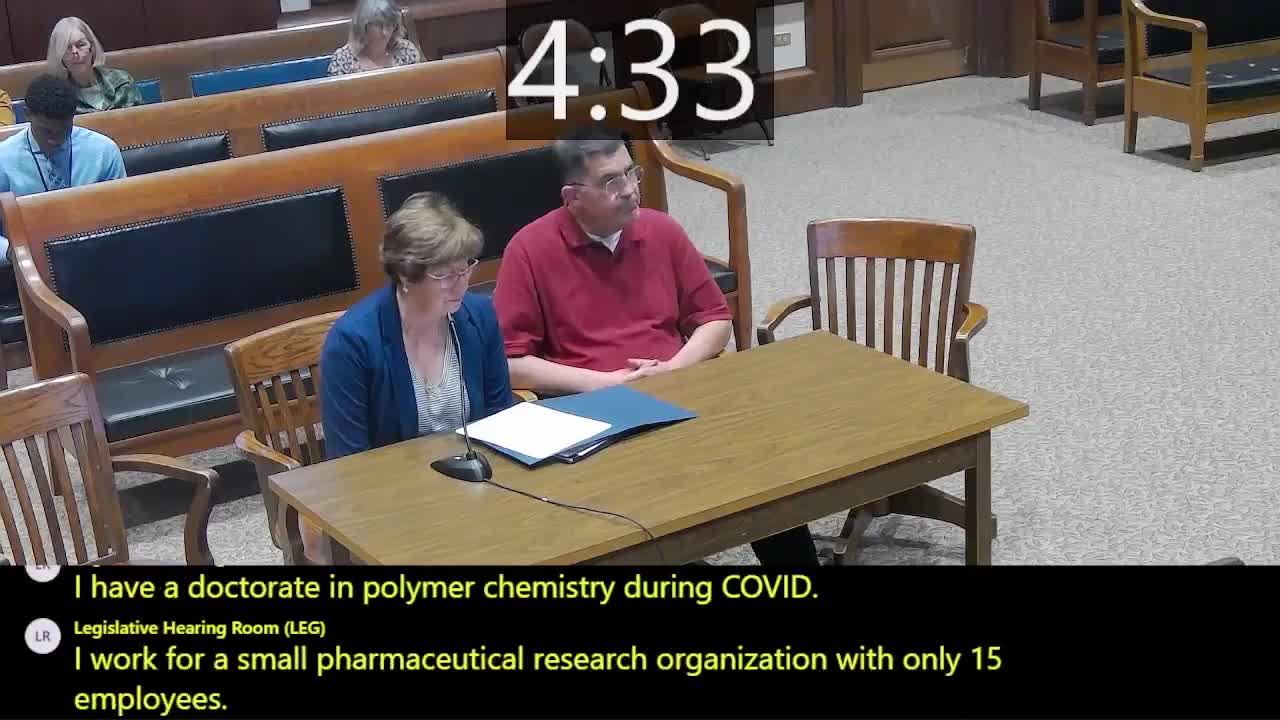
Hundreds testify in support of bills to protect bodily autonomy after COVID-era mandates
Summary
Citizens, health professionals and advocates urged the Judiciary Committee to pass bills protecting medical decision‑making and banning coercive mandates, citing COVID-era employment and education mandates that led to firings, lost educational opportunities and reported injuries.
Dozens of witnesses, including health professionals, parents and workers, told the Joint Committee on the Judiciary to pass bills that would enshrine protections for individual medical decision‑making and ban coercive mandates and incentives tied to medical interventions.
Why it matters: Supporters characterized the measures as safeguards for informed consent, arguing that employment and school mandates during the COVID pandemic coerced many people into medical interventions or caused job and education loss for those who refused.
Multiple witnesses recounted personal harm tied to mandates. Anne Marie Cromwick described workplace measures after the COVID vaccine became available: she said mask and workplace restrictions “relegated me as a class citizen” and that her son later lost his college opportunity due to a campus vaccine requirement. “No person should ever be compelled to submit to a medical intervention when they do not want,” she told the committee.
Medical professionals also spoke. Dr. Sarah Schulman, a physician with decades of hospital experience, said she was fired after declining an employer mandate and argued the bills would uphold the “cornerstone of ethical medicine and human dignity.” Several nurses and other clinicians described being forced to choose between employment and a medical intervention.
Supporters asked the Legislature to make three main changes: (1) prohibit coercive or mandatory medical interventions by public or private entities for routine employment or school participation, (2) prohibit financial or other inducements that operate as de facto coercion, and (3) preserve narrow exceptions (for certain occupational licensing or safety testing) and allow legal remedies for people who were harmed by previous mandates.
Opponents of similar measures have argued that narrow exceptions are needed for certain safety‑sensitive jobs or public‑health emergencies; witnesses and sponsors said the bills include limited carveouts for testing and licensing and that the measure would not block voluntary public‑health strategies.
Ending: The Judiciary Committee accepted a long series of witness statements and asked for written testimony to be filed; proponents urged a favorable report to prevent future employment and education disruptions related to mandates and to preserve informed consent.
Note on sources and claims: Witnesses made a range of claims about adverse health events and systemic impacts following COVID‑era mandates. Those claims will require standard public‑record and medical follow‑up for verification; the committee invited written evidence and data in follow‑up submissions.