Get Full Government Meeting Transcripts, Videos, & Alerts Forever!
Get email alerts on the Juvenile Diversion topic
No spam. Unsubscribe anytime.
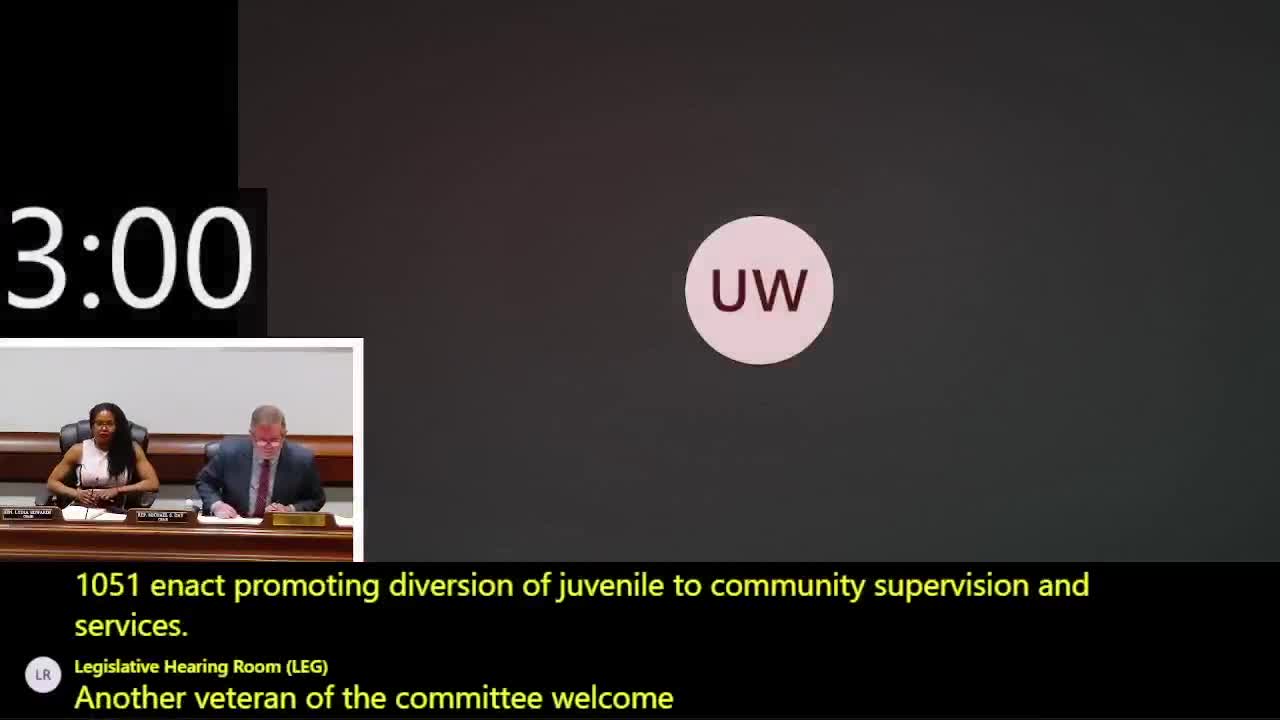
Advocates tell judiciary committee to expand juvenile diversion and judge discretion
Summary
Proponents of bills to expand pre‑arraignment juvenile diversion told the Joint Judiciary Committee that judicial discretion could reduce racial disparities and unnecessary court contact for young people, and pointed to state-funded diversion programs as evidence supports.
Advocates and lawmakers urged the Joint Committee on the Judiciary to expand judicial authority to divert juveniles from the court system, telling the panel that diversion yields better outcomes and reduces racial disparities.
Why it matters: Supporters said expanded diversion would reduce unnecessary juvenile records and detention, connect young people to community services, and ease collateral harms that make long-term success more difficult.
Senator Becca R. Cream (testifying for Senate bill 10 51) and representatives of juvenile justice organizations said the 2018 Criminal Justice Reform Act allowed pre‑arraignment diversion but left categorical exclusions that prevent judges from considering diversion for many offenses. Senator Cream said the bill “would expand access to diversion for offenses depending on the facts of the case,” allowing judges to evaluate whether a youth would be better served by community‑based supervision and services.
Sana Fadel of Citizens for Juvenile Justice testified that last year juvenile court data showed many young people receive a juvenile record even when they are not adjudicated delinquent, and that Black and Latino youth remain overrepresented in system involvement. “The bill gives judges greater flexibility to consider diversion for young people today who are statutorily ineligible,” Fadel said.
Court and service‑provider witnesses said service availability has been a concern for judges, but that the Massachusetts Youth Diversion Program (a state‑funded program launched in 2021) has expanded capacity. Melissa Threadgill of the Office of the Child Advocate told the committee the program now operates in most DA districts and that in 2024 “88 percent of youth completed the program,” evidence she said supports judges using diversion when appropriate.
Union and community groups also testified. The Boston Teachers Union and community advocates urged an end to juvenile fingerprinting and aggressive information sharing and asked for diversion rather than punitive responses. Witnesses described local programs that produced higher graduation rates for referred students than traditional processing.
The committee heard that expanding diversion would not require judges to divert every case; rather, it would allow individualized consideration based on case facts and youth needs. Supporters asked for a favorable report so the Legislature can consider statutory language to expand eligibility and reduce disparities.
Ending: Proponents described diversion as a public safety investment that keeps youth connected to school and services while lowering the likelihood of future justice involvement; the committee did not take a vote during the hearing.