Get Full Government Meeting Transcripts, Videos, & Alerts Forever!
Get email alerts on the Juvenile Records And Federal Sharing topic
No spam. Unsubscribe anytime.
Chelsea officials and teachers urge law change after juveniles’ fingerprints led to ICE detentions
Summary
Teachers, school officials and city leaders told the Joint Committee on the Judiciary that automatic sharing of juvenile arrest fingerprint data with federal agencies has led to rapid ICE detentions in Chelsea and urged legislation to stop dissemination and expand juvenile expungement.
Chelsea school and community leaders urged the Joint Committee on the Judiciary to bar automatic sharing of juvenile fingerprint records with federal authorities after a wave of deportation-related detentions in the city.
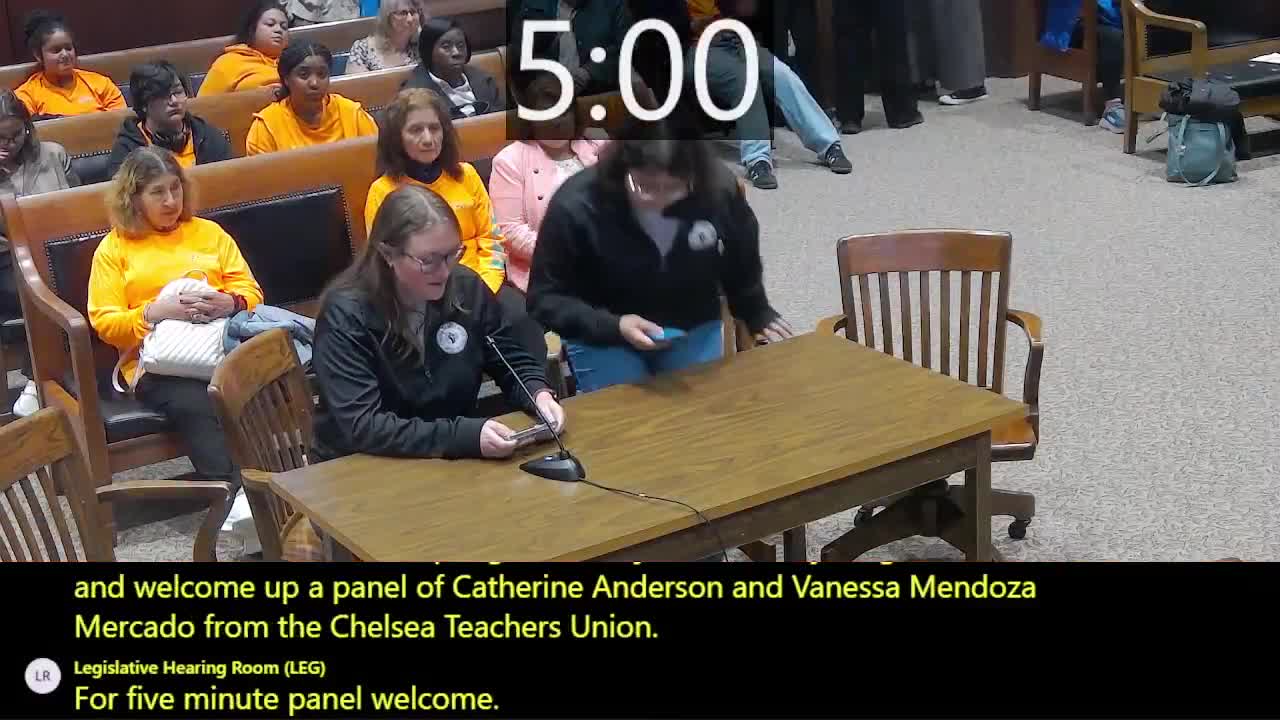
At a committee hearing, Catherine Anderson, president of the Chelsea Teachers Union, said fingerprinting of arrested students sent data “straight to the FBI, and therefore ICE,” which allowed federal officers to appear at local police stations and students’ homes within minutes. “The speed of this domino effect was chilling,” Anderson said.
Why it matters: Witnesses said the current practice breaks trust between immigrant families and local public safety institutions, discourages victims and witnesses from coming forward, and can produce family separation without local due process. Multiple speakers asked the committee to adopt legislation that would prevent juvenile arrest fingerprinting from being disseminated to federal agencies and to expand avenues for expungement so young people and families are not tracked by federal systems.
At the hearing, Sarah Neville, a member of the Chelsea School Committee, described six minors detained by ICE in a six-week period in Chelsea, a two‑square‑mile city she said sits close to a large FBI facility. “When an individual is arrested and booked, their fingerprints are instantaneously shared with the FBI, and this is what allows ICE agents access to the information,” Neville testified. She said ICE then “showed up at the children's homes afterwards,” creating terror among siblings and parents.
Roberto Jimenez, a Chelsea city councilor, said constituents called him “furious” after ICE removals following school arrests and that the episode “destroyed progress” the city had made building trust between immigrant families and local police. “Even though the policies are not allowing this to happen, it is how the community perceives it,” Jimenez said.
Teachers described immediate local impacts. Vanessa Mendoza Mercado, vice president of the Chelsea Teachers Union, told the committee that students are still developing and that “one person's actions should not compromise the safety of whole families.” Michael Sanabria, an 18-year-old youth worker from Chelsea, recounted a recent incident in which two undocumented teens were fingerprinted after a BB-gun episode; he said ICE arrived in roughly 30 minutes and families were terrified.
Legal and policy advocates urged parallel changes. Laura Alffring of the Committee for Public Counsel Services testified in support of bills expanding juvenile expungement eligibility and prohibiting dissemination of juvenile arrest fingerprinting to the FBI. Greater Boston Legal Services and the Massachusetts Immigrant Collaborative also spoke in favor of laws to keep juvenile records local and to make expungement more accessible.
Office of the Child Advocate staff and statewide juvenile justice advocates emphasized that keeping juvenile matters local would not block legitimate local prosecutions but would reduce the risk of collateral federal immigration consequences for families. Melissa Threadgill from the Office of the Child Advocate told the committee that the state’s youth diversion and expungement reforms are intended to reduce long-term harm and that sharing juvenile arrest data with federal agencies undermines those goals.
What the bills would do: Testimony during the hearing referenced bills that would (1) prohibit dissemination of juvenile fingerprint or arrest data to federal agencies, and (2) expand eligibility for expungement of juvenile records, including non-convictions, while maintaining exceptions for the most serious offenses. Witnesses pointed to models in other states that block federal dissemination of juvenile biometric records.
Opponents at the hearing were minimal; much of the testimony from law enforcement and prosecutors emphasized preserving public safety while enabling local discretion. Several speakers said local police and school discipline procedures would still operate under the proposed changes; they characterized the policy change as limiting federal access only to juvenile biometric data rather than preventing local enforcement.
The committee did not take a vote; witnesses asked the Judiciary Committee to report the measures favorably so the Legislature can consider statutory changes during the session.
Ending: Advocates told the committee passage would protect immigrant families, preserve school trust, and shield juveniles from lifelong federal records stemming from routine school arrests while still allowing local authorities to pursue appropriate juvenile accountability measures.