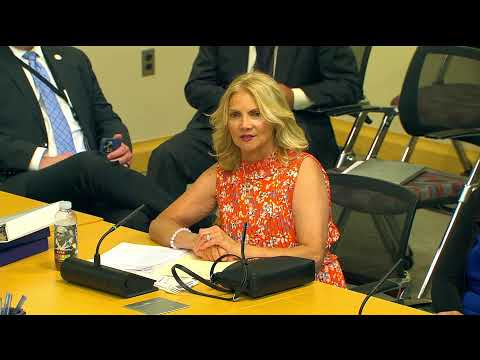
Aurora council to hold foreseeable meetings virtually, ends public-comment listening sessions until Lewis case resolved
Loading...
Summary
On June 9, 2025, the Aurora City Council voted 7–3 to hold foreseeable meetings virtually, change the start time to 6:00 p.m., and eliminate the public-comment listening session until there is a ruling in the civil case filed by the Lewis family.
Aurora City Council on Monday voted to hold foreseeable council meetings virtually, move the start time to 6:00 p.m., and eliminate the standing public-comment listening session until there is a ruling in the civil case brought by the family of Kylan Lewis.
Supporters said the measure was intended to limit disruptions and avoid duplicative appearances while a civil case is pending; opponents said it silences residents and reduces public access to the council.
The motion was made during discussion of agenda item 16a, "discussion and possible action regarding future in person or virtual council meetings." Council member Birkenfeld offered the motion to suspend the rules to hold meetings virtually and to eliminate the public-comment listening session; the motion was put to a vote and passed 7 yes to 3 no. The three members recorded as voting no were Council member Coombs and Council members Medina and Murillo. The council also accepted a friendly amendment to set future meeting start times at 6:00 p.m.
Public commenters who spoke before the vote said closing the public-comment period would reduce community oversight. Aiante Anderson, during public comment, urged the council to preserve in-person access and said residents repeatedly seek "justice and accountability" in the city’s response to the death of Kylan Lewis. Madia Schaffner urged council members to reflect on whether changes to public-comment rules produced any real benefit and warned that curtailing public access harms trust.
Council members who supported the motion argued virtual sessions would make it easier to manage fraudulent or disruptive sign-ups and would reduce in-person confrontations while the legal process is ongoing. Council member Hancock said similar problems can occur in virtual and in-person formats but suggested some issues are easier to manage online. Council member Majorski described progress in conversations that led to a lawsuit and said, "It's in the court's hands now; let's let the court decide." Opponents characterized the change as an unnecessary restriction on residents’ ability to address elected officials.
According to the council clerk’s roll call, the motion passed with seven yes votes and three no votes. The council did not identify a set end date for the virtual-only meetings; the motion tied the change to the outcome of the civil case filed by the Lewis family, stating the policy will remain "until there is a ruling" in that matter.
The council's action applies to the "public-comment listening session," the regular time when residents speak on items not on the agenda. The record shows the change was enacted as a council rule suspension requiring a two-thirds vote of those present.
Council members and residents seeking further information about future meeting procedures were directed to the city clerk’s office and the council’s posted rules.