Lifetime Citizen Portal Access — AI Briefings, Alerts & Unlimited Follows
Trainer warns confined-space air monitoring errors can be fatal
Loading...
Summary
A safety trainer reviewed confined-space hazards and gas‑monitoring best practices, stressing oxygen, LEL, carbon monoxide and hydrogen sulfide limits, the need for bump testing and calibration, appropriate sampling techniques and continuous documentation.
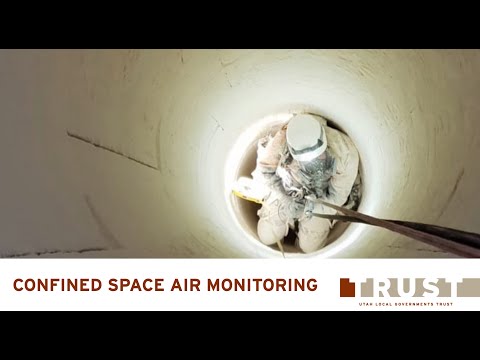
Presenter (Safety trainer) told attendees that “this subject of confined space air monitoring can be the difference between life and death,” and reviewed how hazardous atmospheres account for about two‑thirds of confined‑space fatalities.
The presenter said the Occupational Safety and Health Administration definition of a confined space and the agency’s “permit‑required confined space” classification matter for monitoring, but the session focused on gas detection: common target gases, numeric exposure limits and how to test and document air quality.
Why this matters: confined spaces lack ventilation and can concentrate gases from natural decomposition or activities such as running engines. The presenter said inhalation is the primary route of harm and urged workers to “burn these numbers into your brain” before entering a space.
Key numeric limits and sensors: the presenter advised that meters should check four basic readings: oxygen, flammable atmospheres measured as percent of the lower explosive limit (LEL), carbon monoxide (CO) and hydrogen sulfide (H2S). He listed the numeric guidance used in the presentation: oxygen 19.5–23.5 percent, LEL less than 10 percent (alarms commonly set at 10 percent), CO below 25 parts per million (TLV), and H2S below 10 parts per million on a direct‑reading meter (with a regulatory ceiling of 20 ppm).
Monitoring methods and equipment: the presenter described direct‑reading electrochemical meters as the preferred tools for immediate decisions, supplemented when necessary by detector tubes, pump‑and‑tube sampling, Tedlar bags and lab analysis for more detailed investigations. He emphasized that no single device detects every chemical (for example, a four‑gas meter will not detect chlorine), and recommended using dedicated single‑gas detectors when needed.
Calibration, bump testing and sampling practice: the presenter instructed that meters must be bump‑tested every time before use and calibrated when bump tests fail. He said organizations should designate a trained “meter guru” to perform calibrations. For sampling within deep tanks or layered spaces, he recommended using a pump and hose to draw air from the actual work zone (top, middle and bottom minimum, with more layers in deep tanks) and waiting for the pump and hose lag time before recording readings.
Limitations and interferences: the trainer warned of sensor cross‑reactivity and erratic readings — for example, hydrogen outgassing from lead‑acid battery charging can cause spikes. He advised contacting a qualified expert if readings jump unpredictably and to rely on methodical, corroborated measurements rather than single snapshots.
Documentation and controls: the presenter said continuous monitoring is required during permit‑required entries, that air‑sampling results should be recorded (at least every 15 minutes) on the confined‑space permit, and that data logging and retained cancelled permits are useful for after‑action review and OSHA documentation. He closed by urging workers to “bump test it. Calibrate it if it will pass bump test. Test every time. Test and ventilate the spaces.”
The presentation was instructional and did not propose policy changes or formal actions; presenters invited questions at the session end.