Get Full Government Meeting Transcripts, Videos, & Alerts Forever!
Get email alerts on the Public Safety 911 topic
No spam. Unsubscribe anytime.
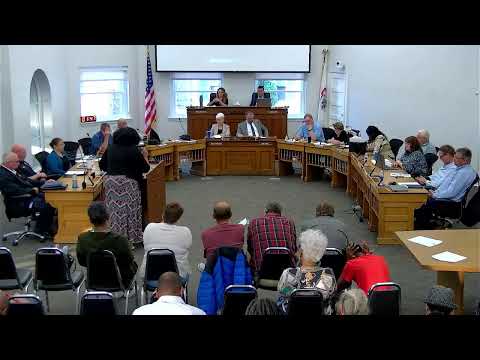
Freeport dispatchers tell council new mutual‑aid call procedure puts 911 callers on hold; employees and residents urge review
Summary
A dispatcher said a recent change requiring phone calls for mutual‑aid ambulance requests forces dispatchers to put in‑progress 911 callers on hold while arranging aid, a practice she called contrary to training and a liability; residents and other commenters backed dispatchers and urged city officials to meet with staff.
A Freeport 911 dispatcher told the Committee of the Whole that a recent procedural change requiring phone outreach to mutual‑aid ambulance providers forces dispatchers to place in‑progress 911 calls on hold, and she said the practice creates an unacceptable safety and liability risk.
Janelle Fokers, a Freeport Police Department dispatcher, described staffing shortages and new instructions she said had been implemented in the prior three weeks. She said when all city ambulances are on a call and a mutual‑aid ambulance is needed, the closest ambulance service must be contacted by phone rather than radio, and dispatchers have been directed to place the ongoing 911 caller on hold while they make that phone call. “We have been directed to put our in progress 911 call on hold. Yes. You heard me correctly,” Fokers said. She said that practice cuts off communication between a frightened caller and a trained dispatcher who might provide life‑saving instructions such as CPR guidance.
Fokers called the change contrary to her training and a substantial liability for callers, responders and dispatch staff. She invited council members and other officials to spend time in the 911 center to see operational pressures firsthand and to ask questions. “This goes against everything I’ve been trained to do in my entire career and is a huge liability to everyone involved,” she said.
Members of the public backed the dispatchers’ concerns. Sue Cook, a resident who said 911 had saved her husband’s life three times, urged the council to respect and support dispatch personnel and to avoid any changes that would weaken the center’s ability to operate.
Why it matters: dispatch protocols affect response times and the ability to deliver life‑saving instructions while responders are en route. The dispatcher’s remarks put a staffing and procedure issue directly on the public record and prompted requests for follow‑up between council leaders, the city manager and dispatch staff.
Outcome and next steps: no formal action was taken at the meeting. Dispatchers requested that council members visit the 911 center and meet with staff; residents and council members urged prompt review of the telephone mutual‑aid practice to evaluate training and liability implications.