Get Full Government Meeting Transcripts, Videos, & Alerts Forever!
Get email alerts on the Residency Ordinance Quorum topic
No spam. Unsubscribe anytime.
Dispute over May 19 vote clouds Freeport residency ordinance
Summary
Alderman Sanders and others questioned the validity of a residency requirement ordinance they say lacked a quorum on May 19; the city attorney and other council members said a quorum of five was present and the ordinance was voted and passed.
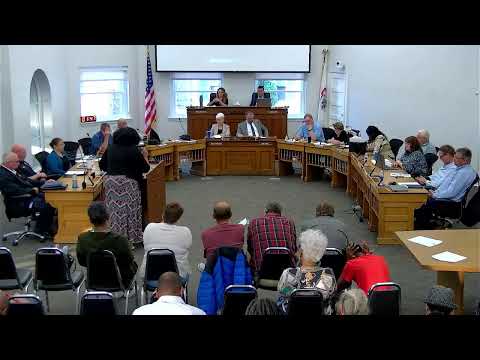
A dispute over whether a residency requirement ordinance was validly adopted on May 19 surfaced at a Committee of the Whole meeting, with aldermen clashing over meeting cancellations, quorum and voting procedure.
Alderman Sanders asked that the record show actions taken at a council meeting without a roll call or established quorum and asked who authorized proceedings on May 19. “I wanted to be put on record of who authorized action to be taken on this council floor without council having a roll call or a quorum,” Sanders said.
City Attorney Zito and other officials said the May 19 meeting was a regular council meeting with a quorum of five and that items on that agenda, including the residency requirement ordinance, were taken up and voted on. “So the residency requirement ordinance was on the agenda for May 19…there was a quorum of 5,” Zito said. Alderman Shadle also said the ordinance was passed at the May 19 meeting.
Why it matters: several aldermen said they believed a prior meeting was canceled and that the residency ordinance therefore could not have been validly passed. Sanders repeatedly asked for clarity on who canceled earlier meetings (references were made to May 5 and May 12). The disagreement included references to correspondence from the attorney general’s office and to procedural norms for calling and canceling meetings.
Council members spoke sharply across the floor. “It was invalid to pass it because it was cancelled,” Alderman Sanders said of the earlier meeting he believed affected the process; others disputed that characterization and insisted the May 19 meeting was properly constituted. The attorney advised that procedural questions could be handled by amending motions at a normal council session and that motions could be tweaked when the item returns for a vote.
Outcome and next steps: no final judicial determination was made at the meeting. The record shows that at least some council members assert the residency ordinance was adopted May 19; other members continue to question the meeting procedures and plan to pursue the matter through council processes and potential follow-up. The dispute was explicitly raised on the record and will likely drive next steps in council follow-up and requests for clarification from counsel or outside legal authorities.