Get Full Government Meeting Transcripts, Videos, & Alerts Forever!
Get email alerts on the Budget topic
No spam. Unsubscribe anytime.
Seal Beach presents $82.8 million budget and opens public hearing as council flags future shortfalls
Summary
Director of finance presented the proposed fiscal year 2025–26 budget totaling $82.8 million in revenues and $108.8 million in expenditures; council opened a public hearing, discussed revenue risks and reserve targets, and asked for more frequent revenue updates.
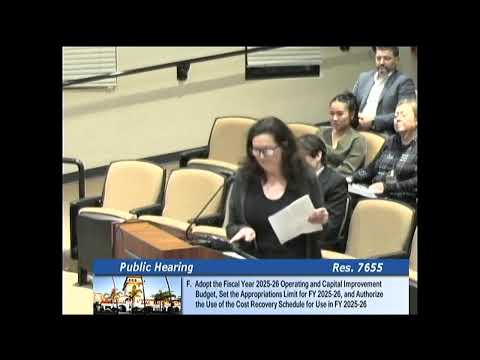
Director of Finance Arnaldo presented the Seal Beach proposed fiscal year 2025–26 budget at the City Council meeting, telling the council the plan shows $82,800,000 in all‑fund revenues and $108,800,000 in all‑fund expenditures and carries $27,400,000 in capital projects. The city’s general fund revenues are listed at $48,200,000 and general fund expenditures at $48,100,000; the presentation notes Measure GG contributes $3,000,000 to sales tax revenue.
“The fiscal year 20 five‑twenty‑6 budget all funds is 82,800,000.0 for revenues,” Arnaldo said while summarizing the document and the outreach process used to prepare the proposal. He described the budget as “a policy document, a financial plan, an operations guide, and a communications device” and urged continued monitoring throughout the year.
The budget document allocates $1,500,000 to an economic reserve, $300,000 to the fleet fund, and an additional $250,000 special payment to CalPERS to reduce long‑term liabilities. It also notes the city is maintaining its council‑adopted general fund reserve target of 25% of annual operating expenditures.
Council members used the public hearing to press staff about revenue assumptions and the timing of receipts. Council members raised concerns that operating costs, including retirement and insurance, are increasing faster than projected revenues and asked how quickly staff could detect downward trends in key revenue streams like sales tax. Arnaldo said the city receives sales tax payments monthly with an approximately four‑month lag and works daily with outside consultants, allowing the city to detect shifts relatively quickly. He also noted property tax has a longer lag.
A number of council members asked staff for more frequent revenue updates than the standard midyear report; one councilmember suggested a simple quarterly snapshot to give council, residents and local businesses earlier visibility into sales‑tax trends. Staff said they already provide quarterly updates in some instances and offered to expand revenue briefings and 1:1 conversations with councilmembers.
Speakers at the public hearing urged the council to prioritize investments that support safety and tourism revenue generation. Public commenters also called for exploring revenue opportunities such as increased transient occupancy tax (TOT) from higher‑quality lodging and emphasized the importance of lifeguard and public safety facilities in protecting visitors and the local economy.
The council did not take a final vote to adopt the budget during the portion of the meeting captured in the transcript; the presentation concluded with staff available to receive questions and the council opening the public hearing for comment.