Get Full Government Meeting Transcripts, Videos, & Alerts Forever!
Get email alerts on the Education Accountability topic
No spam. Unsubscribe anytime.
Board holds public hearing on 2025–26 LCAP; staff reports gains in English-language progress and lower chronic absenteeism
Summary
At a public hearing June 9, Natomas Charter staff reviewed progress under the 2024–27 Local Control and Accountability Plan, reporting gains for English learners on ELPAC and lower chronic absenteeism after targeted attendance interventions.
Natomas Charter School staff presented an end-of-year update on the district’s 2024–27 Local Control and Accountability Plan (LCAP) during a public hearing on June 9, describing progress on four LCAP goals: math, literacy, school culture and attendance, and human resources.
Why it matters: the LCAP is the district’s accountability document that ties local goals to state funding. Board members opened and closed the required public hearing; staff used the presentation to summarize actions, interim data, and next steps that will inform the district’s 2025–26 work.
What staff reported: Laura (LCAP presenter) told the board the 2024 California Dashboard baseline remains the school’s official prior-year reference. Staff summarized local interim measures and pilot programs.
Math: staff described use of diagnostic assessments (i-Ready, IABs), tutoring, co-teaching and PDSA cycles aimed at raising math fluency and CAASPP outcomes. Local i-Ready data (k–8) were reported at roughly 76% meeting standards in the district’s mid-year checks; staff characterized the result as “holding steady” against the most recent official Dashboard.
Literacy and English learners: staff reported that about 65–66% of students met or exceeded standard on a district reading metric and that i-Ready literacy measures showed roughly 87% at standard. Laura told the board that 77% of English learners made growth on ELPAC this year, an increase staff said represented a 38-percentage-point improvement versus the prior reporting period; staff said they had 96% of LPAC (language placement) data in hand and expressed confidence in the EL progress metric.
School culture and attendance: staff described implementation of PBIS (Positive Behavioral Interventions and Supports), the new SEL curriculum Wayfinder, and targeted attendance work. Staff reported chronic absenteeism at 3.14% for the year, an improvement of nearly two percentage points from the baseline. District staff said student attendance review team (SART) meetings had helped: of students who attended SART meetings, 81% showed improved attendance afterward. Staff also reported an attendance-recognition program that reached a large share of students and said the district will move into tiered (Tier 2) PBIS work next year, with added attention to high-school implementation challenges.
Human resources and staffing: staff noted certificated retention near 94% and all-staff retention around 93% year over year, with a multi-year employee pool affected by retirements. Presenters described substitute recruitment, onboarding improvements, substitute office hours, and new hiring practices intended to be culturally responsive. The district reported an employee survey in which about 80% of staff said they valued leadership opportunities and growth supports.
Data caveat and timeline: Laura repeatedly cautioned that the state’s full CAASPP/CAST datasets were still arriving and that the district had to use the most complete interim measures it had available. She told board members the official state dashboard for the 2024 release would be finalized in mid-November and that staff would bring fuller fall analyses after state data and summer work with principals.
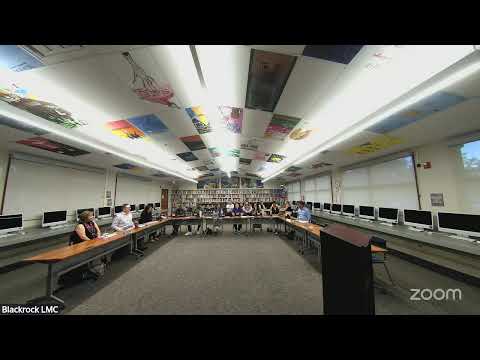
Board and public participation: the board opened the required public hearing at 6:51 p.m. and closed it after noting there were no public speakers in the waiting queue. No formal LCAP adoption vote occurred at this meeting; staff said the board would act on the LCAP at a subsequent meeting (noted on the agenda as the coming Wednesday meeting).
Next steps: staff will continue to pursue full data ingestion from the state, expand targeted intervention classes (including an academic literacy class that staff reported had strong results), continue PBIS tiered work, and refine attendance interventions. The district plans to report full LCAP-related metrics again when state data are complete and will ask the board to adopt the LCAP at the scheduled follow-up meeting.
Ending: The LCAP update presented interim indicators of progress—particularly for English learners and attendance—while staff cautioned that statewide assessment data would be needed to complete the full picture.