Get Full Government Meeting Transcripts, Videos, & Alerts Forever!
Get email alerts on the Master Plan Adoption topic
No spam. Unsubscribe anytime.
Hialeah City Council adopts Hialeah 2050 master plan after two-year process
Summary
The council voted to adopt the Hialeah 2050 master plan after a two‑year planning process and extensive public outreach. The plan sets long‑range goals for land use, mobility, housing, open space, flood mitigation and parking strategies and will guide grant-seeking and regulatory work over the next 25 years.
HIALEAH, Fla. — The Hialeah City Council on Tuesday voted to adopt the Hialeah 2050 master plan, a 25‑year comprehensive vision developed over nearly two years with public workshops, walking audits and mapping exercises.
The master plan lays out recommendations to strengthen neighborhood identity, expand the open‑space network, broaden housing choices, improve multimodal mobility and address drainage and parking, council and consultant presentations said.
Claudia Hasbun, interim planning and zoning official, introduced the plan and said the city’s planning staff and outside consultants ran more than 30 bilingual public events and provided an interactive website to collect input. “We had more outreach on this project than we’ve done on other projects,” she said, describing community workshops, walk audits and open houses that informed the plan’s recommendations.
Consultants from PlacerBia presented the plan’s goals and structure. Juan Moledad of PlacerBia said the project included transportation and design experts, local architects and multimodal planners. Maria Benfeld, the project manager, described four focus areas: urban design and land use; mobility and connectivity; infrastructure and public services; and parking management.
Key recommendations presented to the council include protecting single‑family neighborhoods while identifying regional opportunity areas and walkable neighborhood nodes; designing “missing middle” housing prototypes for small lots to expand housing types; creating a premium transit spine with mobility hubs to improve last‑mile connections; filling gaps in sidewalks and park access; and using green stormwater infrastructure to reduce flood risk.
The plan also recommends parking strategies such as shared parking, curb‑management tools and smart parking systems to better manage on‑street spaces. Presenters noted the plan does not itself change zoning but provides policy and project guidance for future decisions.
Council members praised the outreach and noted the plan’s long timeline. “Trying to change the trajectory of a fully developed, 100‑year‑old city is almost impossible — it’s like turning the Titanic,” Councilmember Junco said, adding he expected implementation to be gradual as redevelopment and new projects come forward. Councilmember Perez and others thanked the consultants for the outreach and promised follow‑up when projects are proposed under the plan’s framework.
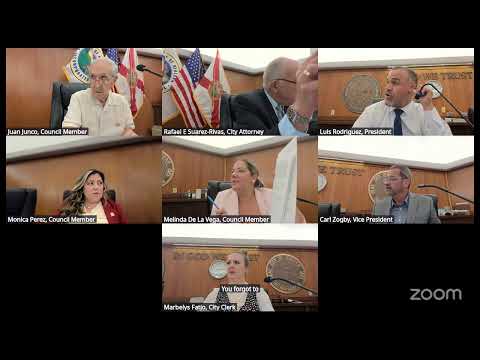
The council approved the plan by roll call vote at the meeting. Councilmembers voting yes included Zogby, Junco, La Vega, Perez and Rodriguez. Adoption allows city staff to seek grants and coordinate with county and state agencies on projects recommended by the plan.
The master plan books and supporting documents will be posted online at hialeah2050.com and hard copies will be distributed to the planning department when the printed volumes arrive, consultants said. The planning department will return to the council with specific implementing measures, zoning changes or project‑level proposals that stem from the master plan.
Implementation will require coordination with Miami‑Dade County, the Florida Department of Transportation and other agencies for projects affecting county or state roads, the presenters said. The plan’s adoption sets a policy framework for those discussions and for prioritizing capital projects and grant applications.