Get Full Government Meeting Transcripts, Videos, & Alerts Forever!
Get email alerts on the Public Safety Immigration Enforcement topic
No spam. Unsubscribe anytime.
Public commenters raise immigration‑enforcement fears; police reiterate AB 54 policy and mutual‑aid deployment
Summary
A resident urged the Public Safety Commission for guidance after federal immigration activity in Los Angeles; Police Chief said department follows AB 54, does not enforce immigration laws and deployed officers to Los Angeles on mutual aid while maintaining local staffing levels.
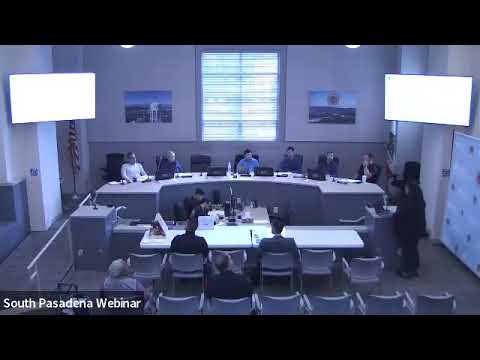
A public commenter told the Public Safety Commission on June 9 that recent federal immigration activity in Los Angeles left her feeling unsafe and seeking guidance about local protections, and the Police Department responded by reiterating its AB 54‑based policy and describing a mutual‑aid deployment to Los Angeles.
Yvonne LaRose told commissioners she had been “on edge this weekend” after federal orders and an informational brochure circulated and said she did not feel safe. “I don't feel safe, and I would like some input on what we're going to do,” LaRose said during the public comment period.
Chief Salinski, speaking for the South Pasadena Police Department, told the commission that the department “does not do any enforcement of immigration laws,” and that responsibility lies with federal authorities. He said the department is committed to public safety for all residents and is “proud of our heritage here in South Pasadena as being a diverse and, multicultural community.”
Chief Salinski also said officers had been deployed to Los Angeles to assist with public‑safety tasks related to demonstrations: “our officers have been deployed to Los Angeles. That is purely for the purpose of ensuring public safety,” he said. The chief explained the deployment used off‑duty personnel working overtime so the city’s local response capacity would not be diminished and said the deployment was scheduled through 9 p.m. the same day, subject to reassessment.
Commissioners and commissioners’ comments reflected concern for immigrant and limited‑English populations. Commissioner Cervantes described worry about people needing medical care outside city limits and the risk of detention for community members and family members; another commissioner noted palpable fear among foreign‑born residents and limited‑English households and said local health workers had treated protest‑related injuries.
The chief said the department also maintains a locally adopted policy that mirrors state law (AB 54) and that the policy is publicly available on the police department’s website under departmental policies.
Why it matters: commissioners expressed concern about the immediate safety and legal protections of community members who might be affected by federal immigration enforcement in neighboring jurisdictions. The department’s explanation — that AB 54 governs local enforcement and that mutual‑aid deployment used off‑duty personnel — clarifies the city’s operational stance but did not change local law or create new protections.