Get Full Government Meeting Transcripts, Videos, & Alerts Forever!
Get email alerts on the Law And Policy topic
No spam. Unsubscribe anytime.
Board discusses SB 533 changes, 72-hour victim-advocate duty and record-expungement concerns
Summary
Members reviewed an amendment to the Police Accountability Act (Senate Bill 533), which sets new investigation timeframes and takes effect Oct. 1, 2025, and debated whether exonerated or unfounded complaints should remain on officers’ permanent records, noting that any change will require legislative action in Annapolis.
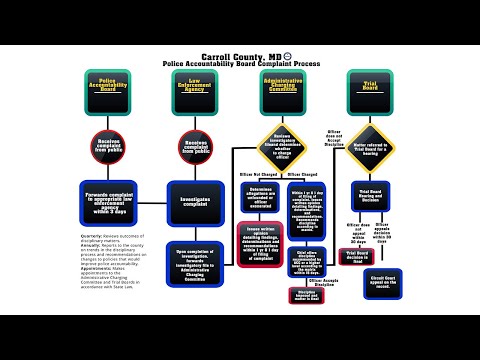
PAB and ACC members reviewed language from a recent amendment to the Police Accountability Act, cited in the meeting as Senate Bill 533, and noted the law changes will take effect Oct. 1, 2025. The amendment sets new timeframes for investigations and ACC jurisdiction: investigators must deliver cases to the ACC within a timeframe described in the amendment (discussed at the meeting as roughly 334 days from intake), the ACC has a 30-day review window with a possible 30-day extension, and the total maximum ACC jurisdictional period was described in the meeting as 395 days.
Members also discussed statutory duties for a department-appointed victim’s rights advocate, including a requirement the advocate contact complainants promptly (meeting participants cited a 72-hour contact requirement). Several chiefs described how, in smaller agencies, the chief or a supervisor typically serves as the designated advocate and fields intake inquiries; if an inquiry is resolved at intake it is closed as an inquiry rather than routed into a formal complaint process.
A substantive portion of the meeting focused on record retention and whether exonerated or unfounded complaints should remain on an officer’s permanent record. Participants reported Maryland previously had a process allowing expungement in some cases (one participant referenced LEOBR-era provisions) but said that process was removed at the state level. Board members debated options ranging from never retaining exonerations on permanent records to setting a time-limited retention for unfounded or exonerated items. Several speakers recommended the PAB include a recommendation to the county commissioners and to state legislators in the PAB’s end-of-year report asking for statutory change to allow removal or time-limited retention for unsubstantiated complaints.
Participants also described an “early intervention” review process that departments run periodically (for example, every six months) when officers have multiple complaints, even if the complaints are not sustained, so agencies can address patterns proactively.
Board members agreed that any change to retention or expungement policy will require action in the General Assembly; they discussed starting with a recommendation that exonerated findings not be retained or that unfoundeds be removed after a short, legislatively defined period as a practical compromise to present to legislators and law‑enforcement stakeholders.