Get Full Government Meeting Transcripts, Videos, & Alerts Forever!
Get email alerts on the Wastewater Treatment topic
No spam. Unsubscribe anytime.
New London reviews wastewater compliance options after EPA-approved TMDL sets low phosphorus limit
Summary
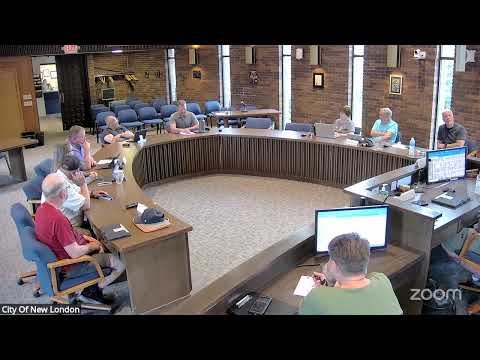
Mike Gerbitz, senior process engineer with Donahue and Associates, told the Board of Public Works in New London on June 2 that the city’s wastewater plant cannot reliably meet a new EPA/DNR phosphorus limit of 3.3 pounds per day and outlined alternatives including a temporary variance, effluent filtration and upgrades, or a new plant.
Mike Gerbitz, senior process engineer with Donahue and Associates, told the Board of Public Works in New London on June 2 that the city’s wastewater treatment plant cannot reliably meet a new phosphorus limit set by a TMDL approved by the EPA.
The PCAP — a Preliminary Compliance Alternatives Plan required by the Wisconsin Department of Natural Resources (DNR) permit — outlines options the city can pursue to comply with the permit-by-date of July 1, 2029, and recommends next steps including submitting the PCAP, confirming eligibility for a multi-discharge variance with the DNR, and meeting with USDA Rural Development to explore funding.
Gerbitz said the EPA-approved total maximum daily load for the Upper Fox–Wolf River basin allocates a 6‑month average phosphorus limit of 3.3 pounds per day to the New London discharge. “You get a mere 3.3 pounds per day as a 6 month average,” Gerbitz said. He added that New London’s plant currently averages about 0.4 milligrams per liter for phosphorus — “remarkably good” for a non‑filtration plant — but that the plant lacks the filtration step needed to meet the new numeric limit.
The PCAP evaluates multiple approaches: pursuing a multi‑discharge variance (MDV) that would buy regulatory time; adding effluent filtration and broadly upgrading the existing facility; building a new liquid and biosolids treatment plant on the existing site; building a new plant at a remote site; and adding a biosolids dryer to produce a dried, Class A product. Gerbitz described the MDV as a time‑buying regulatory option and estimated the annual payment under typical conditions at about $69,000 per year to fund watershed improvements; he cautioned extreme wet years could raise that amount.
On costs and schedule, Gerbitz presented mid‑range capital estimates (ranges provided in the full PCAP) and an implementation timeline that works backward from the 07/01/2029 compliance date. He said submitting plans and specifications by June 2027 under the permit is required, but recommended beginning design this year to avoid compressed schedules and higher contractor bids. “If you had decided you were gonna build a brand new plant outside of town, that's a $90,000,000 to a $100,000,000 proposition,” Gerbitz said when describing the most expensive remote‑site option.
Gerbitz also laid out operational considerations: the current facility is aging (many major structures and pipes are roughly 40 years old or older), the plant uses a fixed‑film/trickling‑filter process that is less suited to future nitrogen removal, and biosolids handling logistics are increasingly costly because the material is dilute and must be hauled to distant fields. He noted that adding filtration and other upgrades could be phased and, if done all at once, may yield lower total cost due to economies of scale.
Board discussion focused on next steps rather than selecting a preferred alternative. Gerbitz recommended the city submit the PCAP to meet the permit requirement, confirm MDV eligibility with the DNR, and host meetings with USDA Rural Development to explore loan and grant scenarios and the feasibility of carrying indebtedness over longer terms to reduce monthly residential bill impacts. He suggested more public engagement and tours of other facilities before a final compliance alternative is selected.
No formal board vote selected a preferred capital alternative during the meeting. The board did approve the city’s 2024 CMAR/CMAR resolution (a separate, formal item) earlier in the agenda, which reflects the plant’s current compliance maintenance rating.
Board members and staff signaled the issue will return for further study and public discussion before any legislative or contracting actions are taken. The PCAP in the meeting packet contains model capital cost ranges, projected rate impacts under different funding scenarios (Clean Water Fund and USDA Rural Development), and recommended phasing and outreach actions for the board and Council to consider.
Gerbitz closed by urging the city to use available time to plan carefully rather than rush into a last‑minute project: “It’s wise to be proactive and continue to make progress and use the time that you have.”