Get Full Government Meeting Transcripts, Videos, & Alerts Forever!
Get email alerts on the Municipal Finance topic
No spam. Unsubscribe anytime.
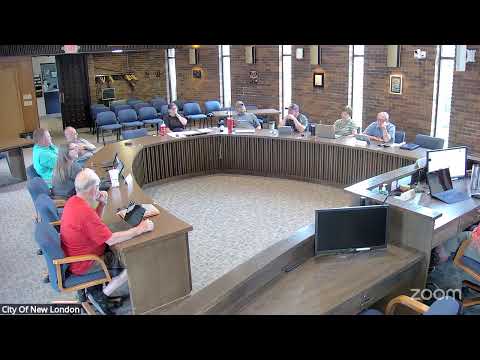
Committee directs finance director to seek short-term loans for Oshkosh Street work and bucket truck
Summary
The New London Finance and Personnel Committee approved a motion directing the finance director to submit loan applications to the State Trust Fund to cover a bucket truck purchase and $386,000 of local Oshkosh Street costs until a $2.1 million state grant is reimbursed next year.
The New London Finance and Personnel Committee voted to direct Finance Director Judy to submit applications for short-term loan financing to cover the purchase of a Department of Public Works bucket truck and about $386,000 of local costs for the Oshkosh Street reconstruction project.
The committee’s action comes as city staff weigh whether to temporarily use the city’s reserves, take a state trust fund loan, or borrow from a local bank while awaiting a state grant reimbursement. "I didn't want to submit them ... as soon as we get them, we put them aside," said Judy (Finance Director), explaining why she wanted committee direction before filing applications.
The decision matters because the city has a $2.1 million state grant for Oshkosh Street that cannot be requested until the project is completed; contractors and engineers recommended leaving the binder layer on over winter and paving the final surface next year to reduce settlement issues. Judy told the committee the city would likely wait to request the grant reimbursement until after the top mat is laid next year and that the State Municipal Agreement deadline is within the grant window. She said the project must be finished by June 30, 2027, under the grant timeline.
Committee members and staff discussed three financing elements: (1) a state trust fund loan for a bucket truck (proposed three-year term at about 5.5 percent interest), (2) a 10-year state trust fund loan to cover the roughly $386,000 local portion of Oshkosh Street to be paid from Tax Increment District 4 (increment revenue), and (3) temporarily drawing down the city’s unassigned fund balance rather than taking a $2.1 million short-term loan for the full project. Judy said the state trust fund carries no administrative fees and allows prepayment without penalty.
Judy outlined the city’s fiscal position: about $3.2 million in unassigned fund balance and roughly $800,000 in retirement reserves (totaling roughly $4 million), and that the city had collected roughly 60 percent of budgeted interest revenue year to date. She recommended using reserves in the short term and submitting the state trust fund loan applications as a precaution; she also said First State Bank had offered a back-up line but could not beat the state trust fund rates once bank fees were considered.
Staff and committee members discussed timing and project sequencing. Engineers and public works staff recommended placing the binder layer this year and the final surface next spring so the road can settle over winter; doing so prevents the city from seeking grant reimbursement until the final surface is in place. Committee members asked whether that schedule risks losing the grant; Judy replied the city is within the State Municipal Agreement window and named June 30, 2027, as the grant completion deadline.
On a voice vote the committee approved a motion directing Judy to submit the state trust fund loan applications and proceed with short-term financing plans; the formal resolutions to accept the loans will return to the committee at the next meeting. Judy said she would not immediately submit applications without committee direction because "if the state gets these, they put the money aside," and she did not want funds reserved before the committee was ready to accept them via resolution.
Committee members also discussed how the loans and use of reserves would interact with other planned borrowing, including potential future bonding for large street or utility projects. Judy and staff emphasized the difference between general obligation debt (paid by property tax levy limits) and revenue debt (paid from utility user fees), noting the wastewater treatment plant financing would be handled through revenue bonds and would not affect the city’s general obligation capacity.
The committee’s direction allows staff to proceed with loan applications and return with formal resolutions next month for final approval; staff will also monitor interest rates and may prepay the shorter-term loans if a lower-rate bonding option becomes available later.