Get Full Government Meeting Transcripts, Videos, & Alerts Forever!
Get email alerts on the Large Scale Development topic
No spam. Unsubscribe anytime.
Commissioners briefed on Westbridge Meadows plan: 410‑acre master plan, 13,200‑unit buildout phased by traffic triggers
Summary
Staff and the applicant described a large Westbridge Meadows master plan (roughly 410 acres) that envisions more than 13,000 dwelling units over decades; phasing will be tied to transportation triggers, river/rail bridges and floodplain mitigation, and commissioners sought clarity on infrastructure triggers and protections for nearby landowners.
County planning staff and the applicant on Monday presented the Westbridge Meadows master plan, a long‑range proposal covering about 410 acres and proposing up to roughly 13,200 dwelling units over several decades.
“It's a big project, 4 10 acres or so, with roughly, 13,000 or so dwelling units being deposed over the next 50 or so years,” planning presenter Charlie Stanford said, describing the applicant’s requested density and the multi‑decade buildout.
Why it matters: commissioners and staff framed phasing and required infrastructure investments as the core public‑policy question. Staff said phasing will be tied to transportation level‑of‑service (LOS) thresholds — the county will limit additional building permits if road corridors such as Twelfth Street approach or drop below LOS C until new crossings (for example, bridges at 2550 or 1800) or other mitigation is in place.
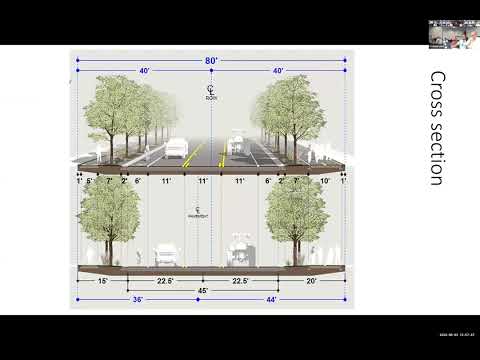
Phasing and infrastructure: Stanford said the developer must provide on‑site sewer and water systems, address floodplain issues through FEMA letters of map revision as needed, and reserve land for potential transit stations and highway corridors. The county told the commission it has asked the applicant to reserve land for two potential rail stations and to set aside a 60‑foot linear easement for future tracks.
Staff described a trigger table tied to unit counts and traffic modeling, enabling the county to require particular off‑site improvements before additional permits are issued. “Once we hit that threshold, they come in and say, OK, I've got … 2,000 homes,” a staff member said, “and we say, you don't get any more permits until….” Commissioners heard that phases 1 and 2 together total about 2,500 units, and that at an average long‑term buildout of 13,200 units over 30–50 years the pace would be roughly 264–440 units per year.
Other issues: staff and the applicant discussed floodplain mitigation, mass earth‑moving to avoid moving water onto neighboring property, and coordination with Union Pacific on the 7500 West railroad crossing. Staff said Union Pacific agreed to a limited number of additional units crossing 7500 West before an upgrade is required and that the railroad made clear improvements to the crossing may not be forthcoming — reinforcing the county’s emphasis on alternative bridges and access points.
Preservation, parks and governance: the applicant committed to reserving open space, donating public parks and working with homeowners associations on long‑term maintenance. Staff also said the county will not “freeze” all future changes to rules for multi‑decade development projects; instead, the county will vest layout and utility commitments but maintain the ability to adapt ordinances and standards over time.
Commissioners asked for clearer language on triggers, protections for adjacent landowners (including a proposed 300‑foot buffer along certain shorelines), and steps to ensure county taxpayers are not left paying for project‑related regional improvements. No formal action was taken; staff said they will continue negotiating development‑agreement terms, traffic triggers and floodplain mitigation requirements.