Get Full Government Meeting Transcripts, Videos, & Alerts Forever!
Get email alerts on the Council On Aging topic
No spam. Unsubscribe anytime.
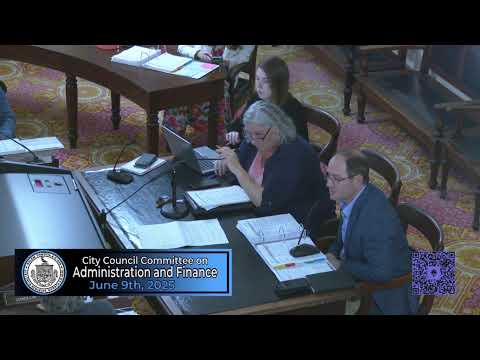
Salem Council Committee approves Council on Aging budget as department shifts to independent status
Summary
The Administration and Finance Committee recommended approval of the Council on Aging(COA) FY26 budget after department leaders outlined staffing, transportation and outreach improvements including two MassDOT electric vehicles and a small enrollment shortfall for a wellness check program that city staff said has saved lives.
The Salem City Administration and Finance Committee recommended approval Monday of the Council on Agingpersonnel and operating budget for fiscal year 2026, approving a department total of $539,780 after department leaders described expanding outreach, new staff and transportation changes.
Terry Arnold, director of the Council on Aging, told the committee the department"mission is to provide programming that affirms life and independence" and said a core goal remains preventing social isolation among older residents.
Arnold and other staff highlighted several items that informed the proposed budget. Arnold said the department provides roughly "1,151 way rides a month" for medical appointments and grocery shopping and that congregate meals have grown to about 650 per month. He also said the center applied to MassDOT and "were awarded 2 electric vehicles" for transportation services.
The budget discussion also focused on a morning wellness check program the department runs with an outside vendor. "What this is is a wellness check-in the morning," Arnold said, describing a process in which registered participants receive automated calls in the 8 a.m. hour; if they do not answer, "the police department, the officer in charge is alerted, and then they will send a police officer out to do a wellness check." Arnold said the city has had only "about a half dozen people on this program" and urged broader outreach, calling it "free" to users and saying the program has, at times, saved lives.
Committee members pressed staff on outreach and follow-through. Councilor Harvey and Councilor Maricillo urged expanded marketing through home-delivered meal providers, visiting nurse services and regular social-media and newsletter pushes. Councilor Watsonfell and others asked about response times; Arnold said police respond quickly during the program's morning check window and the city will provide clearer data on enrollments going forward.
The committee also discussed internal department organization. Mayor Pangalo and staff described a multi-year administrative change that restored the Council on Aging to an independent department after it had been administratively folded into Parks and Recreation in 2007. Mayor Pangalo said budget line items shifted as part of that change so that building-wide costs (for example HVAC for the Community Life Center) sit with the appropriate department rather than solely on COA's budget.
On personnel, Arnold said the social services team is now fully staffed, naming Sharon Felton as head of the social service team and adding that new hires Ingrid Patterson and social worker Fabiola Alvarez increase bilingual outreach and clinical capacity. Arnold said that hiring and the new transportation coordinator have already generated better community ties and outreach to Spanish-speaking residents.
Councilors moved to recommend approval of the Council on Aging personnel line item of $462,680 and expenditures of $77,100, for the department total of $539,780. Councilor Stott made the motion; it was seconded by Councilor Harvey. Chair Merkle recorded "4 hands plus my own" in support and declared the matter carries.
The committee asked staff to provide follow-up data about program enrollments (including wellness-check and lockbox program participation) and to continue regular outreach to healthcare providers, home-delivery volunteers and neighborhood organizations.
For now, COA staff said they will continue to prioritize transportation, bilingual outreach and the wellness-check enrollment push while implementing the organizational shifts that move some building costs to other departments.