Get Full Government Meeting Transcripts, Videos, & Alerts Forever!
Get email alerts on the Public Defense Budget topic
No spam. Unsubscribe anytime.
Subcommittee advances $707.7 million budget for Public Defense Services Commission
Summary
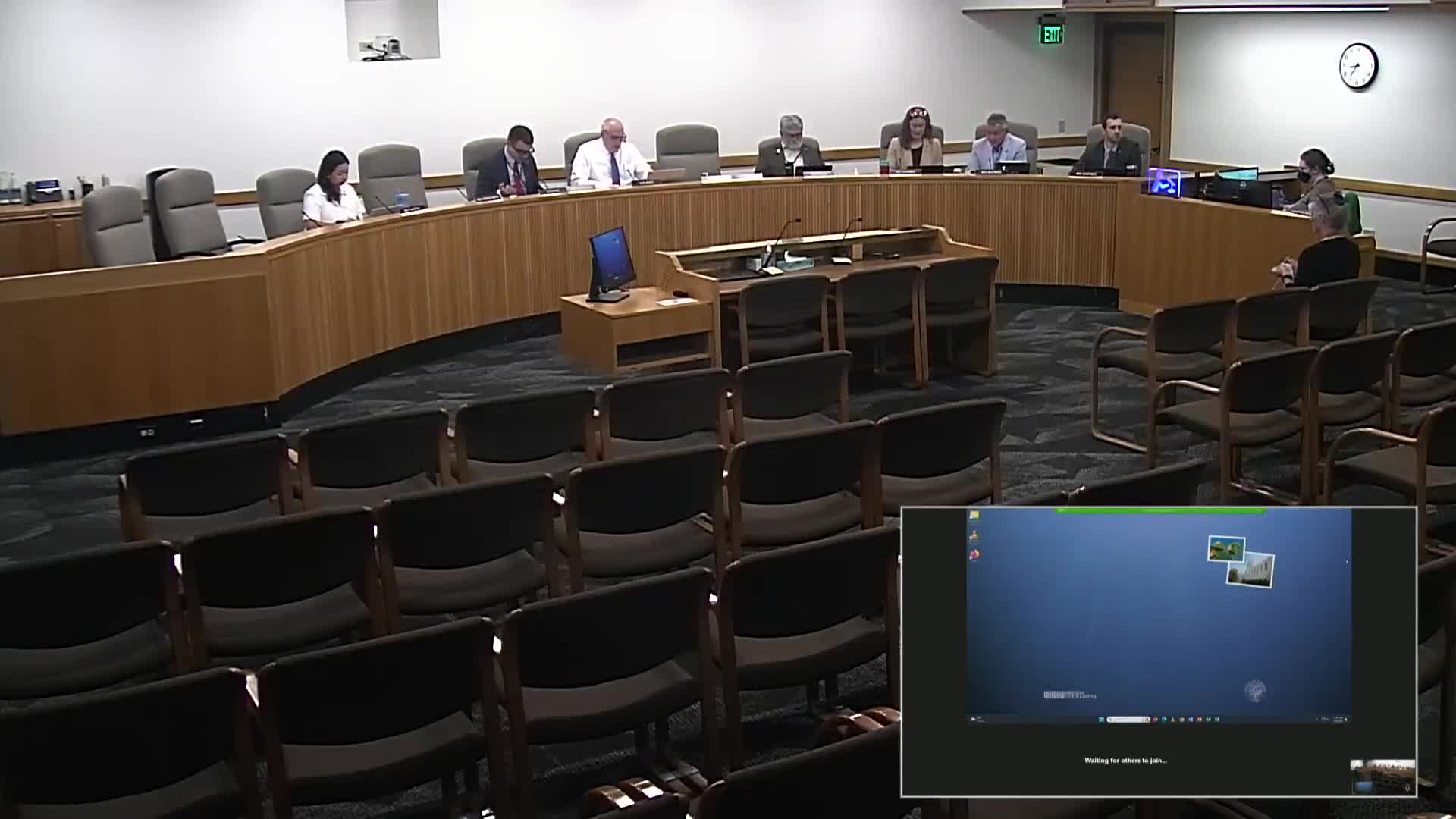
The Public Safety Subcommittee on June 9 advanced House Bill 5,031, endorsing a $707.7 million total‑funds budget for the Public Defense Services Commission with conditions that require reporting and capacity reviews before some funds are scheduled.
On June 9, 2025, the Public Safety Subcommittee advanced House Bill 5,031, recommending a $707.7 million total‑funds, 180‑position budget for the Public Defense Services Commission and forward the measure to the full Ways and Means Committee.
The subcommittee and the Legislative Fiscal Office (LFO) framed the package as a sizable investment to restore capacity, improve accountability and stabilize public defense delivery statewide. The recommendation includes one‑time pilot funding, continued law‑school investments, mandated caseload adjustments, carryforward payments for an expiring hourly program and unscheduled funds that may not be released until the commission delivers capacity reports to the legislature.
John Borden, Legislative Fiscal Office analyst, told the subcommittee that the LFO recommendation for the 2025–27 biennium is $707,700,000 in total funds, comprised of $681,000,000 General Fund and $26,700,000 other funds, and 180 positions (179.8 FTE). "The Legislative Fiscal Office recommendation for House Bill 5,031 ... is to fund the department at $707,700,000 total funds, 180 positions, 179.8 FTE," Borden said. He described multiple line‑item adjustments, including mandated caseload increases, error fixes, and fund shifts to maximize federal reimbursement.
Key budget elements described by LFO and discussed by members: - Enhanced provider capacity pilot: $2.2 million one‑time to compensate existing contract providers operating at or above capacity in six designated "crisis" counties — Multnomah, Washington, Marion, Jackson, Douglas and Coos. - Law‑school investment: $3.4 million continued funding to support clinical programs; the recommendation includes a reporting requirement on students trained, clients served and case outcomes. - Mandated caseload adjustments: LFO cited multiple mandated adjustments across divisions, including a $38.9 million adjustment referenced for current service level alignment and other division‑specific adjustments (for example, a $16.7 million adjustment in one area that, combined with prior amounts, totaled $31.4 million for that program). LFO noted further reconciliation of pricing and capacity remains to be done with the commission. - Temporary Hourly Increase Program (THIP): The recommendation does not extend THIP beyond its 6/30/2025 sunset; however, it includes one‑time carryforward funding (noted at $18.4 million general fund) for cases already assigned under the program. - Reductions and efficiencies: The package contains reductions totaling roughly $17 million, position abolishments for long‑term vacancies and several position rebalance actions. LFO also recommended transferring in‑house counsel responsibilities consistent with Executive Branch practice if the commission is moved under the Department of Justice. - Unscheduled funds and reporting: The Department of Administrative Services requested $22.1 million in unscheduled General Fund in select programs; those funds may be scheduled only after the commission reports to the 2026 Joint Committee on Ways and Means comparing budgeted capacity to actual capacity for contract providers and the trial representation division. The report must include a plan to address providers or trial staff operating at less than 90% budgeted capacity.
Discussion at the work session emphasized accountability and transparency. A co‑chair of the subcommittee said, "we're not standing in front of a mission accomplished sign right now," stressing the need for reports and follow‑through before additional funds are released. Representative Lewis and Representative Helfrich both voiced conditional support, citing the new reporting requirements and the commission's 12‑month plan as reasons to back the recommendation. Lewis said the scheduling requirement "provides a level of accountability." Representative Graeber asked for detail on trial‑division staffing; Borden clarified the package includes 21 state trial attorneys and several support staff in new trial offices that are intended to operate from regional hubs (a Southern regional office, a Northwest regional office and a Willamette Valley central office able to deploy resources statewide).
The subcommittee also approved Legislative Fiscal Office recommendations on key performance measures (KPMs), including adding a new KPM that targets 100% of financially eligible defendants receiving public defense. LFO directed the commission to report to the 2026 legislative session with a comprehensive restructuring of KPMs and targets for the 2027–29 biennium.
Formal actions taken during the session included motions to adopt the LFO recommendations, adoption of the dash‑1 amendment that aligns the bill with LFO recommendations, approval of the KPM package, and approval of the budget notes. All motions were carried by voice vote with no recorded roll‑call tally taken in the transcript.
Next steps: the subcommittee moved House Bill 5,031 as amended to the full Ways and Means Committee with a "do pass" recommendation. Budget notes attached to the recommendation require interim reporting: a January 2026 report to the interim Joint Committee on Ways and Means and a September 2026 report to the Legislative Emergency Board on capacity and implementation of the commission's 12‑month plan; a separate report to the 2027 legislature is required on law‑school investments.
The recommendation contains multiple contingencies and reporting requirements intended to withhold some funding until the commission demonstrates provider and staff capacity and documents early results from the enhanced provider capacity pilot and the law‑school programs. The subcommittee record shows broad legislative concern about execution and transparency; members said they expect to monitor monthly reports and the statutorily directed submissions before fully releasing unscheduled funds.