Get Full Government Meeting Transcripts, Videos, & Alerts Forever!
Get email alerts on the Judiciary topic
No spam. Unsubscribe anytime.
Senate Judiciary panel hears update on Robert R. Parker litigation; DOJ says chances of success are low
Summary
Senator Laurie Monnes Anderson Pruzanski, chair of the Oregon Senate Committee on Judiciary, convened an informational hearing June 9 to receive an update on long-running litigation involving Robert R. Parker and the state following the 2021 passage of Senate Concurrent Resolution 22 (SCR 22).
Senator Laurie Monnes Anderson Pruzanski, chair of the Oregon Senate Committee on Judiciary, convened an informational hearing June 9 to receive an update on long-running litigation involving Robert R. Parker and the state following the 2021 passage of Senate Concurrent Resolution 22 (SCR 22).
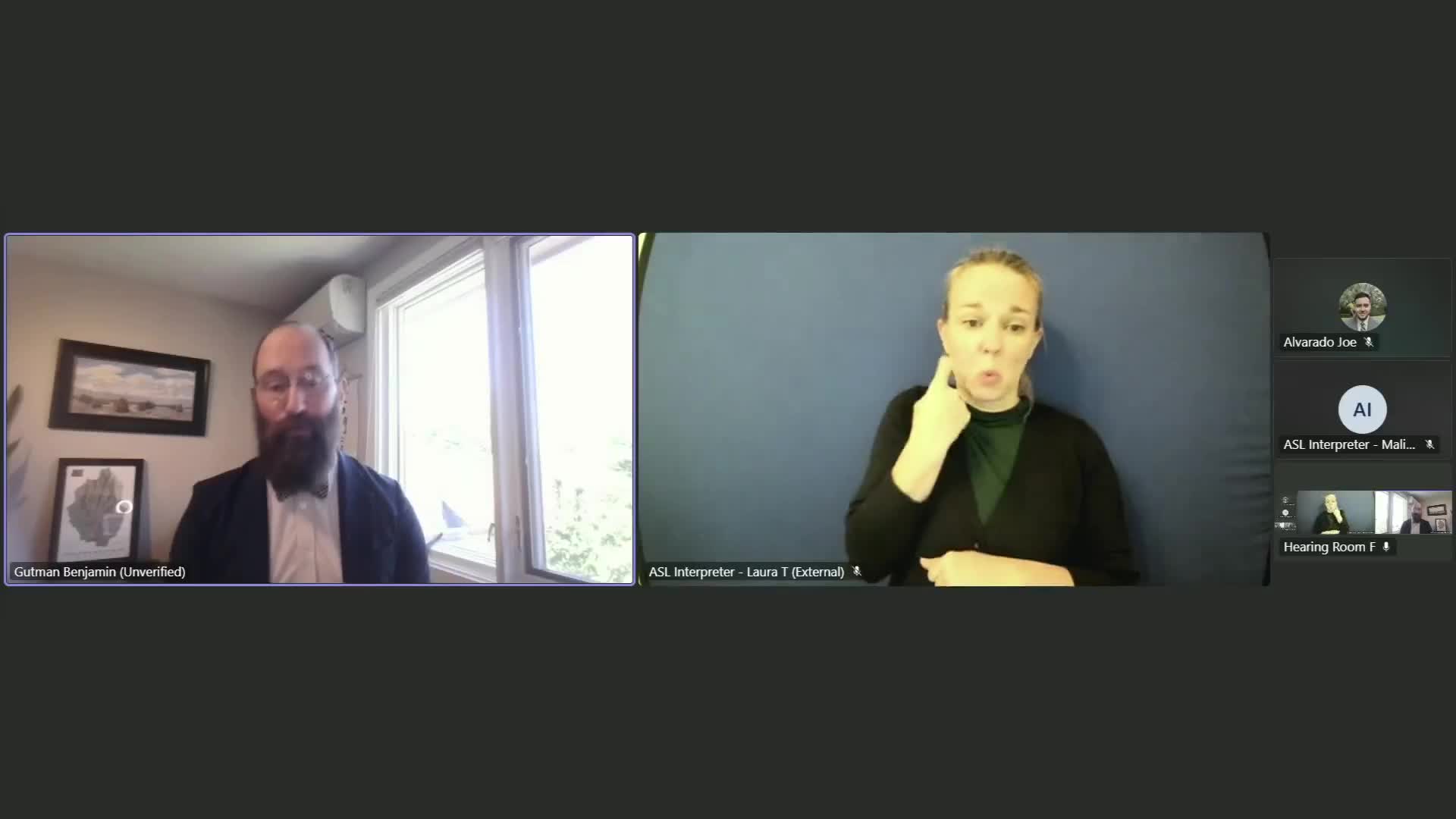
The committee heard from Benjamin Gutman, solicitor general at the Oregon Department of Justice, who summarized the litigation history and current posture. Gutman said Parker first filed a Multnomah County Circuit Court action in 1988, later moved claims to federal court where most were dismissed, and settled one claim against a nonstate defendant. After passage of SCR 22, Parker asked a circuit court to reopen the 1988 case; the trial court declined because of a one-year limit on reopening, and the Oregon Court of Appeals affirmed that there was no legal basis to reopen the closed case. Gutman said the Oregon Supreme Court denied review and the U.S. Supreme Court recently denied review as well, though the denial could be the subject of reconsideration. "The one pending piece is that Mr. Parker can still ask the U.S. Supreme Court to reconsider its denial of review," Gutman said, and he added his view that he was not aware of any pending litigation with a reasonable likelihood of success.
Parker, who addressed the committee after Gutman, said SCR 22 formally apologized and included legislative findings that state officials acted ultra vires and caused decades of harm to him and his family. He told the committee he was admitted to the Oregon State Bar on Dec. 23, 2021, and that parts of the appellate judgment and the Oregon Government Ethics Commission’s earlier determination relevant to his admission had been vacated. Parker said those events, combined with SCR 22, show the factual basis for damage claims but that the courts have declined to provide a remedy because of procedural limits. "Their conduct caused the damage, but they get to dictate whether or not the damage that they caused can be properly compensated," Parker said. He urged the legislature to consider a remedy and asked that consideration of monetary damages be handled by an independent party rather than the Department of Justice, which he said has a conflict of interest because its conduct was described in SCR 22.
Committee members asked clarifying questions. Senator Tim Broadman asked whether the issue the U.S. Supreme Court declined to review concerned merits or procedure; Gutman replied it was a procedural question about whether the 1988 voluntary dismissal could be reopened years later, not the merits. Senator Alan Thatcher asked Parker to explain an earlier remark that his record of service in the Legislature had effectively been erased; Parker said administrative records for his 1987 service as committee administrator had been removed when he was stripped from that post.
Parker said he and his lawyers have filed motions for reconsideration in state and federal courts and said he was not averse to filing a claim directly with the Department of Administrative Services’ Risk Management if required. He asked the committee to consider legislative options to address what he described as continuing damage, including amending procedural rules to allow reopening a matter within one year of discovery of newly available evidence. Parker also suggested the governor could direct Risk Management to pay a claim, saying that an insurance carrier can settle claims without a court order.
Gutman told the committee that risk-management decisions typically turn on an assessment of the likelihood of litigation success and potential exposure. He reiterated his view that he was not aware of litigation with a reasonable likelihood of success, and said that while the legislature could act outside the litigation process, DOJ’s assessment factors into administrative settlement decisions.
No formal votes or committee actions occurred at the informational hearing. Chair Pruzanski said she and Senator Frederick — who had requested the informational hearing — would confer about next steps and other avenues for addressing Parker’s concerns.
The hearing shows continued tension between legislative findings in SCR 22 and the limits of judicial remedies, and it leaves open whether the Legislature or an independent administrative process will be used to consider compensation for Parker’s alleged damages.