Get Full Government Meeting Transcripts, Videos, & Alerts Forever!
Get email alerts on the Transparency Ngos topic
No spam. Unsubscribe anytime.
Bill would add NGOs receiving state funds to Louisiana checkbook, tighten political-activity limits
Summary
Senate Bill 245 would expand transparency requirements for nongovernmental organizations that receive state money, adding them to the Louisiana Checkbook website and specifying reporting and audit expectations; the measure was temporarily returned to the calendar after floor questions about certain provisions.
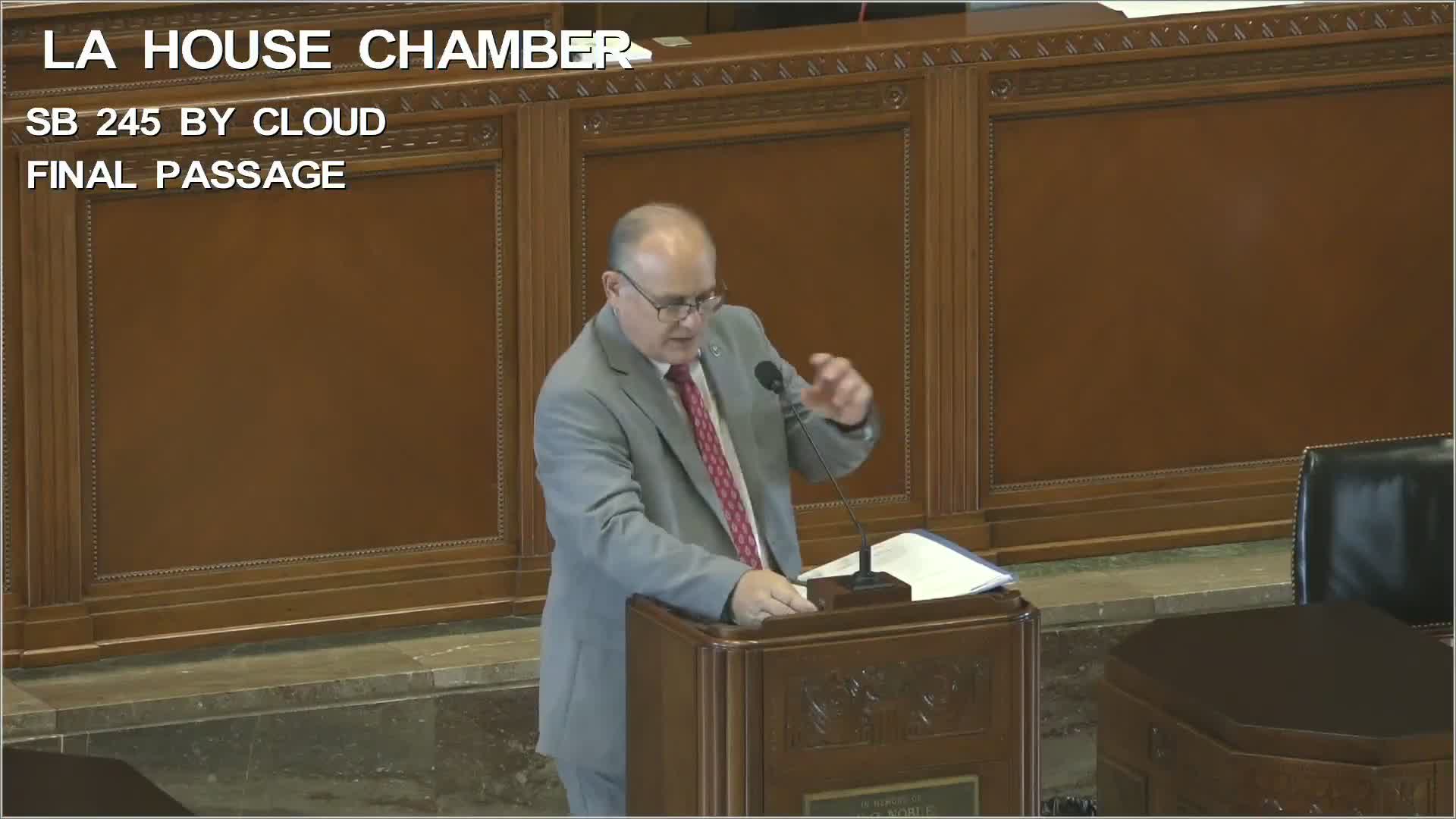
Senate Bill 245, taken up June 8 on the House floor, would increase transparency and reporting requirements for nongovernmental organizations (NGOs) that receive state funds and clarify limitations on political activity funded by state money.
Representative Brett Bakala presented the bill, saying it would add NGOs that receive state funds to the Louisiana Checkbook transparency website and make it easier to see how state dollars are used across contracts, grants and reimbursements. He told colleagues that some agencies already collect this information, and that Treasury and some agencies are involved when funds are remitted on a reimbursement basis.
During floor questions, Representative Willard asked whether NGOs would be required to submit itemized reports of administrative expenses. Bakala said the requirement is largely consistent with current practice for entities that contract with state agencies and that audit levels vary based on funding levels — ranging from certified-auditor reviews up to the legislative auditor depending on the amount. Willard also asked about a provision restricting political activity; Bakala said the bill specifies that state funds cannot be used for campaigning or similar political activity. When a member asked how combined 501(c)(3) and 501(c)(4) entities would be treated, Bakala said the bill prohibits using state funds for political activity but did not provide further detail on segregated revenue streams.
Representative Wheeler asked that the bill be temporarily returned to the calendar for further review; the transcript records that the bill was returned to the calendar temporarily. Members also discussed disclosure requirements about relationships between NGOs and elected or appointed officials; the presenter said the provision remains in the bill but the transcript shows some uncertainty in floor back-and-forth about whether language had been removed and reinserted.
The discussion focused on transparency, audit thresholds, and limitations on using state money for political activity. The transcript shows further floor consideration was deferred pending additional review.