Get Full Government Meeting Transcripts, Videos, & Alerts Forever!
Get email alerts on the State Budget topic
No spam. Unsubscribe anytime.
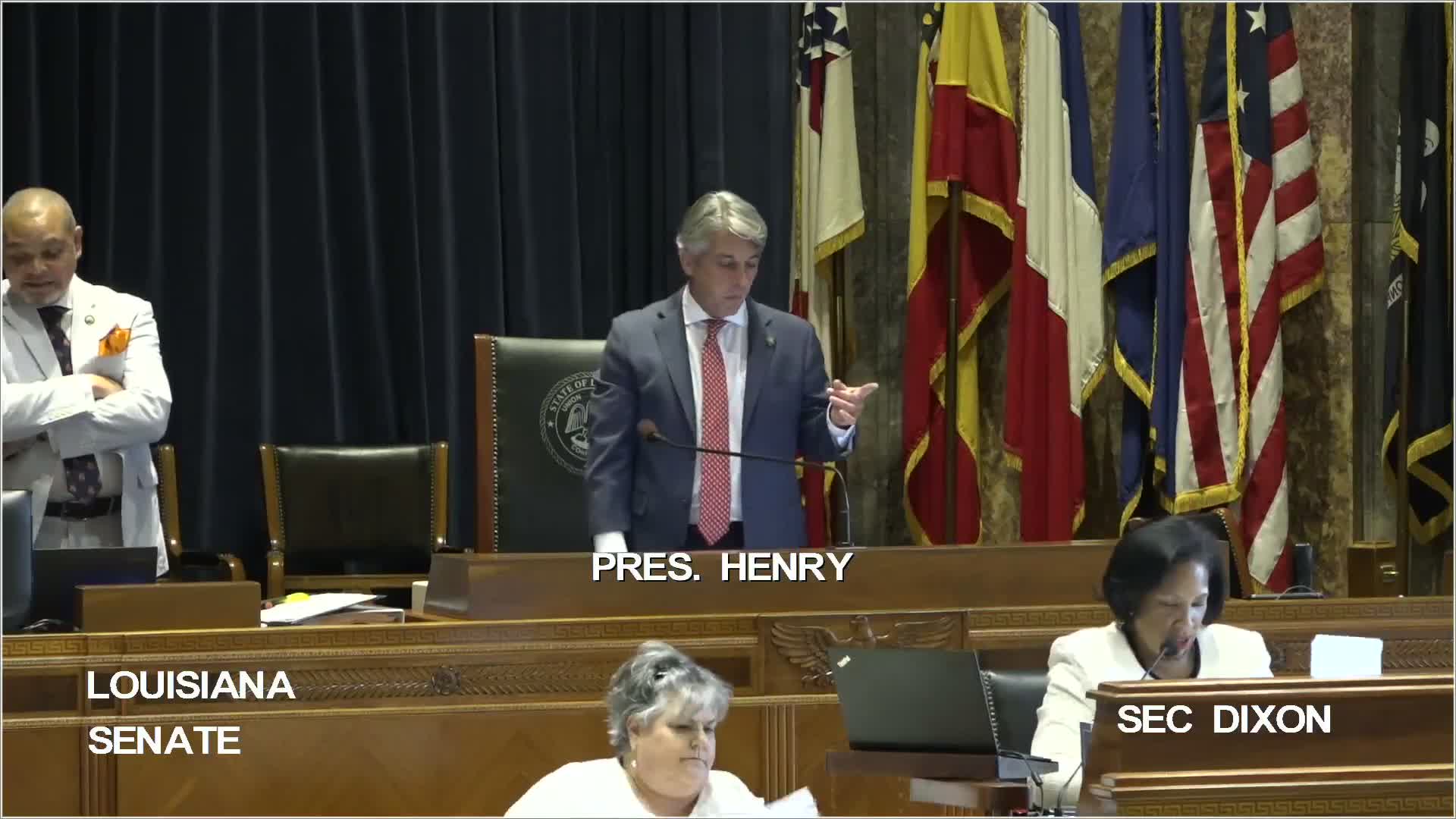
Senate approves $46.7 billion FY26 budget after finance amendments
Summary
The Louisiana Senate adopted the governor’s executive budget for fiscal year 2026, including Senate finance committee amendments that draw $1.2 billion from the Revenue Stabilization Fund and other technical changes; vote was 39-0.
The Louisiana State Senate on Monday gave final approval to the state’s fiscal year 2026 budget, approving House Bill 1, the executive appropriations bill, after adopting a set of floor amendments developed by the Senate Finance Committee.
Senator Jamie Womack, chairing the Senate floor presentation of the bill, said the “total state budget for fiscal year 2526 is 46,700,000,000.0.” He told colleagues the total funds cover executive, legislative and judicial branch appropriations along with capital cash and non‑appropriated expenditures. The Senate adopted a package of finance committee amendments and then passed the bill 39-0.
The amendments included allocations drawn from the Revenue Stabilization Fund; Womack told the chamber the committee’s amendments “reflect the monies allocated from the revenue stabilization fund in the amount of 1,200,000,000.0.” The committee also described Medicaid financing adjustments and technical corrections included in the amendment package.
Senate debate on the bill was procedural and limited on the floor; Womack thanked committee members and House staff for cooperation in crafting the spending plan. After adoption of the amendments, Womack moved final passage; the clerk recorded 39 yays and 0 nays.
The approved HB 1 sets the topline for the executive branch appropriations and establishes the allocations that will be reflected across separate appropriations instruments for the legislature, judiciary and capital programs. Floor speakers emphasized the role of the Senate Finance Committee in balancing priorities and making technical fixes prior to final passage.
The Senate’s approval sends HB 1 back to the House for any remaining procedural steps required between chambers before enrollment and transmission to the governor. The bill as passed includes the committee’s changes funded in part by the Revenue Stabilization Fund and contains the financing framework for Medicaid and other major program areas.