Get Full Government Meeting Transcripts, Videos, & Alerts Forever!
Get email alerts on the Fire Department Governance topic
No spam. Unsubscribe anytime.
Butte-Silver Bow fire chief warns legal gaps, staffing and funding strains threaten safety; commission seeks more review
Summary
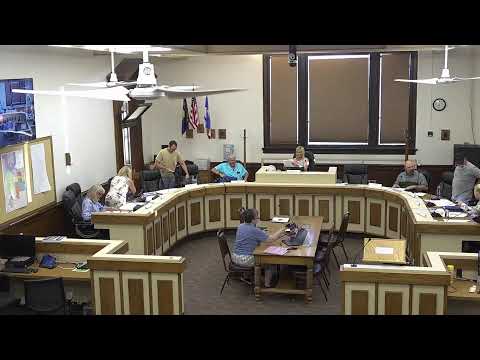
Director of Fire Services Zach Osborne told the Butte‑Silver Bow Study Commission on June 9 that long‑running contradictions between the county charter, state law and local ordinances have produced safety, liability and staffing risks for both paid and volunteer firefighters.
Director of Fire Services Zach Osborne told the Butte-Silver Bow Study Commission on June 9 that long‑running contradictions between the county charter, state law and local ordinances have produced safety, liability and staffing risks for both paid and volunteer firefighters.
Osborne said House Bill 547 — a bill he described as a "safety bill" intended to resolve statutory contradictions introduced by a 1979 law (House Bill 392) — was vetoed by the governor this spring. "We are being asked to absorb 100% of the liability with 0% of control," Osborne said, arguing that without statutory clarification volunteers cannot simultaneously claim legal independence while using city‑county equipment, facilities and insurance.
Osborne framed the problem historically: after Butte and Silver Bow consolidated in the 1970s the charter (Article 7, sec. 7.03) intended the consolidated fire department to include both paid and volunteer divisions. He said subsequent state statutes and attorney‑general opinions introduced ambiguity about whether volunteers within consolidated governments retain independent legal and budgetary status. He told commissioners HB547 would have restored primary reliance on the charter and local ordinances and thereby clarified oversight and safety responsibilities.
Why it matters: Osborne said the lack of clear authority has practical consequences for training, incident command and liability. He told the commission the department managed roughly 5,200 calls last year, including about 191 structure fires and 193 hazardous‑material incidents, and that paid personnel logged roughly 12,762 training hours in 2024. He said the fire fund operates on an approximately $6,700,000 annual budget and supports 36 career firefighters, two dispatchers, three administrative staff, 11 stations (14 structures) and 43 pieces of apparatus; the department also lists about 134 active volunteers.
Osborne said staffing and funding are acute problems: under the current roster the department runs on only six firefighters on duty 54% of the time, and the department meets NFPA staffing standards (four personnel per engine) only rarely. "We run with 2 to perform safe and effective operations," he said, then warned that operating under those conditions "is knowingly putting our crews at risk." He cited a recent outside study that recommended adding eight career firefighters immediately; he said that the fire fund had "hit our cap," leaving no local budget authority to hire additional staff.
Commissioners and staff pressed on how the county’s coverage maps, tax structure and legal duties interact. Osborne described two separate taxes in the county fire funding structure: an emergency services tax assessed broadly and a fire tax that applies to some areas and not others. He said Montana Connections pays the emergency service tax and contributed to local equipment purchases via a TIFID arrangement in prior years, but does not pay the local fire tax.
Legal and regulatory points raised during the discussion included attorney‑general opinions from 1974 and 1987, provisions of the Butte‑Silver Bow charter (Article 7, sec. 7.03), the Montana Code Annotated sections governing volunteer/rural fire districts, and workers' compensation law. Osborne said volunteers covered by city‑county insurance are included in the county’s workers’ compensation framework and cited MCA sections that treat public volunteers as employees for benefits and safety jurisdiction. He also cited OSHA/Montana Occupational Safety and Health rules as reasons the county must exercise safety oversight for anyone working on its behalf.
Osborne answered commissioners’ operational questions about how volunteers are integrated into response plans, how incident command is handled and how after‑action reviews are conducted. He said incident reports are filed with the state and reviewed by senior staff, that volunteer personnel are invited to after‑action reviews but do not always attend, and that the department has created response areas based on apparatus capability rather than strictly the historic volunteer district boundaries.
Next steps and directions recorded in the meeting included several requests and commitments: commissioners asked the county attorney to provide a written opinion about the charter, ordinances and state statutes; Osborne agreed to provide the comprehensive fire study (the ESCI study) to the commission for review; the commission scheduled volunteer fire department representatives to appear at a future meeting; and commissioners discussed recommending a targeted ordinance and charter review to clarify director authority and incident command.
The commission also handled two administrative items that passed during the meeting: approval of a $1,100 laptop purchase for the study commission (vote recorded as approved with one opposed) and approval of a public‑outreach contract with Shannon Adams, amended to make Adams the study commission's public outreach coordinator and to broaden the listed "email campaign" language; the commission asked that the final contract language be reviewed by the county attorney before execution.
Osborne closed by urging a collaborative ordinance review that includes career firefighters, volunteers, the county attorney and safety staff. "The risk did not [end with the bill]," he said. "This is a moment for clarity, for accountability, for action."