Get Full Government Meeting Transcripts, Videos, & Alerts Forever!
Get email alerts on the Criminal Justice Post Conviction topic
No spam. Unsubscribe anytime.
Senate approves overhaul of post-conviction schedule and procedures amid debate on pleas and legal access
Summary
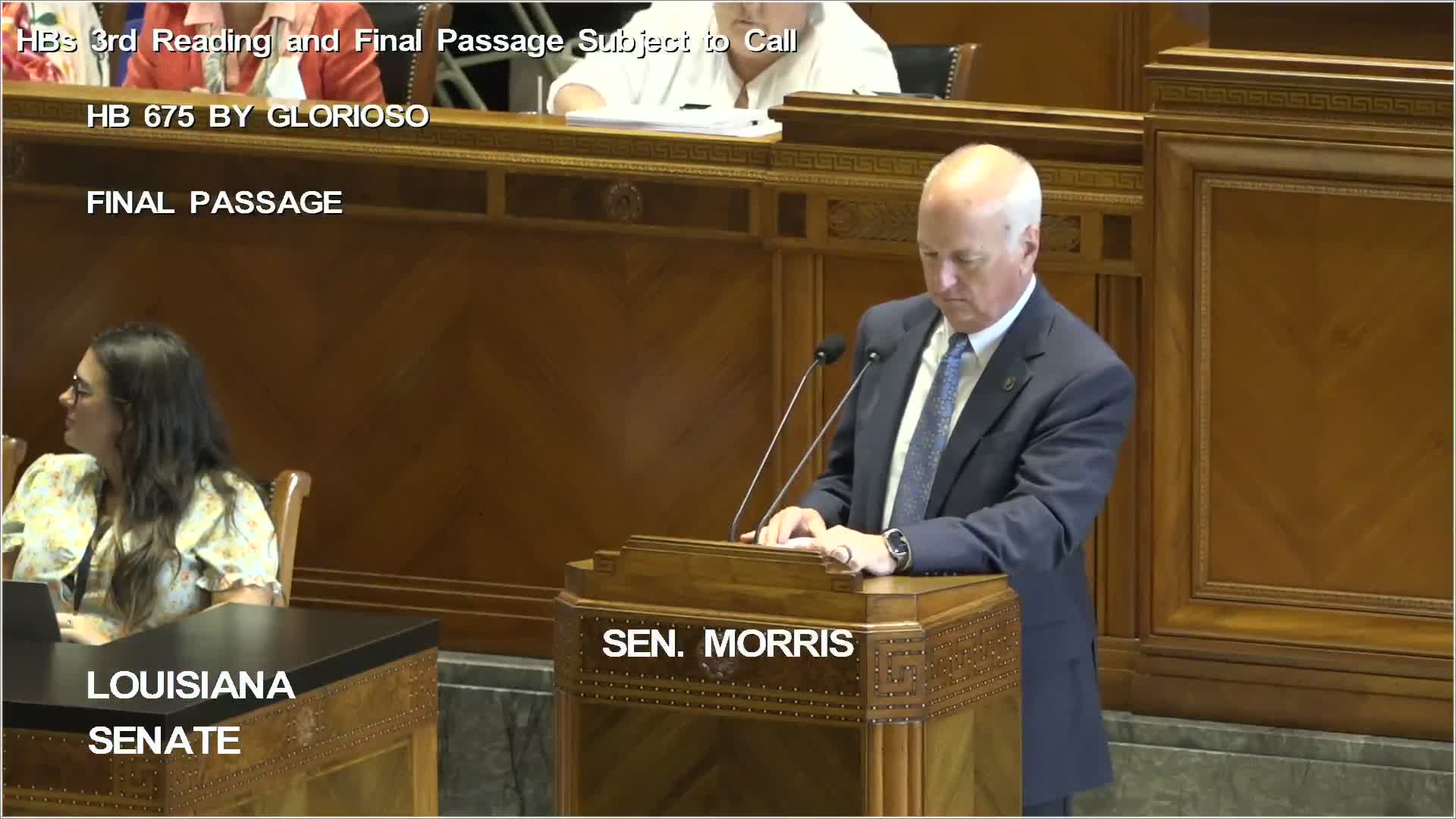
The Louisiana Senate approved House Bill 675, establishing deadlines and procedural steps for post-conviction relief petitions and adopting transitional provisions for previously filed cases after extended floor debate and amendments.
The Louisiana Senate approved House Bill 675 on final passage after extended debate and floor amendments, adopting a statutory framework to set deadlines and procedural steps for post-conviction relief petitions.
Senator Jack Moore, speaking on the measure as it appeared on the floor, described the bill as an effort to create scheduling rules and reduce lengthy delays in post-conviction litigation. "This bill deals with a very arcane area of the law, which is post-conviction relief after a person has been convicted of a crime," he said, noting examples of petitions lingering for a decade or more in some parishes.
Major changes in the adopted language include a general two-year filing window for post-conviction petitions following a final conviction (subject to transitional provisions), a 30-day initial screening period for judges, a 60-day period for district attorneys to file procedural objections, and a requirement that hearings on the merits be completed within 180 days once a matter proceeds. Senator Morris offered and secured a set of amendments—drafted with input from defense law clinics and practitioners—that provided additional time for certain previously filed "shell petitions" to be fully briefed and added structured extension rules. The sponsor described the amendments as a compromise to address concerns raised by defense counsel without leaving cases open indefinitely.
The bill drew pointed questions about scope. Senator Bower asked whether the amendment language that bars claimants who pleaded guilty from asserting factual-innocence claims on applications filed on or after August 1, 2025, remained in place; the sponsor confirmed it did not change that prohibition. Senator Barrow raised concerns about possible limits on review where ineffective assistance of counsel is alleged and noted workload and resource issues for public defenders; the bill includes transitional provisions and a funding mechanism to support the process. A floor amendment replaced a reference to the Louisiana Public Defender Fund with the state's "over collections" fund so that capital-case needs could be met under the bill's funding language.
The Senate adopted the sponsor's amendments and then passed the bill on final passage; the recorded vote on the floor was 28 yeas and 11 nays. Supporters said the bill will reduce long-running litigation in the state courts and provide predictable timelines; critics warned the measure could curtail review in cases involving guilty pleas and raised concerns about whether the public‑defender system has capacity to meet the scheduling demands.
Why it matters: The bill restructures post-conviction procedure across Louisiana courts. By imposing deadlines and screening steps, the law aims to reduce open-ended cases but also tightens limits on when and how certain claims—particularly factual-innocence claims after guilty pleas—may be raised.
What happens next: With final passage, the statute’s timeline and screening rules will become law as enacted and implementing guidance and resource allocations will follow through the Judiciary, the Public Defender Office and the legislature’s appropriations process.
Votes and action: The Senate adopted amendments and passed House Bill 675 on final passage; the mover on the floor and sponsors included Senator Jack Moore and Senator Morris (amendments). The final tally recorded in the transcript was 28 yeas and 11 nays.