Get Full Government Meeting Transcripts, Videos, & Alerts Forever!
Get email alerts on the Support Groups topic
No spam. Unsubscribe anytime.
Board asks staff to study outsourcing nurse support‑group management after Birchwood presentation
Summary
Birchwood Solutions presented an online facilitator‑led support group management model and the board directed staff to further investigate whether outsourcing support‑group management is feasible and sustainable for BRN’s intervention program.
After a full presentation from Birchwood Solutions on May 29, the Board of Registered Nursing directed staff to study the availability and sustainability of outsourcing nurse support‑group management and return with a report to the Enforcement Investigations and Intervention Committee.
What the board heard: Birchwood Solutions’ founder, Elizabeth Temple, described a turnkey model the company has operated since 2011 for alternative‑to‑discipline and licensing programs. Birchwood’s platform runs professionally facilitated, confidential weekly support groups (online and, when used, local in‑person groups), tracks attendance and compliance, vets and trains facilitators, audits reports, and maintains a secure portal for case managers.
Why it matters: Participants and case managers rely on nurse support groups for recovery support and monitoring in intervention programs. Birchwood argued the model improves accessibility and compliance by moving groups online, consolidating facilitator training and oversight, and providing standardized reporting to case managers.
Key points from the presentation and discussion: - Cost and financial assistance: Birchwood said participant fees are generally participant‑paid (no cost to the board), with typical options of $125/month, $360/quarter, or $1,400 annually. Birchwood maintains an internal scholarship/financial assistance program and said no participant has been turned away for inability to pay. - Attendance and modality: Birchwood reported that groups they manage rapidly shifted from local to online formats and that online groups showed improved attendance compliance and participant‑reported comfort. Template survey results shown by Birchwood indicated participants reported online groups as at least as effective and more convenient than local groups during their implementations. - Facilitator management: Birchwood vets, trains and pays facilitators as contractors (base pay cited as $50 per group, with uplifts for higher degrees or tenure). Facilitators receive monthly or quarterly supervision and annual performance evaluations; groups are capped at 10 assigned participants plus two flex seats for make‑ups. - Program oversight and reporting: Birchwood said it provides weekly noncompliance and attendance reports to case managers, cross‑checking facilitator attendance reports against online logs or physical sign‑in sheets for accuracy.
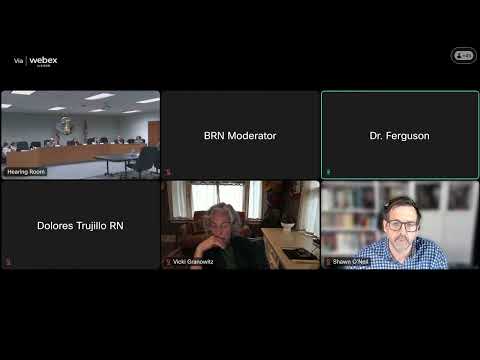
Board direction and vote: Board member Cormack asked about reappointment/application procedures; staff said they will formalize a reappointment review process. Committee Chair Wynne moved to direct staff to further investigate availability and sustainability of support‑group management and bring a proposal back to the next Enforcement Investigations and Intervention Committee meeting. The motion passed unanimously.
Public concerns: Some participants who spoke in public comment praised the concept but raised concerns about participant costs, potential loss of an open forum to raise program complaints, the structure and perceived professionalism of groups, and the effect of removing holiday cancellations. Birchwood and staff said boards may choose whether to subsidize participant fees and that Birchwood’s policies emphasize safety, confidentiality and facilitator training.
Next steps: The board directed staff to analyze contracting or procurement options, the feasibility of adopting an outsourced model for BRN’s intervention population, and the possibility of partial subsidies or a financial assistance policy. Staff will return to committee with a recommended proposal.