Get Full Government Meeting Transcripts, Videos, & Alerts Forever!
Get email alerts on the Land Use Moratorium topic
No spam. Unsubscribe anytime.
Deltona commission directs staff to draft temporary moratorium on most new residential permits
Summary
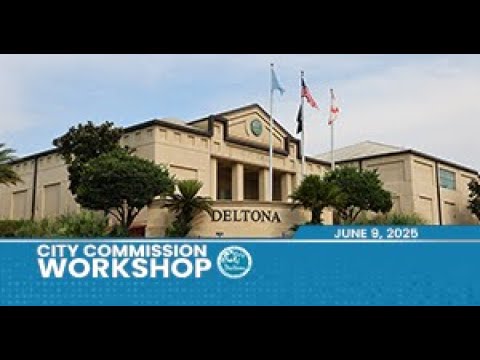
At a June 9 workshop the Deltona City Commission voted to direct the city manager and city attorney to draft an ordinance and schedule hearings for a temporary moratorium on many new residential development permits while the city completes impact-fee and infrastructure studies.
The Deltona City Commission on June 9 directed the city manager and city attorney to draft an ordinance and hold public hearings on a temporary moratorium on specified residential development permits while the city completes impact-fee work and examines infrastructure impacts.
Commissioner Howington moved the directive, asking staff and the city attorney to "draft an ordinance and hold a public hearing regarding the authorization of a temporary moratorium on the issuance of development orders and development permits" for townhomes, cluster homes and multifamily units as well as residential development on lots under one acre. Commissioner Caldwell seconded the motion; the roll call recorded unanimous support (see vote record below).
City Attorney advised the commission that a workshop discussion could be added to the agenda and that the commission could direct staff to prepare draft ordinances and resolutions for later, noticed votes. The attorney also flagged a legal risk in pending state legislation (SB 180), noting that the bill authorizes civil suits and, if a plaintiff prevails, awards reasonable attorney fees and costs — a factor the commission acknowledged as it discussed timing and strategy.
Commissioners said the moratorium is intended as a temporary pause to allow the city to finish an impact-fee update and to evaluate demands on transportation, police, fire/EMS, drainage and other public facilities before new residential approvals proceed. The motion as drafted directs staff to craft an ordinance with a duration equal to the shorter of nine months or the time required for the commission to adopt impact-fee regulations. The draft should also include exemptions, waivers and an appeal procedure as required by law, and should exclude commercial, industrial and business permits, per the commission's stated intent.
The commission instructed staff to publish public-notice advertisements and to schedule two special meetings for consideration; staff identified June 23 and June 30 as the target dates and recommended Planning and Zoning review on June 23 in advance of the commission hearings. The city attorney warned the commission that, if SB 180 becomes law and a suit is filed, the city has 14 days after written notice to repeal the moratorium to avoid an award of attorneys' fees under a specific subsection of the bill.
Commissioners who spoke during the discussion emphasized concerns about current infrastructure capacity and about fast-moving permit applications. Supporters cited the need to align new development with updated impact fees so that new growth pays an appropriate share of costs for fire services, roads, drainage, parks and utilities. Opponents and questioners asked how the draft would treat single infill lots and emphasized that already-filed, in-process projects and the 23 projects identified by staff would be treated as exempt, per staff advice.
The commission's direction is procedural: staff must return a draft ordinance and public-notice language for noticed hearings. Any final moratorium would require formal adoption by ordinance, with two readings and the notices required by law before it becomes effective.
Next steps: city staff and the city attorney will draft the moratorium ordinance, run the required public notices and present the draft at Planning & Zoning and at two special commission meetings (staff announced June 23 and June 30 as target dates). The legal office will continue monitoring SB 180 and will include analysis of litigation risk and an exemption/waiver pathway in the draft.
Ending: The commission's directive stops short of adopting policy tonight; it sets a timetable for staff work and notices so the full commission can consider adoption at properly noticed hearings. The governor had not signed or vetoed SB 180 as of the workshop, so the statute's effect remained uncertain at the time of the discussion.