Get Full Government Meeting Transcripts, Videos, & Alerts Forever!
Get email alerts on the Academic Performance topic
No spam. Unsubscribe anytime.
Garfield Heights reports mixed state test results, plans literacy-focused interventions
Summary
At a June 9 special work session, district staff presented state testing results showing gains in math and social studies but declines in English language arts and persistent gaps for students with disabilities; the district outlined curriculum, intervention and monitoring steps aimed at improving literacy and grade-level instruction next year.
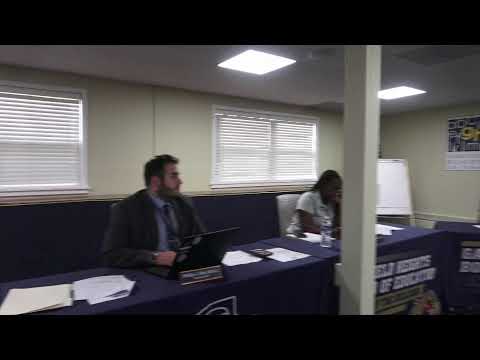
Garfield Heights City School District officials on Monday presented year-end state testing and diagnostic data showing uneven performance across subjects and student groups and described a multi-pronged plan to boost literacy and core instruction.
The presentation to the Board of Education, led by Dr. Reynolds and instructional staff including “Miss Basia” and Dr. Stitt, reported gains in math and social studies but a decline in English language arts (ELA), and said more than half of students in three of four tested content areas were at the “basic” or “limited” levels — classifications the district identifies as not proficient.
Why it matters: ELA declines and persistent gaps for exceptional learners (students with disabilities) signal potential weaknesses in core instruction and intervention systems that the district says it will address through curriculum fidelity checks, expanded interventions, staffing changes and more frequent data monitoring.
District staff said the state-mandated, newly adopted ELA materials were in their first full year of implementation and acknowledged that transition and implementation fidelity can affect outcomes. “This is the year of full implementation of the new state mandated ELA curriculum,” Dr. Stitt said, listing adopted materials including Heggerty Foundations for K–5, Wit & Wisdom for K–3, EL Education for grades 4–8 and My Perspectives for high school.
Staff identified these specific findings and responses: - Distric t results: Social studies and math showed upward trends; ELA declined this year. Staff said social studies has “consistently increased” while ELA performance dropped relative to last year. Exceptional learners showed inconsistent growth across assessments. - Diagnostics and accountability: The district uses AIMSweb as its approved diagnostic screener for K–8 ELA and math; staff said AIMSweb 2 will be used next year for a social-emotional learning screener to connect behavioral and academic trends. - Core instruction vs. interventions: Dr. Stitt explained “core instruction is their main curriculum, this grade-level content that the students should receive,” noting that weaknesses may stem from either how core instruction is delivered or unaddressed student learning gaps that require interventions. - Targeted curriculum and programs: The district will monitor fidelity of the new K–3 foundations (Heggerty), expand interventions (UFLI for reading intervention; Wilson Just Words in intervention programs), and continue EL Education and My Perspectives at secondary grades. - Scheduling and staffing changes: For grades 6–8 the district plans 90-minute blocks for ELA and math with the last 20–30 minutes devoted to small-group instruction; two additional Title teachers will be added at the middle school and intervention specialists will push into classrooms. The teaching-and-learning team will hold weekly instructional “huddles,” and coaches will be placed in each of the five buildings with content specialties. - Monitoring and assessment cadence: Weekly data conversations in teacher-based teams (TBTs), quarterly all-grade-level data meetings, benchmarks and checkpoints from the state reporting system (CRS), and progress monitoring via AIMSweb and pathways/Indmentum for individualized remediation were described as the backbone of progress tracking.
District staff also discussed known limitations in the presented data: the OST/End-of-Course reports represent all students tested and can change when state “report card” data are finalized; some students are tested while enrolled elsewhere and remain in the tested pool; and diagnostic measures differ substantially between kindergarten (letter names/sounds) and grade 1 (oral reading fluency), which creates an expected performance gap at the K–1 transition.
Funding and resources: Board members asked how state support aligns with the new mandate. Dr. Stitt said the state provided approximately $125,000 last fiscal year toward curriculum purchases while the curriculum adoption totaled “close to $200,000,” meaning the district covered the remainder up front and is reimbursed later for some professional development costs. “We front the cost up out front and then we go back send this to them and they reimburse us,” Dr. Stitt said, adding that the state’s initial stipend and reimbursement model does not always cover ongoing implementation costs.
Board members asked about pace of change, equity and whether the new curriculum is being taught in self-contained classrooms for exceptional learners; staff said materials were provided to special education classrooms and that alignment and fidelity monitoring will be priorities.
The board did not take a formal vote on any instructional policy at the meeting. Staff described next steps as continued implementation and monitoring over the coming school year, weekly instructional huddles, paired walkthroughs with coaches and administrators, and targeted professional development designed to improve ELA outcomes and grade-level access for exceptional learners.