Get Full Government Meeting Transcripts, Videos, & Alerts Forever!
Get email alerts on the Public Safety topic
No spam. Unsubscribe anytime.
Police chief warns level funding will strain staffing as crime and enforcement needs shift
Summary
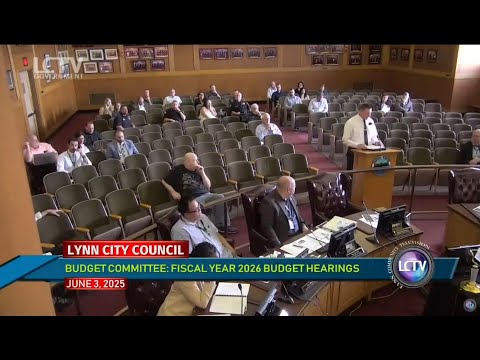
Lynn Police Chief presented the FY26 police budget to the City Council budget committee, citing a 13% drop in major crimes in 2024, ongoing recruitment and retention challenges, uncertainty about behavioral health funding, and planned equipment and program additions that the department says will be difficult to absorb under level funding.
Chief Reddy, Lynn Police Department, outlined the department’s FY26 budget and said level funding will make it difficult to cover rising training, hiring and compliance costs.
“Thanks to their efforts, I am pleased to report that we experienced a 13% reduction in major crimes in 2024,” Chief Reddy said, while also noting the department remains “staffing level of 169 active personnel with 13 additional recruits enrolled in the academy.”
Reddy told the council recruitment and retention are the department’s top budget risks and said the department has used newly available alternative hiring pathways through civil service changes to speed hiring. He described a recently negotiated field training officer program intended to improve retention and training but said the program’s expenses must be absorbed within the existing budget.
The chief described operational expansions the department hopes to support with staff: increased traffic enforcement, a motorcycle unit, a drone unit for crash reconstruction and crime-scene documentation, and additional patrols for the new Harborfront Park and Northern Strand Bike Trail.
Reddy also flagged uncertainty about recurring grant funds that the department counts on — including the 911 Support Incentive Grant, the Municipal Staffing Grant and the Safe Streets Youth Initiative — and warned that state funding for the department’s behavioral health unit may be cut. He said the department will inform the council if anticipated grant shortfalls materialize.
Councilors pressed Reddy on traffic enforcement, a frequent constituent complaint. Reddy said the city does have a traffic unit whose primary responsibility is crash investigation but that an enforcement focus is constrained by staffing; he said citation production increased by about 1,200 citations in the most recent fiscal year and that, if fully staffed, the traffic unit would include three additional members (two focused on enforcement and one on crash investigation).
Reddy urged a data-driven approach to enforcement, noting use of speed-trailer deployments and 24-hour speed surveys to target overtime patrols. He told the committee the number-one budget priority would be additional sworn officers, plus administrative support and investments in technology, including careful evaluation of artificial intelligence tools for report-writing and data analysis.
Discussion: the committee heard that the department expects hiring costs and academy expenses to rise; that new compliance and FOIA workloads have increased administrative overtime; and that the department is pursuing grants to fund training and some programs. No formal vote or directive on funding levels occurred at the hearing.