
Denali Borough work session reviews draft health‑care provider loan program; ordinance postponed for revisions
Get AI-powered insights, summaries, and transcripts
Subscribe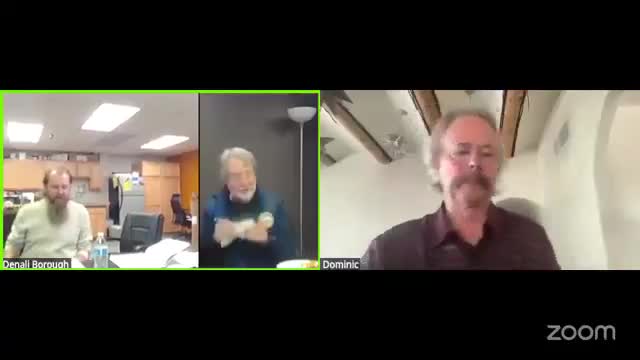
Summary
Denali Borough Assembly members and residents spent a June work session discussing Ordinance 25‑05, a proposal to set up a loan fund to attract health‑care providers to the borough, before voting in the regular meeting to postpone final action to the next assembly meeting.
Denali Borough Assembly members and residents spent a June work session discussing Ordinance 25‑05, a proposal to set up a loan fund to attract health‑care providers to the borough, before voting in the regular meeting to postpone final action to the next assembly meeting.
The ordinance as introduced would create a dedicated fund and offer low‑interest loans — with potential partial forgiveness — to help individual providers or small practices establish operations in Denali Borough. Supporters in the work session described local demand for physical therapy and clinic services, and business owners outlined how existing seasonal clinics have been subsidized to remain open.
Why it matters: Assembly members said the ordinance aims to lower start‑up barriers for clinicians and small provider practices so they can establish a year‑round presence in Healy, Cantwell and surrounding communities. Providers who base operations locally would likely expand access for year‑round residents and reduce costly, two‑hour trips to Fairbanks for nonemergency care.
Discussion and public testimony
An unnamed resident who identified themselves as a local physical therapist described long wait lists and seasonal demand, saying the draft program “is a game changer” and that “I could have stayed year round a lot sooner if something like this was available.” The provider estimated start‑up equipment costs for a single‑provider physical therapy practice could be “close to $100,000” but said someone could get started with “$30,000 to $50,000.”
Bonnie Westland, who identified herself as representing Holland America Princess and as owner of the Buchanan Clinic building in the canyon, said her company subsidizes the Canyon/Buchanan Clinic to keep it open May through September and that “without a subsidy, they wouldn't be able to operate.” She told the assembly the company has invested heavily to maintain clinic space and support seasonal medical services, estimating in public comment that the company’s cumulative investment in that service has been “probably over a million dollars to date.”
Assembly and staff clarifications
Assembly members and staff discussed several program design decisions that staff said could be clarified in the ordinance or in an application form. Key points raised during the work session included: - Loan size and fund capitalization: the draft ordinance referenced individual loan limits of $100,000; staff and assembly members discussed establishing a dedicated fund (staff suggested the fund could be modeled after the borough’s emergency service apparatus fund) and discussed an initial fund balance figure cited in the meeting roughly as $200,000 in the draft budget conversation. - Eligibility and expectations: assembly members said they expect the program to favor providers who commit to year‑round service if they want full loan‑forgiveness benefits; staff and members discussed requiring applicants to state ties to the borough and to include a business plan and operating plan in the application. - Use of funds: the assembly discussed and leaned toward a requirement that loan proceeds be spent on operations or capital within the Denali Borough boundaries. - Forgiveness and repayment: participants discussed a forgiveness mechanism tied to a multi‑year commitment (speakers described an example in which a borrower could request partial forbearance or forgiveness after five years if they met commitments). The ordinance text as introduced did not fix the exact forgiveness calculation in final form. - Satellite operations: the assembly debated whether satellite clinics (providers who rotate in for limited days) should qualify. Several members said satellites could qualify but that forgiveness terms should require a measurable, multi‑year commitment of local service to earn full benefits. - Administrative and credit checks: staff noted the borough could partner with local financial institutions to manage loan servicing (billing/collection) and reduce staff burden; several assembly members asked staff to investigate whether an outside lender or bank could administer underwriting and repayment, while legal staff would advise on confidentiality and public‑records implications of application materials.
Assembly action
At the start of the regular meeting later in the evening, Assembly member David Alexander moved to postpone final consideration of Ordinance 25‑05 until the next meeting so staff could return with a revised draft incorporating points from the work session. The motion to postpone was seconded and carried unanimously.
What remains unresolved
No final loan criteria, forgiveness schedule or appropriation to capitalize the proposed fund were adopted at the meeting. Assembly members directed staff to prepare a revised draft ordinance or a version B that would: add clearer purpose language; identify application requirements (business plan, evidence of licensure, ties to the borough); define whether and how satellite operations qualify; and identify whether the borough will create a standalone fund and, if so, how it will be capitalized and administered.
Ending note
Multiple public speakers urged the borough to keep the program focused on removing startup barriers for individual clinicians while preserving the option of a later, larger effort to support a community clinic if the borough and local partners decide to pursue a bigger capital project. The assembly scheduled the ordinance for reconsideration at the next regular meeting after staff prepares the revised version.