Get Full Government Meeting Transcripts, Videos, & Alerts Forever!
Get email alerts on the Budget Taxes topic
No spam. Unsubscribe anytime.
Kodiak Island Borough adopts FY2026 budget, sets areawide mill rate at 8.91
Summary
After extended debate about MAFTAR and service priorities, the Kodiak Island Borough Assembly adopted the fiscal year 2026 budget and a 8.91 areawide mill rate, shifting limited funds among facilities, parks and nonprofit support.
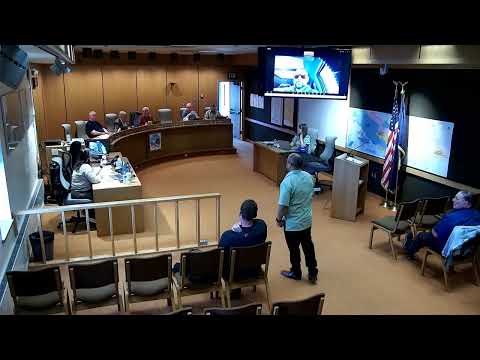
The Kodiak Island Borough Assembly on June 5 adopted the fiscal year 2026 budget and set an areawide mill levy at 8.91 mills, voting 5-0 after amendments that shifted small amounts between parks, facilities and nonprofit funding.
The budget ordinance, presented by Borough Manager Amy Williams, was described as a ‘‘balanced budget’’ that keeps proposed expenditures within anticipated revenues. Williams told the assembly that the FY2026 budget is offered as a balanced budget and “the general fund in our budget stays the same” across mill rate scenarios while the amount placed into the facilities fund changes depending on the levy chosen.
The vote follows weeks of staff briefings and packet reviews. Williams outlined three mill-rate scenarios: 9.25 mills (which would place about $537,925 into the facilities fund), 9.08 mills (about $212,925 to facilities) and 8.89 mills (no facilities funding and $150,000 removed from the parks and recreation budget). She said the borough’s facilities fund balance is “around 9,000,000” but cautioned that projects and reconciliations are ongoing.
Assembly members debated the trade-offs between lowering taxes for residents and maintaining future fiscal capacity. ‘‘Our current spending trajectory is not gonna be sustainable in the coming years in the very near future,’’ Assembly member Beau said during the budget discussion, urging early planning and noting that Maptor (the borough’s Max Allowable Property Tax Revenue rule) might need to be revisited. Assembly member Larry said cutting now could force sharper reductions later and emphasized the risk to school funding.
After a sequence of amendments, the assembly approved a substitution to the budget and later amended the general fund allocations to increase nonprofit grants. One recorded amendment moved $30,000 from the parks allocation into two nonprofit lines (raising each of two nonprofit lines from $85,000 to $100,000) and reduced the parks line accordingly. Assembly member Jared introduced the amendment to reallocate funds and the assembly approved it 5-0.
Finance Director Dora Cross and Manager Williams answered member questions about MAFTAR — a constraint the manager defined as the borough’s maximum allowable property tax revenue rule — and explained that assessed-value growth, school funding requests and other variables affect the borough’s capacity to contribute to the school district in future years.
The assembly also discussed operational details: Williams said the budget includes the school district’s requested increase and confirmed the district’s FY2026 ask is funded in the adopted budget. Members repeatedly emphasized the need to begin long-term fiscal planning and to avoid crisis-driven cuts.
Looking ahead, Williams said staff will continue reconciling fund balances and provide more detailed figures (for example, final facility fund reconciliations are pending and an accountant is working on them). The assembly asked staff to provide the specific mill-rate spreadsheets used during deliberations.
The budget ordinance (FY2026-01) was taken from the table, amended by substitution and passed in the final roll-call vote 5-0.