
Assembly to Consider $2.4M Opioid Settlement Appropriation for Narcan, recovery residences and micro‑units
Get AI-powered insights, summaries, and transcripts
Subscribe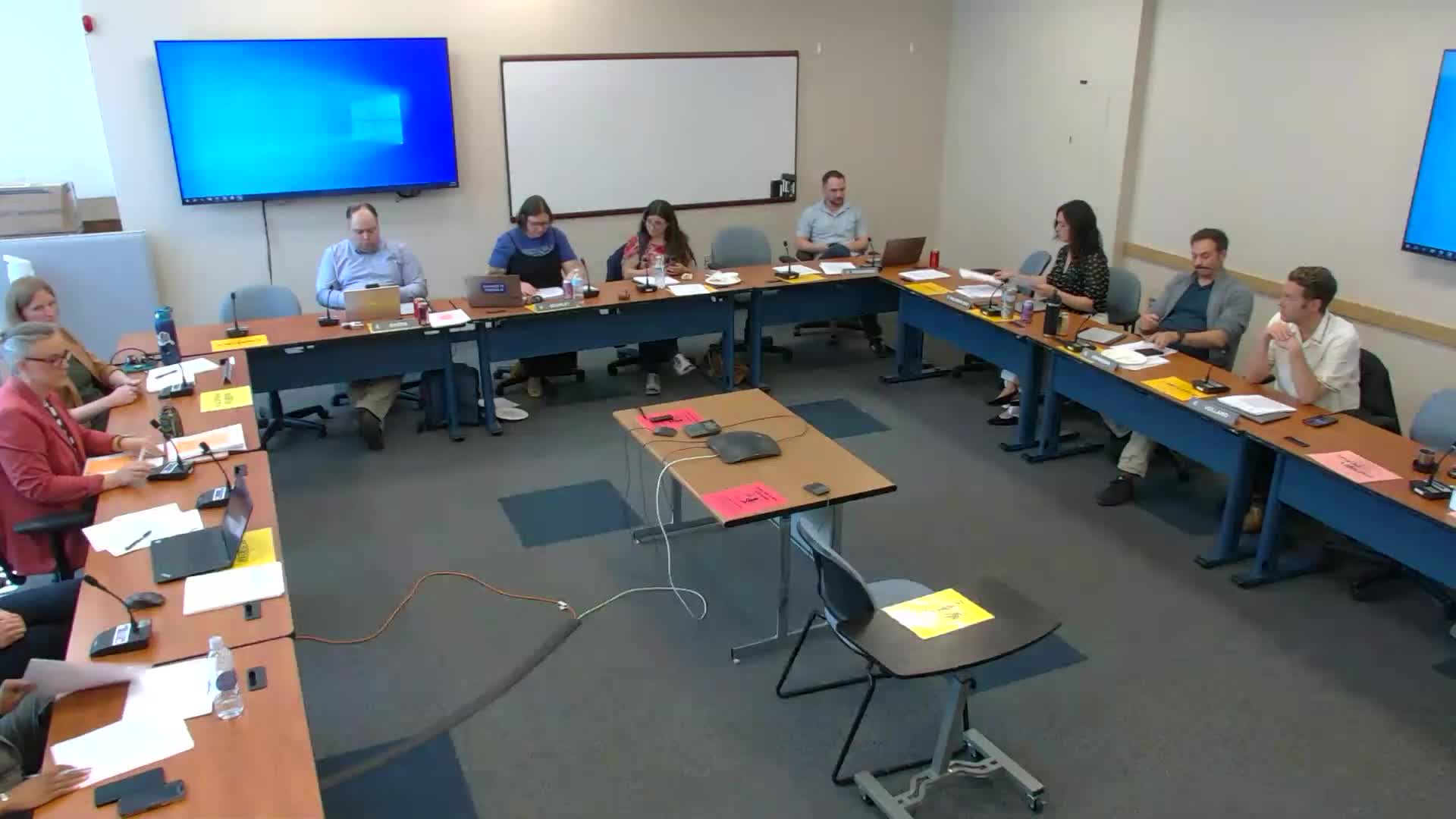
Summary
R2025-189 would appropriate $2,400,000 in opioid settlement proceeds for a community health worker, naloxone distribution (vending machines), startup funding for a treatment operator and capital for at least 24 micro units via the Anchorage Community Development Authority; funds must align with the national settlement's allowable uses.
The administration will ask the Assembly to approve R2025-189 to appropriate $2,400,000 in opioid settlement proceeds for programs to address opioid misuse, Anchorage Health Department staff said at the June 6 work session.
Staff described the municipality’s share of the national opioid settlement and its allowable uses. The Municipality of Anchorage is slated to receive $4,186,000 over 18 years under the settlement, health staff said, and the state’s advisory council projected roughly $58,000,000 statewide over the same period. The municipality’s funds must be spent in accord with the settlement’s Exhibit E, which lists approved, evidence‑based remediation strategies such as expanding access to treatment, supporting recovery programs and harm‑reduction measures.
Rash described four proposed categories under the appropriation: a community health worker position to connect people to services and expand clinic coordination; continued procurement and stocking of naloxone (including placing and restocking vending machines in higher‑overdose areas); up to $500,000 in startup funding to support an operator for a treatment or recovery residence (referenced as the Alaska Center for Treatment project and prior RFP work); and approximately $1,200,000 for capital site development to create at least 24 micro units, with the Anchorage Community Development Authority conducting a competitive RFP to assemble a build team and prepare sites.
Thea Agnew Bemben and other staff said the recovery residences are intended to be operated by a community behavioral health provider so the provider can bill Medicaid for services and generate sustaining revenue beyond the startup funds; the units would also allow billing for services delivered at municipal locations such as the Golden Lion, which staff said would retain its housing function while treatment space is added.
Staff noted prior RFP work from 2021 that discussed an Alaska Center for Treatment and said the requested funds would be used both for startup and for issuing a new RFP to procure an operator. The health department also described vending machines for naloxone that can be wall‑mounted, freestanding or pole‑mounted and said they will be placed using overdose mapping and partner locations; anyone could take kits, including multiples, for distribution in the community.
Assembly members asked clarifying questions about how the micro units and Golden Lion would relate, whether housing counts would change (staff: Golden Lion housing counts would remain the same), and where naloxone vending machines would be sited and how usage would be tracked. No Assembly vote occurred during the work session; R2025-189 is on the June 10 packet for consideration.