Get Full Government Meeting Transcripts, Videos, & Alerts Forever!
Get email alerts on the Wastewater Regionalization topic
No spam. Unsubscribe anytime.
Lincoln Council orders rate study, weighs alternatives after state funding shift for sewer project
Summary
City leaders moved to pursue a rate study and form a steering group after federal funding for a planned wastewater project was rescinded and a state loan (House Bill 1577) became available; council members raised concerns about a proposed regional agreement with Bismarck.
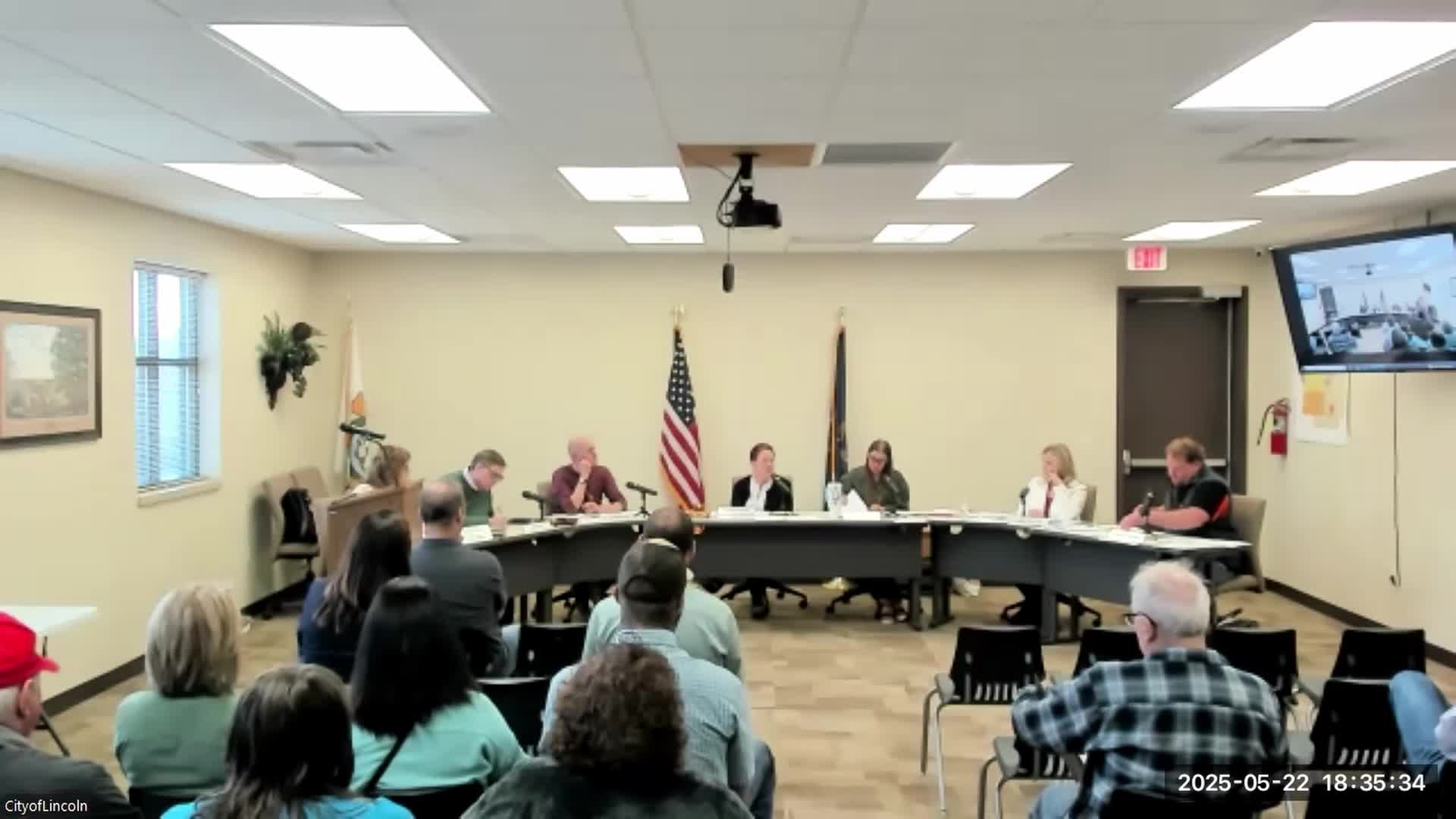
Lincoln city leaders on May 22 directed staff to commission a wastewater rate study and create a small steering committee to evaluate alternatives for the city’s wastewater treatment plans after federal funding for the project failed to materialize.
Mayor (speaking as mayor) told the council that Lincoln had completed required filings for a federal grant but the funds were not released and the grant was rescinded. She said state legislation, House Bill 1577, would make $7,800,000 available as a loan through the Bank of North Dakota that could be repaid if federal funding later arrived.
The decision to commission a rate study followed a presentation from Matt, an SEH consultant, who summarized a technical memorandum re-evaluating four facility-level alternatives. Matt said the memorandum recommends additional flow monitoring, updated population projections and a rate study to estimate user fees for each alternative.
“Some of the recommendations were to do some phone monitoring and sampling,” Matt said, describing steps SEH has taken to update flow and effluent data.
Council discussion emphasized timing and risk. The mayor noted the money must be spent by the end of the 2027 biennium and said starting construction before federal funds were secured could disqualify the city from any later federal reimbursement. Several council members expressed concern about a proposed regionalization contract with Bismarck that was described as one-sided: it would let Bismarck set rates with a 10% markup and annual increases, give Lincoln no ownership of capital funded by Lincoln, place long-term maintenance and indemnity obligations on Lincoln, and include a 20-year automatic renewal clause.
“The contract looked unilateral,” the mayor said, summarizing staff’s review of the draft agreement from Bismarck. She said sections identified by staff raise questions about rate-setting, ownership and Lincoln’s ability to add nonresidential customers without Bismarck approval.
Councilman Shoemaker and others urged the city to fully evaluate local treatment alternatives before committing to regionalization. The council voted to start a rate study; the motion was made by Councilwoman Davis and seconded by Councilwoman Artavia. Roll call recorded affirmative votes from Councilwoman Ortega, Councilwoman Davis and Councilman Biernstead; the motion passed.
Councilmembers also agreed to form a small steering group to work with SEH and city staff on technical review and scheduling. The mayor and SEH said some state reviewers (DEQ) indicated they would prioritize reviews if changes to the facility plan were needed, but that formally amending a facility plan and soliciting agency views would take additional time (a statement-of-solicitation-of-views process requires at least 30 days).
City staff and SEH were directed to: compile existing monitoring and the recent flow-monitoring data, share any recent rate-study materials with SEH for use as a starting point, and return with a draft scope and cost estimate for a rate study and a proposed steering-group membership and meeting schedule.
Background and key clarifications: House Bill 1577 (as described to the council) would make about $7.8 million available as a loan through the Bank of North Dakota; that loan could be repaid if federal funding later arrives. Staff said the draft Bismarck agreement included a 1,000,000-gallon-per-day acceptance figure but did not guarantee capacity beyond that or an appeal process for rate-setting. The council emphasized the 2027 expenditure deadline and the need for detailed cost and rate estimates before making a final selection.
Next steps: staff will provide a proposed scope and cost for a rate study, circulate any recent rate-study material the city already has to SEH, and convene the steering group (public works director, auditor, two council members and SEH were proposed) to meet and review alternatives prior to the next full council meeting.