
Forsyth County adopts FY‑26 budget after split vote; commissioners decline $32.1M school payment request
Get AI-powered insights, summaries, and transcripts
Subscribe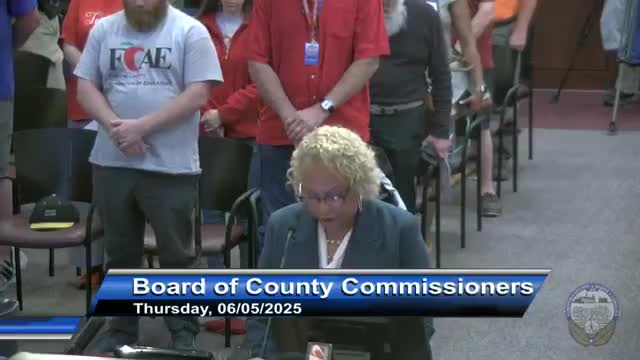
Summary
Forsyth County commissioners approved a FY‑26 budget ordinance (option B) that adds community grants and sets the property tax rate at 53.52¢ per $100; the board also voted not to provide the Winston‑Salem/Forsyth County Schools’ requested one‑time $32.1 million payment and approved increased reporting requirements for teacher supplements.
Forsyth County commissioners adopted the fiscal year 2026 budget ordinance on a 4‑3 vote, approving option B that includes $1.816 million in community grants and sets the county property tax rate at 53.52¢ per $100 of assessed value.
The vote followed several hours of discussion about the county’s fiscal position and an ongoing $18 million deficit reported by Winston‑Salem/Forsyth County Schools. Commissioners separately voted 6‑1 to send a formal letter to the School Board denying the district’s request for a one‑time $32.1 million payment to cover fiscal year 2025 shortfalls.
The budget adopted by the board appropriates total resources in the range presented for FY‑26 (the recommended budget document cited totals in the $589–591 million range depending on options). Option B adds $225,000 for an additional community grant line and raises the tax rate from the revenue‑neutral figure discussed during deliberations to 53.52¢. County staff said the adopted budget is approximately 0.9% higher than FY‑25 after multiple adjustments, including removing longstanding standby payments for volunteer fire departments, correcting a Forsyth Tech salary reserve entry, and updating liability insurance renewal estimates.
Commissioners also included new language in the adopted ordinance tightening fiscal oversight of school funding. Section 4 of the ordinance requires the school system to seek Board of Commissioners approval before transferring or increasing appropriations between purposes by more than 25% and to notify the county by Oct. 18 if changes are driven by state or federal funding. The ordinance sets an Article 46 teacher supplement baseline number (19,798,498) and adds a requirement for quarterly reporting on teacher supplement payments, including those funded by Article 46.
Board members debating the budget split on whether to restore community grants that had been zeroed out in the manager’s recommended budget or to preserve the manager’s approach to strengthen fund balance and protect the county’s AAA bond rating. One commissioner proposed an alternative motion to adopt option A plus a 2¢ property tax increase to provide additional aid to schools; that motion failed for lack of a second. Another commissioner argued a modest tax increase would “help” the schools; others said the scale of the district’s deficit requires state action and that using large fund balance sums would risk the county’s long‑term financial stability.
On the school payment request, commissioners said the county will not provide the requested $32.1 million from fund balance. County staff and the letter to the School Board explained that maintaining the county’s AAA bond rating requires strengthening fund balance rather than drawing it down for a one‑time payment. The letter also noted the school system had unpaid obligations to the county—school resource officer and nursing contracts, fuel and lease invoices—totaling more than $5 million and offered to work on a reasonable repayment plan.
County managers and finance staff committed to continue working with the North Carolina Department of Public Instruction and the General Assembly on options to restore fiscal sustainability for the district. The board also added reporting and reconciliation language stating the county would reconcile Article 46 revenue: if revenues exceed estimates, those funds would be provided to the school system; if revenues come in lower, the board would seek return of funds as provided under existing reconciliation language.
Commissioners and staff emphasized competing duties: support for public education, maintaining services for seniors and veterans, protecting the county’s bond rating, and preserving fund balance to meet emergencies and cash‑flow needs.
The budget ordinance takes effect July 1, 2025, and includes a set of board‑directed initiatives directing staff to study potential Axon contract consolidation with local law enforcement, continue fire service equity work and creation of a fire commission, advance the county capital improvement plan with sustainable funding strategies, and recommend fund balance policy amendments.
The board’s final numeric vote on the budget was recorded as 4 in favor, 3 opposed; the letter to the school board denying the one‑time payment passed 6‑1.