Get Full Government Meeting Transcripts, Videos, & Alerts Forever!
Get email alerts on the Airport Cip topic
No spam. Unsubscribe anytime.
Hutchinson airport seeks runway reconstruction, new jet center and to assume fuel operations
Summary
Airport director proposed a five‑year CIP that centers on reconstructing the main runway to concrete, building a modern FBO/jet center and preparing to run fueling operations when the current lease ends in 2027; most runway funding would be FAA grants.
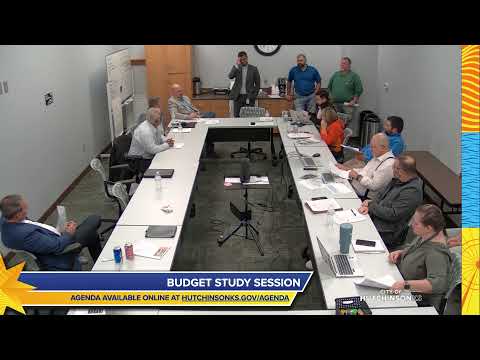
Alex Stang, Hutchinson Airport director, told the study session the airport’s five‑year capital plan centers on a full concrete reconstruction of the main runway (13/31), a modern fixed‑base operator (FBO)/jet center and decommissioning a secondary runway that lost FAA sponsorship. “This would, this would help address that situation and replace that weak, degrading sub base, boost that pavement index, and the idea would be to have this completed before the 20 29 USGA senior open,” Stang said of the runway work.
Nut graf: The airport presentation framed runway and facility upgrades as economic‑development investments: engineers and staff plan to pursue federal funding (FAA grants, BIL) for most of the runway cost while the city would put up a local match. Stang also proposed the city exercise its proprietary rights to operate fueling at the end of the current private lease in 2027.
Scope and schedule. Stang described the 13/31 pavement section as flexible asphalt over a weak subbase; reconstruction to concrete would raise the pavement bearing index and allow heavier aircraft and larger events. He estimated the reconstruction as a multi‑year effort with most costs eligible for FAA funding; engineering and planning in 2026–27 would precede larger construction in 2028–29. Stang estimated the overall five‑year airport CIP at about $23 million, with roughly $19 million in federal funds and $4.3 million local match in his package.
FBO, fueling operations and equipment. Stang proposed a new modern jet center (planning and engineering in 2026–27, construction to follow) with an executive/pilot lounge, office space and hangar capacity intended to attract corporate traffic. He also proposed the airport take over fueling operations after Wells Aircraft Services’ lease ends in 2027. That transition would require additional staffing, ground‑service equipment and operating support; Stang provided staffing‑level estimates for an operations technician, operations manager and administrative assistant.
Runway 4/22 decommissioning and redevelopment. Runway 4/22 no longer receives FAA sponsorship and would require city funds for maintenance; Stang proposed decommissioning it and making roughly 270 acres of airport land available for commercial or industrial development. He estimated a mill/overlay of 4/22 would cost the city about $750,000 if maintained as an aeronautical runway.
Funding and next steps. Stang said the airport would pursue BIL and FAA grants and public–private partnerships for the jet center to reduce local cost. He noted FAA staff have been receptive to a runway reconstruction request. No formal council action was requested at the study session; staff said they will refine engineering costs and grant applications for future budget adoption.
Ending: Airport staff asked the council to consider prioritizing runway engineering and supported FAA grant applications so construction could be bid ahead of the 2029 USGA event.