Get Full Government Meeting Transcripts, Videos, & Alerts Forever!
Get email alerts on the Utilities Cip topic
No spam. Unsubscribe anytime.
Hutchinson staff call for immediate repairs at aging wastewater plant; some water improvements planned
Summary
City engineers and consultant HDR presented a priority list of repairs for Hutchinson’s wastewater plant and water system, recommending emergency and near-term projects in the 2026 CIP and noting the need for future rate adjustments and SRF loan applications.
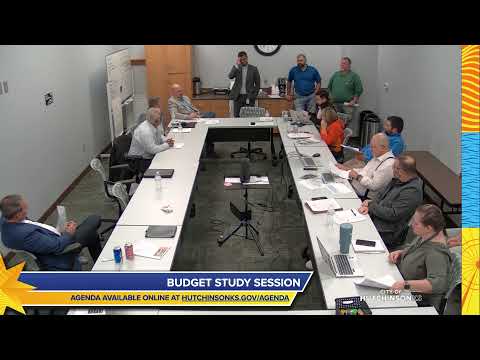
Evan Patterson, city engineer, told the Hutchinson City Council at a study session that consultants and staff prioritized immediate fixes at the wastewater treatment plant that are “poor or emergency” conditions and should be included in the city’s year‑1 capital improvement program for 2026. “The projects that are either classified as poor or emergency are the ones that will be, proposing to be included in what we call the year 1 CIP, which is the 2026 budget,” Patterson said.
The nut graf: The presentation by HDR and city utilities staff laid out dozens of water and wastewater projects, front‑loading life‑safety and reliability work for next year — including structural repairs of digesters, replacement of key pumps and a closed‑headworks centrifuge — while flagging larger, multi‑year items and reapplication for State Revolving Fund (SRF) funding this summer.
Most urgent: wastewater life‑safety and critical process equipment. HDR’s inspection and staff notes identified failing concrete, unsafe walkways, decayed pump and valve systems and clarifier internals that need replacement or major rehab. Patterson and Utilities Director Dave Gwynn said the digester area contains immediate life‑and‑health risks and that a package of repairs labeled “digester complex phase 1” is proposed for next year. The influent pump station and headworks received similar emphasis: Patterson said pumps and valving must be replaced and that a nonoperational headworks impairs plant performance.
On clarifiers, HDR documented interior spalling and exposed rebar after draining a tank, and Patterson said the city can save money by reusing the outer concrete while rebuilding the clarifier internals. He told councilmembers the approach could extend useful life rather than replace whole tanks.
Water system priorities and reliability. The water treatment plant, constructed in the late 2000s and in generally better condition, nevertheless faces operational risks the city wants to head off. Patterson outlined projects to remove biofilm from reverse‑osmosis membranes, improve permeate flushing, relocate dechlorination closer to RO feed pumps and add UV reactors to protect membrane life. He also proposed a head tank to stabilize pump VFD operation and two full‑capacity backup generators to ensure potable water delivery during power outages. “We only have about an 8 hour window of water in the towers right now with our current, storage volumes and our normal consumption,” Patterson said, underscoring the reliability concern and long lead times for generator procurement.
Finance and next steps. Staff said cost estimates in the presentation are “all‑in” (engineering, construction, procurement, contingency) and that some large projects would span multiple years. Several projects have been pre‑applied to SRF; staff expects SRF determinations by July 1. Utilities staff also told council they are implementing operator training and an asset management system to reduce future failures. Gwynn noted that to fund the proposed CIP fully, the city will likely need to revisit water rates: “we would have to adjust our water rates, to in order to accommodate these projects. Otherwise, we wouldn't be able to afford them. We bleed out all of our reserves and operating cash,” he said.
Discussion vs. decision. This session was a study discussion; no binding action was taken. Staff asked council for direction on priorities and whether to pursue SRF funding and multiyear budgeting for long‑lead equipment.
Ending: Staff offered follow‑up material and plant tours and said HDR will return for targeted investigations inside the digester complex. Councilmembers and staff flagged the need to balance expansion projects (water extensions outside existing customers) against funds for critical repairs to existing infrastructure.