Get Full Government Meeting Transcripts, Videos, & Alerts Forever!
Get email alerts on the Child Care topic
No spam. Unsubscribe anytime.
Durham delegation outlines child-care financing, supply and zoning ideas; task force recommendations expected
Summary
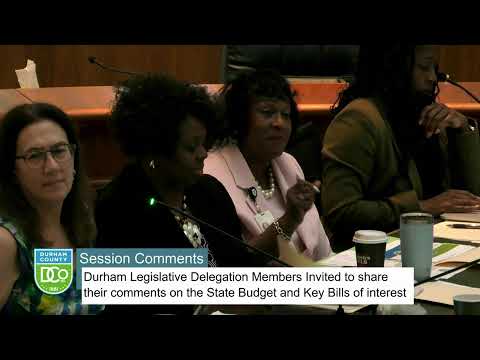
Delegation members and county staff discussed child-care supply challenges, a state child-care task force due to release recommendations, a proposed child-care finance agency and local changes to Durham's Unified Development Ordinance to reduce barriers to on-site and neighborhood child care.
State senators and county officials described ongoing work on child-care financing and supply interventions and said a bipartisan task force will release top-level recommendations later in the month.
Senator Sophia Chitwick said the governor's child-care innovation task force is expected to offer recommendations that include raising subsidy floors and improving supports for early-childhood educators; she said she has proposed a child-care finance agency as an alternative to other financing concepts. "The wave of kind of top level recommendations will come out at the end of this month," Chitwick said during the meeting.
County staff and representatives discussed practical supply-side steps: creating a county inventory of underused space, reducing zoning barriers to create more sites for small-scale child-care providers, and piloting on-site corporate child care. County planning staff said revisions to Durham's Unified Development Ordinance (UDO) will explicitly examine barriers to locating child care across the county as part of the UDO rewrite.
Delegation members and county leaders also raised workforce and regulatory issues. Delegates described bipartisan interest in increasing subsidy rates to support providers, boosting pay parity for community college instructors who train early-childhood educators and formalizing rapid-certification programs to expand the workforce. Delegation members reported they are seeking creative tie-ins, including building-code clarifications to reduce construction-related delays.
Why it matters: county officials and legislators said child care is a supply-and-money problem. Delegation members and county staff framed proposed solutions as combining financing, regulatory fixes and local land-use changes so that smaller, proven local providers can scale rather than relying on national providers unfamiliar with local needs.
Ending: Delegation members asked for continued engagement with industry leaders, Durham Tech and municipal partners to pilot financing and zoning changes and to ensure state proposals can be implemented at the local level.