
Virginia State Parks outlines cabin renovations, equipment pilots and outreach to improve accessibility
Get AI-powered insights, summaries, and transcripts
Subscribe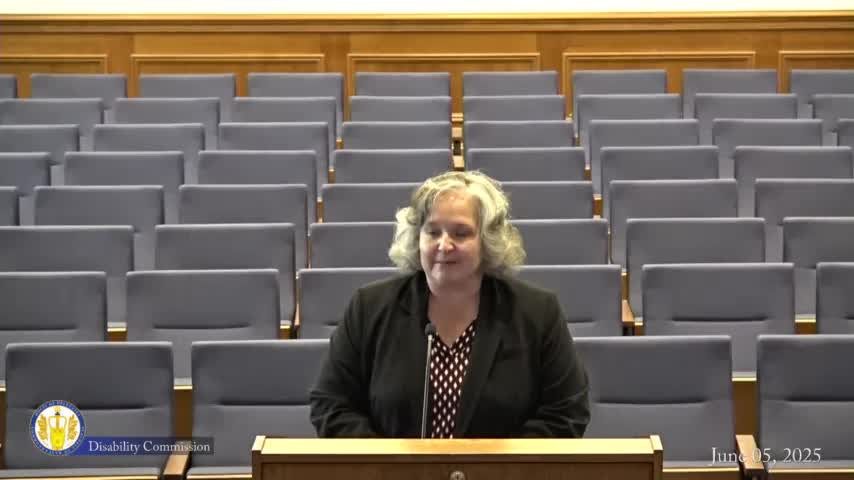
Summary
Department of Conservation and Recreation officials described long‑term capital renovations to cabins and restrooms, equipment pilots (all‑terrain wheelchairs, EnChroma viewers), staff training and outreach partnerships to make state parks more accessible.
Dr. Melissa Baker, director of the Division of Virginia State Parks at the Department of Conservation and Recreation, briefed the Virginia Disability Commission on June 5 about accessibility work across the park system.
Baker said the parks agency is pursuing long‑term capital improvements alongside operating‑budget efforts such as staff training, adaptive equipment pilots and outreach. "Virginia State Parks was the first state park system in the country to establish a system of state parks," she said, and the agency is refurbishing cabins — including Civilian Conservation Corps (CCC)‑era structures — to bring them into compliance and reduce barriers where feasible.
She listed examples: cabin renovations at Douthat, Fairy Stone and First Landing; 31 restroom reconstruction projects; a new High Bridge Trail visitor center with accessible paths; and cabin refreshes at Westmoreland State Park. Baker described ADA upgrades required when government buildings are altered and noted that funds and project timelines mean some accessibility gains are phased.
On noncapital measures, Baker described a pilot program for all‑terrain (track) wheelchairs funded through State Parks license plate revenue and a systemwide rollout of EnChroma viewers that help people with red/green color‑blindness perceive colors. She also described a beacon‑based app pilot at Natural Bridge, which provides audio directional information for visitors with severe vision limitations, and adaptive equipment and program modifications in "Let's Go Adventures" (archery, kayaking, fishing) to reduce barriers.
Commissioners raised concerns about cabin accessibility and affordability: Senator Hashmi urged the department to consider making renovated cabins fully ADA‑compliant given the long lifespan of these buildings and asked for a plan and timeline. Baker said the agency is creating a modern asset management system and condition assessments to prioritize capital planning and welcomed the suggestion to establish an external advisory group with people with disabilities.
The commission agreed by unanimous consent to direct staff to draft a letter asking the parks agency to establish a task force to develop accessibility recommendations; no objection was recorded. Baker said the parks system will continue trialing equipment, expanding staff training and working with friends groups and external partners to advance inclusive access.