Get Full Government Meeting Transcripts, Videos, & Alerts Forever!
Get email alerts on the Boards And Commissions topic
No spam. Unsubscribe anytime.
Fargo staff propose trimming arts grants, pausing snow-removal aid and reshaping advisory boards
Summary
City staff told the Fargo City Commission they plan to cut or reprogram parts of the city's social-service and arts budget, shift some programs to community partners, and restructure boards and commissions to reduce administrative burden and align work with current priorities. No formal vote was taken; staff will return with recommendations.
City of Fargo staff told the City Commission they plan to reduce or reprogram portions of the city’s social-service and arts funding, pause the city’s call for public art projects and seek community partners to take over a long-running snow-removal assistance program as part of a broader review of boards and commissions.
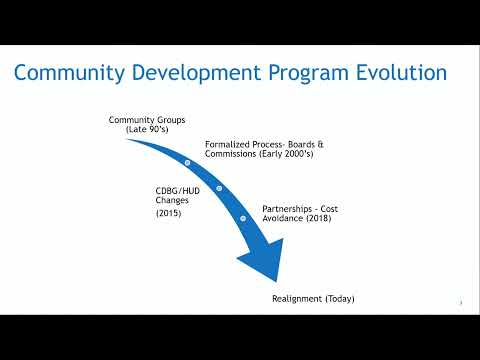
Nicole, planning director for the City of Fargo, told commissioners the review grew out of a two-decade history of small grants, federal requirements and partnership arrangements. “I’ll just kick off by thanking our staff for really putting a lot of time and effort into studying our boards and commissions,” Nicole said, summarizing the presentation.
The proposal staff previewed would: pause the open call for city arts projects and reduce the direct arts-program budget, discontinue the city-run snow-removal assistance program and seek a nonprofit or volunteer partner to continue that service, and modify strategic partnerships that receive annual city support. Nicole said the city currently budgets about $250,000 for social-service activities and about $150,000 for arts programming and that she was “proposing we reduce that budget to 0” for the city’s arts-program line in the 2026 budget.
Why it matters: staff framed the changes as a response to tighter fiscal constraints, new state limits on municipal revenue and shifting federal rules that affect how the City may use Community Development Block Grant (CDBG) and other HUD funds. “As we start to prepare for that budget,” Brenda, a city staff member who led the policy discussion alongside Nicole, told commissioners, “what we really want everyone to be thinking about is how does the City of Fargo show up for those community development activities and how do we want to be present?”
Key program details and clarifications
- Social-service allocation: Staff said the historic general-fund allocation for social services has been about $250,000 annually; arts allocations have been about $150,000. (Source: Nicole.) - Special-assessment assistance: The staff presentation identified an ongoing special-assessment assistance line of roughly $45,000 per year used for income-qualified residents facing assessment bills. (Source: Nicole.) - Snow-removal assistance: The program historically helped low-income or disabled residents with private-property snow removal; staff said CDBG and HUD rule changes forced some program shifts and that the city does not publicly advertise the assistance. If the city discontinues the direct program, staff explained, standard complaint-and-enforcement processes for unshoveled sidewalks would remain in place and unpaid city removal can be special-assessed to the property owner. Commissioners noted that typical special-assessment charges for sidewalk enforcement are in the “$75, $100” range when private contractors are used. (Sources: Nicole; Commissioner question.) - Partnerships: Staff proposed shifting more work to established partners such as the Arts Partnership (formerly Lake Agassiz Arts Council), Downtown Community Partnership and the FM Homeless Coalition, and said organizations such as Dakota Medical Foundation and regional funders have historically leveraged city allocations.
Boards and commissions
Staff presented a linked governance review because many advisory boards grew up around the social-service and arts allocations. The review proposes evaluating each advisory body for continuing need, recommending that some commissions move from a formal, government-run advisory model toward strategic partnerships or regional bodies and that others be concluded altogether. Nicole and Brenda said the goal is to reduce duplicative meetings, lower the administrative time required of planning staff and allow volunteers to contribute in less bureaucratic, more project-focused ways.
Commissioners and department leaders generally supported the review but emphasized caution. Commissioner Don Strand (referred to in remarks as Commissioner Strand) was cited by staff as an early champion of a city-supported community land trust; several commissioners urged staff to preserve access to grant-eligibility and external funding that can flow through a city partnership. Police Chief Sebowski and others said they preferred continuing informal advisory contact even if formal commission structures were concluded.
Process, authority and next steps
Staff repeatedly emphasized that the session was a preview and discussion, not a formal decision: the presentation outlined budget recommendations for the 2026 budget process and a framework to evaluate each board or commission. Brenda asked commissioners for policy guidance and said staff would work with executive committees and affected volunteers, gather input and return recommendations to the City Commission. There were no motions or votes recorded on the proposals at this meeting.
What staff cited as constraints and dependencies
- Federal rules for HUD and CDBG funds that changed between about 2015 and 2018 affect which activities can be supported with federal dollars. (Source: Nicole) - State legislative limits on municipal revenue (the cited “3% cap”) and changes to how the city measures and budgets revenue were described as increasing pressure to prioritize core services and partnerships. (Source: Commissioner remarks and staff explanation.)
Ending
City staff said they will continue the review, consult volunteer members of affected boards and commissions, and bring more specific budget and policy recommendations back to the commission later in the budget cycle. In the interim staff will seek partners who could continue snow-removal assistance and will engage groups such as the Arts Partnership and FM Homeless Coalition about continued, potentially restructured city support.