Get Full Government Meeting Transcripts, Videos, & Alerts Forever!
Get email alerts on the Lcap topic
No spam. Unsubscribe anytime.
East Whittier board reviews LCAP priorities; parents and board raise bullying, mental health and restroom cleanliness concerns
Summary
District staff presented LCAP outreach results and proposed priorities including academic interventions, TK expansion, PBIS and mental-health supports during a public hearing of the East Whittier board.
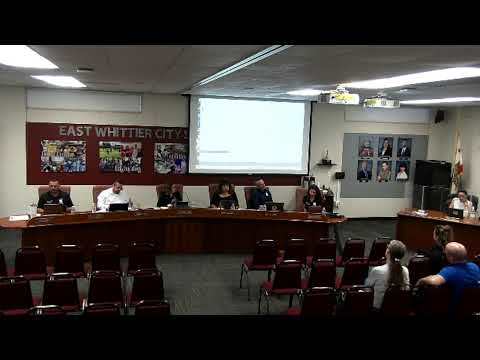
District staff presented the Local Control and Accountability Plan (LCAP) highlights and community engagement results to the East Whittier City School District Board of Education during a public hearing, summarizing student, parent and staff input and proposed goals for the coming year.
The presentation, led by district LCAP staff and Dr. Romand, described outreach to students, parents and staff, and summarized common themes: requests for more academic supports and after-school enrichment, continued focus on early literacy and writing, attention to mental-health services and bullying prevention, facility concerns including restroom cleanliness and modernization, and a desire for more parent-engagement sessions. Staff showed survey excerpts, student comments and a parent-friendly budget diagram explaining LCFF and supplemental-concentration funding.
Board members and the public asked for clarifications on bullying reporting and confidentiality. Staff said the district will respond to reports and investigate them; while some confidential handling is possible, allegations of unsafe behavior require investigation and action to keep students safe. "Our commitment to any parent who comes forward is we will keep your child safe but we do need to respond," a district presenter said during the discussion.
Staff also described mental-health supports: a social worker at every school site, tiered SEL supports, small-group interventions and check-in/check-out strategies. The board discussed strategies to connect with students who are reluctant to seek help; staff highlighted evidence-based practices such as "2 by 10," where an adult meets briefly with a student for two minutes a day for 10 days to build connection.
Other LCAP highlights presented: plans to add six full-day transitional kindergarten classes at identified sites, expansion of dual-language immersion in preparation for the incoming cohort, ongoing professional learning (PLC+) and support for AVID/college and career programs, continued PBIS implementation and social-worker support, and parent liaison and parent-engagement programming (parent workshops, HAWK conference, district parent committee). Staff noted some positions (school psychologists) continue to be funded from learning-recovery block grant funds but were listed in the LCAP for transparency.
No board action was required at the hearing; staff said they will continue to refine the LCAP and return with any required formal adoption steps.