Get Full Government Meeting Transcripts, Videos, & Alerts Forever!
Get email alerts on the Homelessness topic
No spam. Unsubscribe anytime.
Organizers say winter warming center kept people alive; ask city to sustain effort
Summary
Organizers of a volunteer-run warming center told the Springfield City Commission that the site operated this past winter out of a gymnasium, served dozens, and recorded no deaths from exposure. Presenters urged the commission to continue support and to pursue longer-term solutions including case management and housing partnerships.
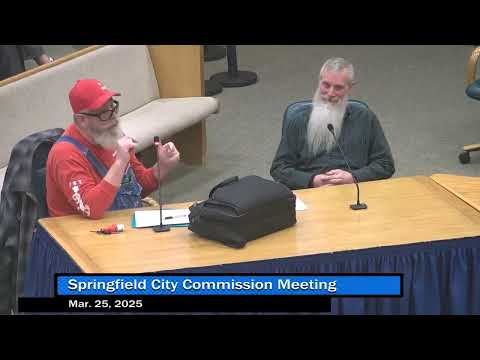
Ken Baron Selig, a pastor who leads a street ministry affiliated with Liberty Disaster Relief, told the Springfield City Commission at a work session that a volunteer-run warming center opened this past winter and helped dozens of people avoid exposure-related deaths.
“The most important number that I'm gonna say here tonight is 0,” Baron Selig said, referring to the number of people who died of exposure while the warming center operated. “Once you're inside, there was only 1 rule, be nice.”
Baron Selig said the center opened on Dec. 2 and operated under a 90-day occupancy permit in a gymnasium loaned by a local center on Fountain Avenue. He said the site provided meals and a place to warm, and that volunteers staffed the site around the clock for extended periods: “I physically didn't even leave the building for 45 days,” he said.
Why it matters: organizers said the center filled gaps in an overburdened system of shelters and treatment programs and that short-term, community-driven responses saved lives over an unusually cold winter. Baron Selig and other volunteers asked the commission to consider sustaining the effort year-round and to work with local partners on housing and case management.
Details from the presentation and Q&A
Baron Selig described outcomes the volunteers tracked: he said 58 people entered drug- and alcohol-treatment programs during the center's operation, eight people left to join a full-time mission outside the region, and 21 people accepted religious baptism. He also recounted medical emergencies handled on site, including one person who, after a trauma nurse’s intervention, was transported to a hospital and likely would have died without care.
On safety, Baron Selig said volunteers separated families when necessary and arranged hotel placements on several occasions. He said staffing sometimes dropped to two people during overnight shifts but that the Springfield Police Department responded quickly when volunteers called for help: “The average response time when we called and said, hey, we need help, for a situation, it was well under 5,” he said.
Commissioners’ response and requested next steps
Commissioner Hausen thanked the volunteers and asked Baron Selig what he saw as the leading cause of homelessness in Springfield; Baron Selig answered that the causes are varied and emphasized the need for mental-health services and consistent case management. Commissioner Brown asked what the city could do next; Baron Selig called for “real conversation” and for local partnership on property, housing and program models, saying he is seeking real-estate developers or acreage donations for a longer-term solution.
Baron Selig said some referral and treatment partners remain reluctant to be named publicly until waivers or permissions are finalized; he told commissioners he would provide a PowerPoint and follow up on program details once releases are in place.
Formal action
The work session concluded with a motion to adjourn. The commission called the roll and recorded four affirmative votes: Missus Brown (present), Missus Houston (yes), Missus Tackett (yes) and Doctor Estrop (yes). The motion carried and the work session ended.
Taper/next steps
Baron Selig urged the commission and city staff to begin planning before next winter so the city can move beyond an all-volunteer, ad hoc response. Commissioners encouraged him to meet with staff members (Brian and Rob, named in the session) to begin those discussions this spring.