Get Full Government Meeting Transcripts, Videos, & Alerts Forever!
Get email alerts on the District Finance Operating Referendum topic
No spam. Unsubscribe anytime.
Edina board briefs community on operating‑referendum renewal window; approves preliminary FY2026 budget
Summary
Finance staff described a state law change allowing boards to renew an operating referendum without a public vote and outlined the district’s renewal window; the board approved a preliminary FY2026 budget projecting $167.6 million in general‑fund revenue and an 8.9% unassigned fund balance.
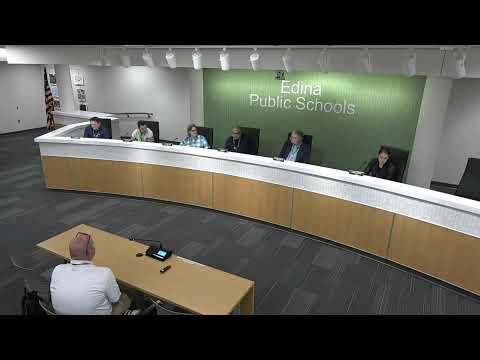
The Edina Public Schools Board of Education on Monday heard a presentation on the district’s operating‑referendum authority and then approved the administration’s preliminary budget for fiscal year 2026.
Why it matters: The operating referendum provides a substantial portion of local operating revenue. Under 2023 state legislation described by Finance Director Mert Woodard, boards may renew an existing operating referendum in the same amount and duration without a voter referendum during a limited window. The district’s current referendum generates roughly $21.5 million annually and is a major funding source for staffing and operations.
Operating referendum: Finance Director Mert Woodard told the board the district’s operating referendum was approved by voters in 2017 and is set to expire in fiscal 2028. He described a statutory renewal window that opens July 1, 2025, and closes June 15, 2027, during which the board may, by resolution, renew the same amount and term without a public election. Woodard said the district certified a levy of $2,261 per adjusted pupil (closer to the state cap of $2,288 after adjustments) and that next year the referendum will generate roughly $21.5 million in revenue. He said, “The $21,500,000 of revenue would equate to about 174 teachers,” underscoring the size of the levy’s effect on staffing capacity.
Preliminary FY2026 budget: The board voted to approve the administration’s preliminary general‑fund budget for fiscal 2026. Director Woodard summarized major assumptions: basic education aid increase of about $200 per adjusted pupil, continued referendum revenue tied to inflation, and no new material cost containment measures. The administration presented preliminary general‑fund figures of $167,614,828 in revenue and $165,331,168 in expenditures, with a projected unassigned fund balance of about 8.9% at year end — inside the board policy target of 6–10%.
Woodard noted the district’s short‑term stability stemmed from prior cost containments and some favorable revenue performance; he also warned of structural pressures further out. The forecast presented to the board shows potential deficits beginning in fiscal 2027 and growing in later years unless revenue or expenditure assumptions change. He said the administration plans to return with a recommendation on renewing the operating referendum at the July 14 meeting.
Board response and next steps: Board members asked procedural and fiscal questions about voter outreach, tax impacts and contingency options if the state changes caps. Director Woodard said that if the board elects not to act in the renewal window, the district would need to seek voter approval to reestablish the authority. The board approved the preliminary budget by voice vote; no roll‑call tally was recorded in the meeting transcript.
What to watch: The board is expected to consider a resolution on the referendum renewal at a coming meeting; if it approves renewal by resolution in the statutory window, no special election would be required. If the board declines to act, the district would need to pursue a voter referendum to continue the authority beyond 2028.