Get Full Government Meeting Transcripts, Videos, & Alerts Forever!
Get email alerts on the Special Education Unified Pilot topic
No spam. Unsubscribe anytime.
Parents, staff urge pause to pilot that would split Southview Unified special‑education facilitator
Summary
Dozens of parents, students and special‑education staff urged the Edina Public Schools board to pause a proposed pilot to split a full‑time Southview facilitator between Southview and Valley View, saying the change would jeopardize a nationally recognized Unified program and create legal, safety and staffing risks.
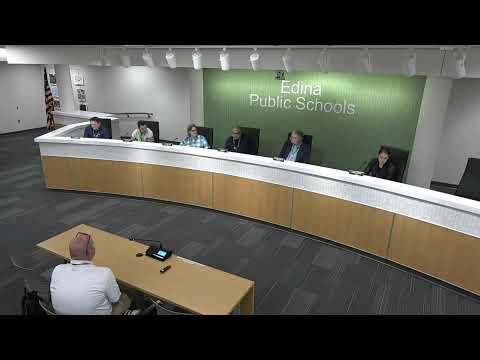
More than a dozen parents, students and special‑education staff asked the Edina Public Schools Board of Education on Monday night to pause a district pilot that would split a full‑time special‑education facilitator between Southview and Valley View schools.
The speakers said the plan would cut key staff time at Southview, threaten the school’s nationally recognized Unified program and increase legal and safety risk for students with Individualized Education Programs (IEPs). During the public comment period, the board did not answer questions; by board policy, public comments will be referred to the superintendent for follow up.
Why it matters: Southview’s Unified program, speakers said, is regarded statewide and nationally for inclusion and student outcomes. Community members warned that cutting facilitation at Southview to a half‑time role would increase caseloads, reduce crisis response capacity and jeopardize program funding tied to national recognitions and grants.
Marie Johnson, a Southview parent, told the board: “The plan cuts Whitney to halftime at Southview and halftime at Valleyview, doubling her caseload to 2 buildings and 324 IEP students.” She said the change “violates that metric, jeopardizing the banner and the 70,000 plus in Rotary, Edina Ed Fund, and polar plunge grants tied to it.”
Multiple parents and students described the Southview team as essential to safety and student progress. Becky Golden, a parent, said of a named staff member: “Whitney became our lifeline. She didn't just guide us through the red tape. She walked beside us with compassion, clarity, and care.” A student speaker described Unified as “where everyone's differences are celebrated and cherished,” and said the program created lifelong friendships and critical life skills.
Staff and team members directly involved with special education urged the board to preserve a full‑time facilitator at Southview. A representative of the district’s special‑education team said, “We come as United Special Education team to ask the board to reconsider splitting the facilitator position between Southview and Valleyview. We strongly believe this needs to remain a full time position at each school.” The team outlined operational concerns: a single half‑time facilitator would be responsible for dozens of case managers, more than 40 paraprofessionals, and hundreds of students and families across two buildings.
Speakers detailed multiple risks they said make the pilot unsafe or inequitable: compliance with IDEA timelines, increased legal and fiscal exposure, higher staff turnover, reduced crisis‑response capacity and the loss of a program model that the community views as a district asset. Robert Kunde, a parent, raised legal concerns and cited the Individuals with Disabilities Education Act, saying, “If there's no education lead in special education at their school, how are you gonna meet that requirement?”
Several speakers also criticized the process and communication around the pilot. Parents and staff said the decision was made without prior consultation with affected staff, the Special Education Advisory Council or families; they asked the board to “press pause” until a collaborative, data‑driven analysis is completed.
What the board did: The public comment period ended without board response; the meeting proceeded to the consent agenda. Under board public‑comment rules, issues raised will be referred to the superintendent for follow up. No formal board vote on the pilot occurred during the meeting.
Clarifying details from speakers: parents and staff repeatedly cited a proposed caseload figure of about 324 IEP students if facilitation time is split; they also named grant funds (Rotary, Edina Education Fund, polar plunge proceeds) they said support the Unified program and could be jeopardized by staffing changes.
Next steps: Speakers asked the district to pause implementation of the pilot and produce a transparent, data‑backed plan that includes staff and parent input. The board did not take formal action during the meeting; any administrative follow‑up would be handled by the superintendent’s office under normal procedures.