Get Full Government Meeting Transcripts, Videos, & Alerts Forever!
Get email alerts on the Capital Improvements topic
No spam. Unsubscribe anytime.
City council reviews five‑year capital improvements plan, schedules formal adoption for July
Summary
Council members and staff reviewed a draft five‑year capital improvement plan (CIP), discussed priorities and funding risks tied to sales tax and bond capacity, and directed staff to include the draft in the next packet with a planned resolution for adoption in July.
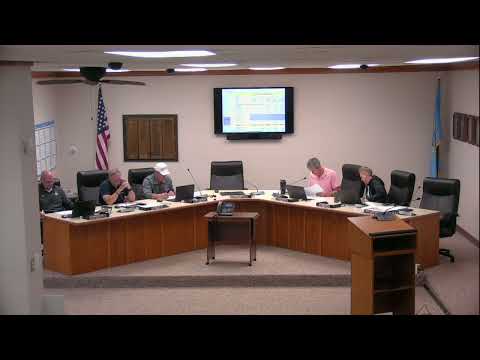
The city council reviewed a draft five‑year capital improvements plan and directed staff to include the plan in the next council packet, with formal adoption anticipated at the July meeting.
Christina, a city staff member responsible for the CIP projections, told the council the city currently has “a little over $11,000,000 in the fund balance right now” and outlined a proposed mix of projects, debt and operating forecasts. She recommended paying certain small equipment and furniture out of fund balance rather than bonding for those items, and said she adjusted the 2025 sales‑tax estimate upward to $5.5 million based on last year’s receipts.
Why it matters: council members and staff said debt capacity and sales‑tax volatility will determine which projects can move forward. Staff identified a 60–65% ratio of sales‑tax revenue applied to debt as the upper comfort threshold and warned that approaching 75% would limit future borrowing options.
Key details from the discussion included:
- Projects and priorities: staff listed City Hall, Rushmore 3, Core 3a, Ironwood 2, pool parking and Aspen parking among projects within the five‑year plan. Staff said Ironwood currently estimates roughly $2,800,000 until bids are final. Council members discussed flipping the public works building and Core 3a in the priority order depending on operational efficiency and condition of existing facilities.
- Fund balance and debt: Christina said the fund balance is “a little over $11,000,000” and proposed maintaining a fund balance target around 40–50% of operating expenses. She said the city has added nearly $30,000,000 in debt over the last six years and that annual debt payments have risen from about $311,000 in 2018 to about $2.5 million this year.
- Revenue assumptions and risks: staff used a 3% annual sales‑tax growth projection in the modeling and noted sales tax can fluctuate; the transcript records that sales tax was 1.8% above last year in one month while another line reports an April month‑over‑month drop of 11%. Staff said property tax is more stable than sales tax and that any change to state property‑tax policy could affect future revenues.
- Funding sources by program: staff identified several funding streams for specific projects — street improvements funded in part by annual federal STP (surface transportation program) allocations (about $450,000 per year, as stated), TIF revenue for certain corridor projects, golf course revenue for golf course capital needs, and FEMA reimbursements that recently improved the golf course fund balance.
- Program‑level projects: staff reviewed water and sewer projects including connecting Well 3 to the treatment plant (water fund), lift‑station rehabs (Pioneer, Bethany Lehi, Lions and Westside) in the sewer fund, and stormwater projects such as Redwood Storm Phase 2 and Bluff drainage phases.
Council discussion included a request from a council member to reserve $500,000 for parks within the CIP draft; the council agreed to have parks produce a prioritized five‑year list so members can rank park projects for consideration. Staff said the full CIP book with project descriptions would be provided in the packet and that formal adoption is expected in July.
No formal vote on the CIP occurred at the meeting; staff were directed to include the draft in the next packet and return with a resolution for adoption in July.