Get Full Government Meeting Transcripts, Videos, & Alerts Forever!
Get email alerts on the School Meals And Fees topic
No spam. Unsubscribe anytime.
District staff propose 10¢ paid-lunch increase and keep student fees unchanged; board weighs communication and meal debt
Summary
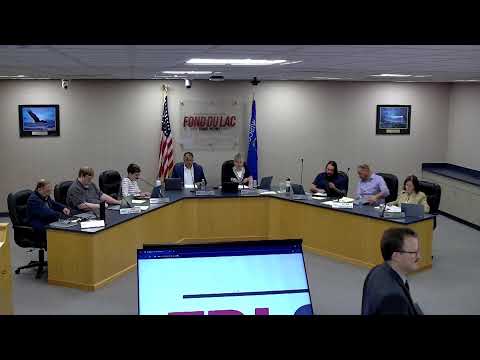
At a workshop the Fond du Lac School District presented a proposal to raise paid student meal prices by 10¢ and recommended holding student fees steady. Administrators flagged $23,000 in unpaid meal charges that must be covered from the general fund if not collected and urged increased outreach to encourage free/reduced meal applications.
District finance and food-service staff proposed a 10¢ increase to paid student meal prices during a June workshop and recommended no change to the district’s standard student fees. The board signaled general support for incremental increases to preserve long-term fiscal sustainability but asked administrators to boost community outreach and to provide more program-level detail on fees and waivers.
Why this matters: Federal rules and state guidance (paid-lunch equity, PLE) constrain how school meal programs are accounted for. If meal prices are held flat while costs rise, the district risks larger, less-palatable increases later or needing to cover food-service shortfalls from the general fund.
Finance staff presented the rationale. Staff member Mike Gerlach said the district has been able to avoid PLE-driven increases in part because Fund 50 has maintained a positive balance. He told the board a gradual increase is intended to prevent a larger single-year jump later: “If you do not begin incrementally increasing in 10¢ increments, you could be faced with the process of a multi dollar increase for your paid students.”
Gerloch (staff) also told the board the district is carrying roughly $23,000 in unpaid meal charges for students who were not eligible for free or reduced-price meals; under federal rules those unpaid balances cannot be paid from food-service funds and the district must transfer local general-fund money to clear the debt. Gerlach said, “At fiscal year end in June, we will have to take $23,000 from Fund 10 to pay off that debt because we cannot use food service funds to do that.”
Board members discussed participation rates, the district’s universal free breakfast program delivered as “breakfast in the classroom,” and barriers families may face completing free/reduced applications. Administrators said many families are directly certified via state programs, the application is available electronically and in multiple languages, and food-service staff work at open houses to encourage completion. The board requested additional outreach to reduce meal debt and to help families understand confidentiality of free/reduced status.
On student fees, administration proposed no increases to required fees for the coming year; optional fees (for items like yearbooks, dual-enrollment tuition, or consumables) remain and are managed at the school level. Board members discussed whether scholarships, donations or building-level supports could cover optional items for families who cannot afford them and asked administrators to follow up on existing supports at the high school.
Ending: Administrators said they will bring formal action to raise paid meal prices by 10¢ at an upcoming meeting and will provide the board with additional data on participation, program costs, and communications strategies to help families complete free/reduced meal applications.