Get Full Government Meeting Transcripts, Videos, & Alerts Forever!
Get email alerts on the Licensing Food Trucks topic
No spam. Unsubscribe anytime.
Council approves ordinance clarifying direct‑seller and mobile‑food rules, leaves fees for later review
Summary
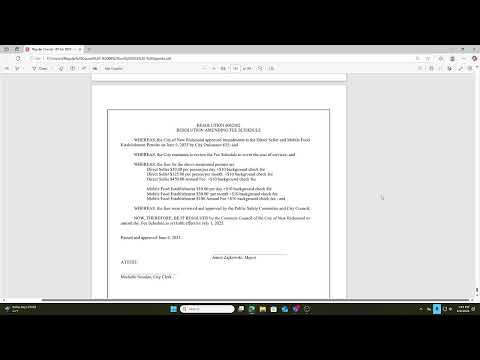
The council approved Ordinance 6‑25 (pending legal review) separating direct‑seller and mobile food‑establishment permits, clarified exemptions for farm products and youth fundraisers, and agreed to treat fee levels as a separate discussion after gathering comparative data.
The New Richmond City Council voted to approve Ordinance 6‑25 (pending legal review), which separates licensing and definitions for direct sellers (door‑to‑door sales and booth sellers) and mobile food establishments (food trucks), clarifies background‑check requirements for direct sellers, and restates exemptions for farm produce and certain youth fundraisers.
Michelle (city staff) told the council the ordinance is intended to remove confusion in the prior code that had grouped door‑to‑door sellers, booth vendors and food trucks under a single “direct seller” permit. “They have different licensing also from the county and the state,” she said, explaining that mobile food establishments must also hold county or state licenses and inspections. Michelle said the ordinance clarifies that farm products are exempt and that youth fundraising sales are exempt under the city code.
Council members expressed concern about fee parity between local brick‑and‑mortar businesses and transient food trucks. One alderman suggested different fee levels for local businesses that operate food trucks and for out‑of‑town vendors; staff said brick‑and‑mortar businesses are exempt from the local fee under the draft ordinance. Staff further noted that county licensing and inspections for food trucks already cost more than $400 and that those inspections are conducted by the county.
The council approved the ordinance pending legal review, and members asked staff to provide comparative fee data from other municipalities and to solicit input from downtown restaurants that might be affected by transient food vendors. The council agreed to treat the fee schedule as a separate item for later consideration; no fee change was adopted at the meeting.