Get Full Government Meeting Transcripts, Videos, & Alerts Forever!
Get email alerts on the 2026 Budget Targets topic
No spam. Unsubscribe anytime.
Larimer County sets initial 2026 budget targets, asks departments to identify $6 million in cuts
Summary
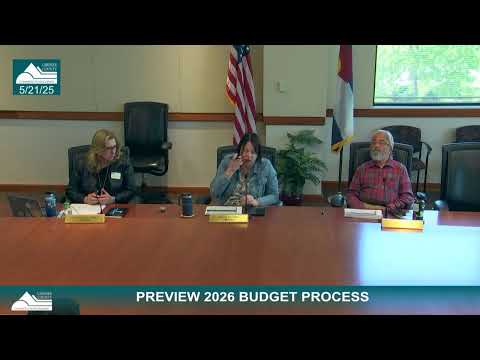
At a May 21 work session the Larimer County commissioners and staff set preliminary 2026 general‑fund planning targets, outlined revenue and expense trends, and directed departments and elected offices to identify roughly $6,000,000 in expenditure reductions or avoidance amid fiscal uncertainty.
Larimer County officials on May 21 set initial general‑fund planning targets for the 2026 budget and asked departments and elected offices to identify roughly $6,000,000 in expenditure reductions or avoidance, county staff said at a board work session.
"We have challenged our elected offices and departments to identify roughly $6,000,000 in expenditure reductions and at the very least expenditure avoidance in the future," Josh Fudge, the county's director of performance, budget and strategy, told the Board of County Commissioners. The work session served as a kickoff to the 2026 budget process, staff said.
County budget staff reviewed revenue and expense trends through April 2025 to explain why managers are seeking savings and service changes. Matthew Behunen, the county budget team lead, said countywide property‑tax collections are up about 3.9% versus 2024 (a change staff attributed in part to last year’s mill levy certification timing), sales tax receipts were up 1.4% through the early months of 2025, intergovernmental revenue was up about 22% largely because Larimer acted as fiscal agent for a Department of Natural Resources partnership on open‑lands acquisition, and interest earnings were down roughly 14% year over year. Behunen also reported that solid‑waste external charges were slightly down while event revenue at the ranch was higher than last year.
On the spending side, Behunen said personnel costs were about 3% higher year to date because market increases to pay ranges took effect Jan. 1, operating expenses across departments were about 3% lower, and capital spending was significantly higher due to large costs for the new North Landfill and land acquisitions tied to the DNR partnership. He said several one‑time project funds and limited‑term positions from 2025 have been removed from the baseline used to set 2026 targets.
County Manager Lorinda Volker asked staff and department heads to examine every program and position for potential savings. "Every idea should be looked at. Every stone should be overturned," Volker said, according to the meeting transcript, adding that the county is trying to balance stewardship with maintaining essential services.
Staff said they have collected nearly 200 employee suggestions through the county’s idea platforms and internal innovation challenges; Josh Fudge said those submissions range from small time savings to proposals with larger dollar impacts. The budget office plans to vet ideas over the summer and present service proposals and recommended reductions during fall budget meetings.
The session included several operational and policy details departments will address in their 2026 requests. Notable items staff flagged:
- Shifting ongoing flood‑monitoring and certain incident response costs out of Fund 105 (Disaster Response) into the general fund. Behunen said about $800,000 was set aside in the disaster reserve and that the monitoring work will cost roughly $100,000 per year; staff described the change as a cleanup to align operating costs with the department that will manage them.
- Applying a modified incremental budgeting approach countywide (inflators applied to a base budget, with one‑time items removed), while performing targeted zero‑based budgeting reviews for engineering and community development.
- Requiring departments that previously received waivers of indirect cost allocations to resubmit those waivers for 2026.
Staff also called attention to items that will affect next year’s targets: election costs are expected to rise about 100% in 2026 because of the midterm cycle; the assessor’s initial certification of assessed value will be available in September and is used to finalize property‑tax revenue projections; and the treasurer’s office is projecting higher interest revenue in coming years as the office locks in longer‑term investments. Behunen provided a planning figure of about $12,000,000 a year in interest revenue for the next few years as a placeholder based on current investments.
Commissioners and staff discussed other operational risks and constraints that informed the budget targets: uncertain state and federal funding, succession and pay pressure in some roles, cybersecurity and facility security vulnerabilities (including systems owned by the state that Larimer must use), the increasing frequency and cost of natural disasters, and decentralized external communications across county offices.
The county laid out the calendar for the budget process: staff will publish targets and meet with departments over the summer; human resources will present recommended merit and market adjustments at a June work session; service proposals and capital plans are due in August; the county manager must submit a proposed budget to the board by the statutory Oct. 15 deadline; a public hearing on the proposed budget is scheduled for Nov. 3; and final adoption and mill‑levy certification occur after final assessor certification in late November or early December.
Officials encouraged public input. Behunen directed residents to the county’s Budget Explorer (larimer.gov/budget/explorer) and to standard participation channels including advisory boards, contacting commissioners, and the BOCC email address (bocc@larimer.org).