Get Full Government Meeting Transcripts, Videos, & Alerts Forever!
Get email alerts on the Ems Impact Grant topic
No spam. Unsubscribe anytime.
Muscatine County board affirms application for EMS impact grant to fund first‑responder equipment
Summary
The Muscatine County Board of Supervisors voted to affirm an application for a 2025 impact grant to support first‑responder equipment and community first‑responder training; county and EMS leaders discussed using pulse‑alert apps and Good Samaritan protections but left some funding details unclear on the record.
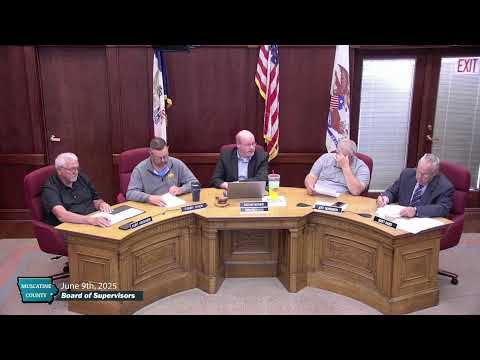
The Muscatine County Board of Supervisors on June 9 affirmed an application for a 2025 impact grant to provide first‑responder equipment and expand community first‑responder capacity across the county.
The action, taken during item 4 of the board meeting, followed a presentation by Tom Summitt, president of the Muscatine County EMS Association, who described plans to distribute lifesaving “bags” of basic life‑support equipment and to recruit and train local residents and professionals to serve as nearby first responders.
Summitt said the grants would allow the county to place equipment with people who are not formally affiliated with an ambulance service — for example, an off‑duty nurse or another trained community member — so they can begin basic life support before an ambulance arrives. “So, that’s the whole idea behind this grant, is being able to utilize people that are out in the county that would be close,” Summitt said.
Summitt and the board discussed integrating a cellphone alert system called PulsePoint, which would notify trained volunteers when a nearby cardiac or medical emergency occurs. Summitt said the program would pair dispatch alerts with trained community responders and that county staff had discussed paging through cell phones to reach responders.
Board members asked about liability for volunteers who respond without formal EMS certification. Summitt said the association has consulted other Iowa counties that use similar programs and that the county attorney would be invited to review the plan; he also referenced Good Samaritan protections. “There’s likely a Good Samaritan,” Summitt said, noting that neighboring counties had involved their county attorneys and reported smooth operations.
The board voted to affirm the application. The meeting record included a verbal correction and some confusion about the grant amount during the initial presentation; the final, on‑the‑record dollar figure for Muscatine County’s application was not clearly stated during the discussion.
The supervisors who participated in the vote voiced appreciation for the EMS Association’s measured approach. The board did not adopt detailed operational procedures at the June 9 meeting; Summitt said procedural rules and certification steps would be developed and that full implementation would take time.
Next steps identified at the meeting include inviting the county attorney to review liability and Good Samaritan protections and continuing coordination with county dispatch and EMS services on the PulsePoint implementation and training schedule.