Get Full Government Meeting Transcripts, Videos, & Alerts Forever!
Get email alerts on the Grading Equity topic
No spam. Unsubscribe anytime.
MVLA student advisory urges clearer, fairer grading; board asks for follow-up analysis
Summary
Members of the Mountain View–Los Altos Student Advisory Council presented recommendations to make grading less punitive and more transparent, and trustees asked staff to analyze impacts before any policy changes.
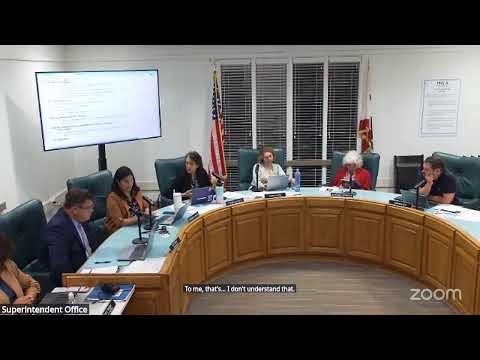
Members of the Mountain View–Los Altos Student Advisory Council (MSAC) presented the board on June 9 with a package of recommendations aimed at making grading more equitable and transparent across district high schools.
The students, introduced by Michelle Visenet, district communications and outreach lead, urged changes they said would reduce the outsized effect of single low scores, make progress visible earlier and give students clearer paths to revision and mastery. "Grading has a lot of impact on our motivation to do work," an MSAC student said during the presentation.
Why it matters: board members said the students' proposals could affect thousands of high‑school students across Mountain View and Los Altos and intersect with teacher workload, bargaining rules and district policy. Trustees asked staff to analyze the recommendations and report back with feasible next steps that would balance student needs and teacher capacity.
What students recommended: MSAC anchored its work in Joe Feldman’s book Grading for Equity and grounded proposals in students’ classroom experience. Key recommendations included: a district guideline that the minimum recorded score for a submitted assignment not be less than 50% (to reduce the disproportionate drag of a single zero); consistent, written rubrics across sections of the same course; wider access to Aeries’ “what‑if” grade edit mode so students can model the effect of assignments on their term grade; an expectation that teachers update gradebooks at least every three weeks (weekly preferred by students); clearer, aligned policies on retakes and revisions (including consistent caps on score recovery); and tracking nonacademic behaviors (punctuality, participation) separately from academic proficiency.
Board and staff response: Trustees praised the students’ organization and asked for additional evidence and cost/benefit analysis. Trustee Catherine said she was impressed and wanted an operational plan that respects contracts and teacher workload. Superintendent Terry and Associate Superintendent/Chief Business Officer Elvis (Elvis) said the administration would share the presentation with staff and consider the recommendations in the context of existing board policy and labor agreements. Trustee Dean and others asked for both teacher feedback and data showing where grading variance most affects outcomes (for example, math and some history courses were cited by the students).
Next steps: Board members asked District staff (identified in the meeting as Eric and other administrators) to work with MSAC and school leaders to produce a follow‑up report: summarize the root causes students raised, identify low‑cost “low hanging fruit” changes (staff and administration both highlighted gradebook transparency as readily actionable), estimate teacher time/cost impacts, and propose pilot options. The district did not adopt any immediate policy changes at the meeting.
Attribution: Quotes in this article come from MSAC students (presenters) and Michelle Visenet, who introduced the student group. Board comments are summarized from the public June 9 meeting record.
Taper: Trustees and staff said they will return with concrete proposals after teacher feedback and analysis; the district said it will share recommendations with bargaining units and school staff before taking formal action.