Get Full Government Meeting Transcripts, Videos, & Alerts Forever!
Get email alerts on the Transportation Funding topic
No spam. Unsubscribe anytime.
Larimer County unveils draft transportation master plan, outlines $840 million shortfall and potential sales-tax option
Summary
County staff presented the draft "Larimer on the Move" transportation master plan, detailed project priorities and funding gaps, and discussed a possible 0.15% sales tax that would generate an estimated $15 million annually to close part of an $840 million need.
Larimer County on Monday presented a draft Transportation Master Plan called "Larimer on the Move," described priorities for nearly 200 miles of roadway improvements and at least 500 identified safety and roadway projects, and confirmed the county faces a long-term funding shortfall estimated at $840,000,000.
The draft plan, staff said, is available on the project website and will remain open for public comment ahead of a joint work session with the Planning Commission and the Board in July.
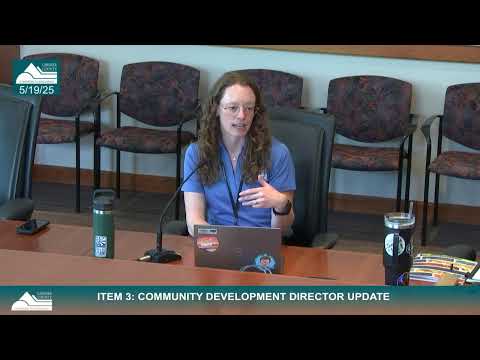
County planning director Leslie Ellis said the plan "is the county's blueprint for building a transportation system that keeps pace with our future" and pointed commissioners and the public to the Larimer-on-the-Move webpage to review recommended projects and leave comments.
Staff emphasized safety and mobility as the highest priorities. The draft lists improvements including nearly 200 miles of roadway upgrades, paving about 90 miles of gravel roads, 20 key intersection upgrades, 44 multimodal crossings and roughly 70 safety-focused projects targeting high-crash locations. The presentation noted more than 2,300 crashes over the past five years, including 28 fatal collisions, and projected population and travel growth by 2050 that will increase demand on county roads.
The county currently has about $7,000,000 a year available for road and bridge capital work, staff said; without new funding sources, that level would cover roughly 20% of the estimated multi-decade need. One funding option discussed is a proposed 0.15% sales tax (15 cents per $100), which the county estimates would generate about $15,000,000 annually. Commissioner Cavallos recommended reminding the public that any new tax would supplement, not replace, the existing $7,000,000 annual investment: "that reminder might be helpful," Cavallos said.
Road and Bridge Director Todd Jurgens described how the plan's project lists are organized to allow flexibility. "They are not listed in numeric 1, 2, 3, 4 order," Jurgens said, "with intent to allow us to be nimble and react to funding streams that become available, development that occurs that wasn't anticipated in the plan." He added that short-term priority projects will be a subset of the total list so the county can apply for targeted grants and respond to changing road conditions.
Commissioners asked how residents can get details about particular projects shown on the plan maps. Leslie Ellis said the website will include interactive maps and project lists; staff expect those details to be available within a week and will provide printed materials and a communications kit for commissioners to use at community events. Questions about private subdivisions and whether county funds would be used to repair private roads were raised; staff said the plan will be a guide and that paving projects would proceed through a public process that considers ownership, local needs and standards.
On gravel roads, staff said the county uses a threshold of roughly 400 average daily trips (ADT) as a trigger to consider paving; several existing unpaved roads already exceed that level and more are projected to by 2050. Staff stressed the plan does not automatically commit the county to paving a given road without further public review and project-level decisions.
Ellis and staff said next steps include continued community outreach, additional polling this summer, grant and partnership pursuit, and returning to the board later this year to discuss whether a ballot measure is appropriate. The draft plan and comment portal are available at investinlarimer.co.
Funding and implementation decisions will move forward only after further public engagement, project scoping and identification of specific financing strategies.