Garfield County planning commission recommends denial of Nutrient Farm PUD amid water-supply and review gaps
Summary
After hours of testimony and new referral comments from the Division of Water Resources, the Garfield County Planning Commission voted 7-0 to recommend the Board of County Commissioners deny the Nutrient Farm PUD, citing insufficient information about water supply and related approvals.
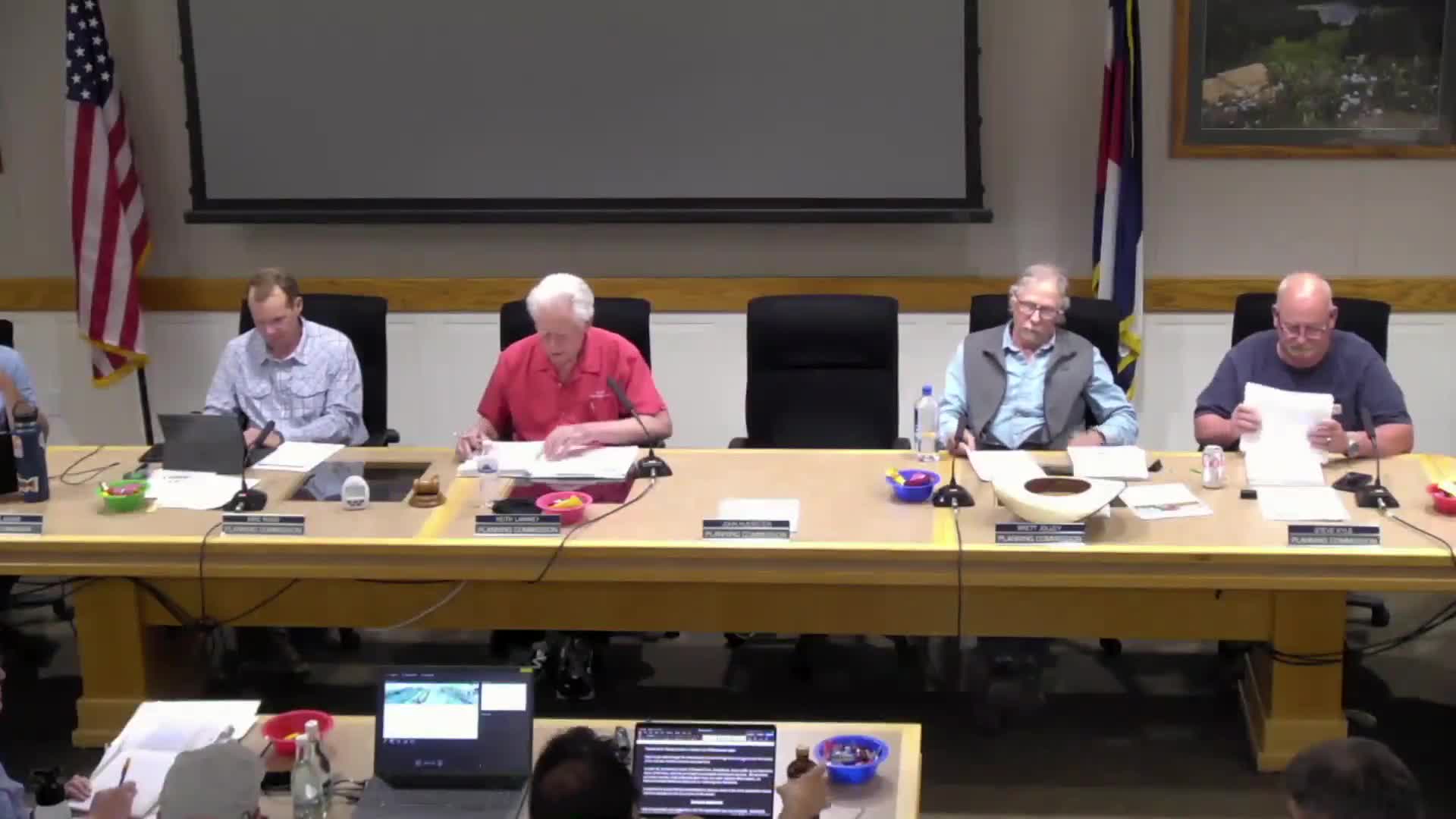
The Garfield County Planning Commission on May 28 voted 7-0 to recommend the Board of County Commissioners deny the proposed Nutrient Farm planned unit development (PUD) and related Riverbend/Coal Ridge PUD revisions, citing outstanding water‑supply questions and incomplete technical information. The recommendation follows staff analysis and new referral comments from the Colorado Division of Water Resources that the county and applicant must still resolve.
Staff told the commission that the application — a rezoning and amendment affecting about 1,137 acres east of Newcastle and spanning five parcels — “as submitted and revised, does not meet the requirements and standards contained in the Land Use and Development Code.” The staff report identified particular shortfalls tied to water supply documentation and recommended denial with five findings for the Board of County Commissioners to consider.
Why it matters: the PUD would change the zoning and potential uses for a large parcel that adjoins residential neighborhoods and conserved lands. Commissioners and many residents said unresolved water rights and technical details create too much uncertainty to forward an approval recommendation; staff and referral agencies signaled they need additional documentation before the county can reliably evaluate public‑safety, environmental, and infrastructure impacts.
Most of the hearing focused on water. The Division of Water Resources (DWR) told the county it had “not received sufficient information to render an opinion regarding whether the proposed water supply is adequate and will not cause material injury to existing water rights.” DWR listed several specific items it wanted clarified, including (1) contingency plans for an Area 5 farmhouse well, (2) how pond‑filling would be administered and whether that would use Vulcan Ditch credits, (3) a complete ownership and decree history for the roughly 393 acre‑feet credited to the Vulcan Ditch, and (4) a formal water‑supply plan from Riverbend Water and Sewer Company for residential areas that would rely on that provider. Staff changed proposed approval conditions 4 and 5 in response to DWR comments; those changes were discussed at the hearing.
The applicant and project team — represented in the hearing by attorney Dan Teodoro of Timberline Law and owner Andy Bruno of Nutrient Farm — said they have submitted detailed water reports, are working with DWR, and are willing to accept conditions tying further approvals to resolution of remaining DWR items. “We are not going anywhere,” Dan Teodoro said, describing the PUD as an effort to provide a comprehensive, master‑plan approach rather than piecemeal reviews. In the hearing Andy Bruno spoke at length about the farm’s vision and operations and said the project would rely on decreed water rights and the applicant’s planned infrastructure.
Public commenters and several referral agencies pushed back. Residents from Canyon Creek and Riverbend described persistent local concerns about ditch maintenance, historic use of the Vulcan Ditch, weed control, wildfire risk, and the prospect of increased traffic or commercial uses. Conservation interests including Aspen Valley Land Trust told the commission they had not received a specific, written pipeline/methodology memo from the applicant and that any work crossing conserved lands would require additional legal review. Multiple speakers urged the commission to wait until DWR and water‑court matters were fully settled.
Commissioners also raised land‑use and procedural issues: whether the PUD text and use table leave open industrial or commercial activities in locations close to residences, how major land uses would be subjected to subsequent major‑use reviews, and how the county would enforce conditions on water, wildfire mitigation, and access. Staff emphasized that the Planning Commission is a recommending body and that any final rezoning, PUD amendments, or vacations would be decided by the Board of County Commissioners.
Action and next steps: Commissioner motioned to recommend denial “of the Coal Ridge PUD revocation, Riverbend PUD substantial modification, and Nutrient Farms PUD as submitted and amended, in particular in regard to the water supply provisions,” incorporating five findings drafted by staff. The commission approved the motion in a roll‑call vote: Reginald (yes); Kolberger (yes); Daniel Adams (yes); Eric Rudd (yes); Keith Lammy (yes); Steve Kyle (yes); Wes Miller (yes). The Planning Commission’s recommendation will be transmitted to the Board of County Commissioners, which will take the final decision.
What remains unsettled: DWR requested a revised water‑supply report that (a) documents ownership and decrees for the 393 acre‑feet tied to the Vulcan Ditch, (b) clarifies administration of pond fills and any needed diversion notices, (c) explains backup plans for exempt wells and potable service in certain areas, and (d) includes a Riverbend Water and Sewer Company water‑supply plan for portions of the project that would rely on that system at subdivision. Staff also flagged missing or incomplete wildlife mitigation plans and asked for additional detail on grading, drainage, and trail connections. The Planning Commission’s denial recommendation cited those open items in its findings.
Quotations used in this article come from the hearing record. The Planning Commission’s vote is recorded in the meeting minutes; the recommendation will now be considered by the Board of County Commissioners.