Get Full Government Meeting Transcripts, Videos, & Alerts Forever!
Get email alerts on the Community Preservation Act topic
No spam. Unsubscribe anytime.
Springfield council approves FY26 CPA budget and $3.1 million in project recommendations; one contested award fails
Summary
The City Council approved the Community Preservation Act (CPA) FY26 revenue estimate and recommended awards across 20 local projects totaling roughly $3.17 million in available revenue; a separate $300,000 recommendation for the Kavanaugh Building reuse failed after extended debate.
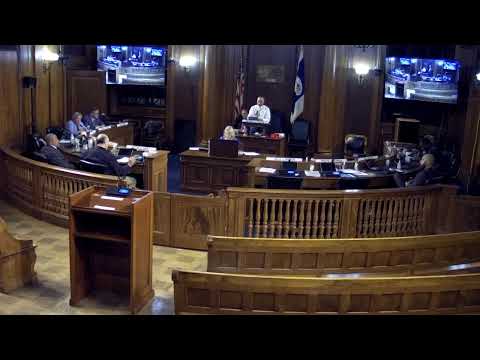
The Springfield City Council on Monday approved the Community Preservation Act (CPA) FY26 budget estimates and the Community Preservation Committee’s recommendations for a slate of neighborhood and historic preservation grants, while rejecting a separate $300,000 allocation for the Kavanaugh Building reuse project.
The council accepted the CPA’s FY26 revenue projection of $3,171,000 — composed of a $2,510,000 local levy estimate, about $262,000 in account interest and a projected $399,000 state distribution — and moved the statutorily required 10% set-asides to housing, historic preservation and open-space/recreation reserves. The committee reported administrative costs at about $122,700 and left roughly $2,097,000 in undesignated reserves for future recommendations.
Why this matters: CPA funds support small-to-mid-size neighborhood-driven capital projects, preservation of historic buildings, and affordable housing tools that often do not match other grant programs. This year’s recommendations touch multiple neighborhoods and include roof and stained-glass repairs, park improvements and housing production.
Most approvals came in a single omnibus vote after the Community Preservation Committee (CPC) chair Bob McCarroll summarized 20 recommended projects. Notable awards included $300,000 recommendations for all-abilities play equipment at Marshall Roy Park and improvements to the Forest Park fitness course, $300,000 for the long-running Historic Home Restoration Program, $300,000 for stabilization at 79 Stockbridge Street (recommended from historic funds), $300,000 toward the Paramount Theater roof, and $288,000 for North Riverfront Park dock improvements. Other awards ranged from roughly $28,900 for the Doyle Avenue Trail to $155,000 for the Ames House roof repair; the CPC split some awards between the CPA housing, historic or undesignated reserves.
Debate and the Kavanaugh Building: The council split out item 14, a $300,000 CPA request for the Kavanaugh Building reuse at 443 State Street, after several members asked for more information. The applicant, DM Renaissance Development LLC (managing director D.M. Mitchell), told the council the project will be built in phases — 25 units in a first phase, then roughly 10 more units — and that the developer has spent predevelopment funds including demolition, abatement and stabilization. Mitchell said he expects to finalize designs by the end of summer and start construction in early fall.
Several councilors voiced support on housing and mental-health grounds, noting the project will provide income-restricted units and a master-lease arrangement with the Mental Health Association (MHA). Opponents said the site, adjacent to Commerce High School, was not an appropriate location and criticized the project’s previous pause and perceived mismanagement. Councilor Kern cited location concerns and prior ARPA funds the city had already committed; Councilor Brown said he would not support additional taxpayer money after the project stalled.
A motion to send the item to committee failed. A subsequent vote to move the question carried, and the final roll call on the Kavanaugh award failed; the item did not receive enough votes to be funded by CPA.
Other procedural items and context: The CPC chair reported that although there was about $3.5 million in recommended funding requests this year, the committee recommended partial funding for many proposals so projects could return in subsequent cycles. Councilors and presenters repeatedly emphasized water intrusion (leaky roofs) as a major threat to historic structures and supported targeted repairs.
What’s next: Councilors approved the CPA budget and the recommended awards (excluding Kavanaugh). Projects cleared for funding must complete any required legal or administrative steps before receiving disbursements; applicants that received partial funding were told they could return to the CPC with supplemental requests in future cycles.
Ending: The council approved the CPA package amid councilor comments thanking the CPC for outreach and long volunteer hours; the Kavanaugh Building request will not receive the $300,000 CPA award following Monday’s vote.