Get Full Government Meeting Transcripts, Videos, & Alerts Forever!
Get email alerts on the Entomology Parasitoid Wasps topic
No spam. Unsubscribe anytime.
Speaker describes parasitoid wasps' life cycle and virus partnership
Summary
At a Missoula Butterfly House lecture, former bug wrangler Brenna Shea detailed how parasitoid wasps lay eggs in or on hosts, how wasp-associated viruses suppress host immune responses and why parasitoidism differs from parasitism.
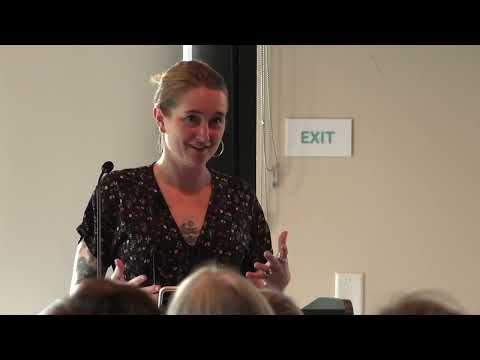
Brenna Shea, a former bug wrangler and education specialist at the Missoula Butterfly House, described parasitoid wasps and their life cycles at a public lecture recorded by Missoula Community Access Television.
Shea opened the segment by saying, “I want to start with parasitoid wasps,” and went on to explain that parasitoidism differs fundamentally from parasitism: “parasitoids ... it always ends up in death of the host, always.” The lecture covered the two broad forms—ectoparasitoids, which lay eggs on an external host and often paralyze it, and endoparasitoids, which lay eggs inside a living host and allow it to continue growing so larvae can develop inside it.
Why it matters: Shea said parasitoid wasps are extremely diverse, many species are tiny and solitary, and they play a major ecological role by regulating other insect populations. She described how some ectoparasitoids paralyze hosts (she cited tarantula hawk wasps as an example) while endoparasitoids develop inside caterpillars and can later emerge and pupate on the host body.
Shea also discussed a surprising biological partnership: certain wasps transmit DNA viruses (polydnaviruses) that suppress the immune systems of host insects so wasp eggs and larvae survive. She called this a rare mutualistic relationship between a virus and an insect lineage and noted the viruses evolved independently in different wasp groups. Shea referenced historical reaction to parasitoid biology, quoting Charles Darwin’s written discomfort with ichneumonid wasps as an illustration of how unsettling the life cycle can appear.
The talk included a planned video of parasitized caterpillars that did not load for the live audience; Shea described instead that parasitized caterpillars often support wasp larvae until the larvae erupt from the host and spin cocoons. Audience members asked follow-up questions about timing and mechanics; Shea answered that hatching times vary by species but are often on the order of days to a couple of weeks, and that larvae chew their way out when emerging from a host.
The lecture was part of the Butterfly House’s Bugs and Brews series; Shea told the audience she had recently left the Butterfly House after roughly six and a half years with the organization and that much of the parasitoid material she presented came from work and study done while she was on staff.
Shea emphasized the limits of attribution for technical claims and encouraged attendees to consult primary literature for species-level details. The Butterfly House said the lecture was being recorded by Missoula Community Access Television and that video links might be shared later.